mofuku
the black clothing worn to a funeral
喪服(もふく)
In one line
The shortest answer that works
Mofuku is the plain black outfit worn to a Japanese funeral, with no shine and no gold.
喪服とは、日本の葬儀で着る飾りのない黒い服で、光る素材と金は避けます。
In 30 seconds
The standard explanation
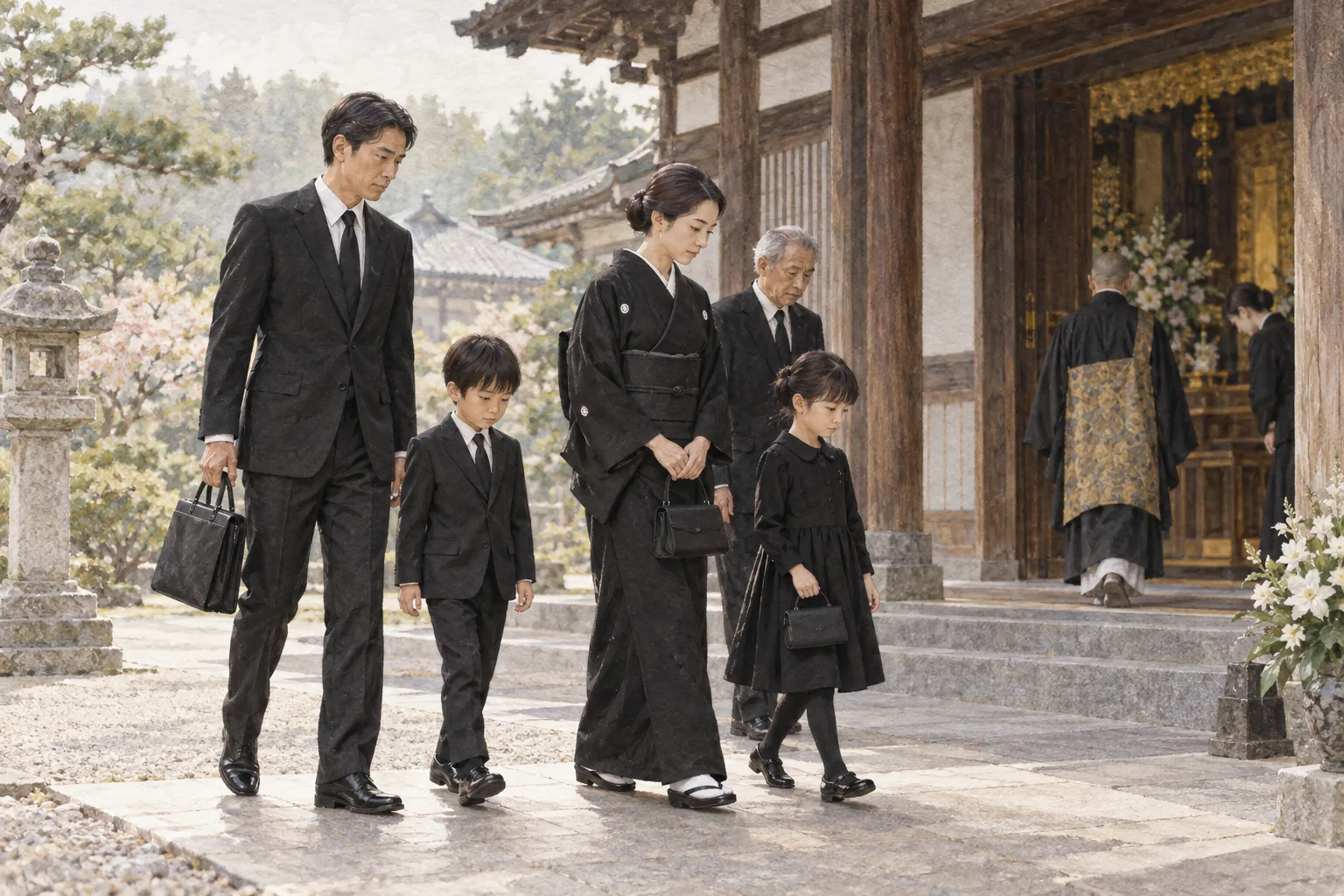
At a Japanese funeral almost everyone wears black. Men wear a black suit with a white shirt and a black tie; women wear a black dress or suit covering the knees and arms, with black stockings. The rule that matters is not the color but the finish: nothing shiny, no gold buttons, no bright jewelry. A single strand of pearls is the one accepted exception for women.
日本の葬儀では、ほぼ全員が黒を着ます。男性は黒いスーツに白いシャツ、黒いネクタイ。女性は膝と腕が隠れる黒いワンピースかスーツに、黒いストッキングです。大事なのは色より仕上げで、光るもの、金のボタン、派手な装身具は避けます。女性の真珠の一連だけが例外として認められています。
As a short speech
A full paragraph you can read aloud
If you are invited to a funeral in Japan, what you wear is not a small matter, and the rules are more specific than just wear black. Men wear a plain black suit, a white shirt and a black tie. Women wear black that covers the knees and the arms, with black stockings, and they carry a bag without metal fittings.
What people actually check is shine. A glossy suit, gold buttons, a big watch or bright jewelry will stand out, because the idea is to not draw attention to yourself on someone else's day. The one exception is pearls, which women often wear as a single strand.
If you do not own black formal clothes, rental shops handle this constantly and it costs less than buying. And if you only attend the wake the evening before, dark navy or gray is usually accepted, because the wake is meant to be the gathering you came to straight from work.
日本で葬儀に呼ばれたら、服装は小さな問題ではありませんし、決まりは「黒を着る」より具体的です。男性は飾りのない黒いスーツ、白いシャツ、黒いネクタイ。女性は膝と腕が隠れる黒い服に黒いストッキング、金具のないバッグを持ちます。
実際に見られているのは光沢です。艶のあるスーツ、金のボタン、大きな時計、派手な装身具は目立ちます。人の日に自分へ注目を集めない、という考え方だからです。例外は真珠で、女性は一連で身につけることが多いです。
黒い礼服を持っていなければ、貸衣装の店が日常的に扱っていて、買うより安く済みます。前夜の通夜だけに出るなら、濃紺やグレーでも差し支えないことが多いです。通夜はもともと、仕事から直行して集まる場だからです。
Questions people actually ask
And how to answer them.
I only have a dark gray suit. Is that a problem?
For the wake the evening before, dark gray or navy is generally fine. For the funeral itself, black is expected, and rental shops can outfit you the same day. Nobody will say anything to you, but they will notice.
前夜の通夜なら、濃いグレーや紺でおおむね問題ありません。葬儀そのものは黒が前提で、貸衣装の店なら当日でも用意できます。誰も口には出しませんが、気づかれます。
Why are pearls allowed but nothing else?
They are traditionally read as restrained rather than decorative, and white, gray or black pearls are the usual choice. A double strand is avoided, because doubled things are associated with repetition, and repeating a funeral is not something you wish for.
真珠は飾りというより控えめなものと受け取られてきたためで、白、グレー、黒が一般的です。二連は避けます。重なるものは繰り返しを連想させ、葬儀が重なることは望まないからです。
Do people wear kimono?
Close family sometimes do, especially the widow or the chief mourner, and it is a plain black kimono with the family crest. Most other attendees wear Western clothes. You will not be expected to wear kimono.
近しい親族、特に喪主や故人の配偶者が着ることがあります。家紋の入った黒い和装です。ほかの参列者はほとんど洋装です。あなたが和装を求められることはありません。
A common misunderstanding
MYTHBlack has always been the mourning color in Japan.
FACTWhite was widely used for mourning in earlier periods, and black is said to have become standard from the Meiji era onward under Western influence, spreading widely after the war.
Phrases you can use
- Plain black, and nothing shiny.飾りのない黒で、光るものは避けてください。
- A white shirt and a black tie for men.男性は白いシャツに黒いネクタイです。
- Pearls are fine — a single strand.真珠なら大丈夫です。一連にしてください。
- You can rent formal black clothes for the day.黒い礼服は、その日だけ借りられます。
- For the wake, dark navy is usually acceptable.通夜なら、濃紺でもたいてい差し支えありません。
Words you need
- mourning clothes喪服
- wake通夜
- chief mourner喪主
- shiny, glossy光沢のある
- family crest家紋
Watch
From YouTubeBackground (Japanese)
喪の色は時代によって変わっている。古くは白の喪服が用いられた。平安時代の貴族は鈍色(にびいろ)と呼ぶ濃い灰色を喪の色としたが、のちに庶民の間で再び白が広まった。黒が広まったのは明治以降で、西洋の服装の影響に加え、葬儀の参列者が増えて白の手入れが追いつかなくなったためという説もある。なお現在でも、喪主の装いとして白を用いる地域や家がある。参列者の黒は「和装の喪服」と「洋装の喪服」に分かれ、前者は五つ紋の黒無地。また、ネクタイの黒は無地で、光沢のある生地は避ける。