shi to kyu o sakeru
unlucky numbers in Japan
四と九を避ける(しときゅうをさける)
In one line
The shortest answer that works
Four and nine are avoided in Japan because they sound like the words for death and suffering.
四と九が避けられるのは、死と苦と同じ音になるからです。
In 30 seconds
The standard explanation
Four can be read shi, which is also the word for death, and nine can be read ku, which is also the word for suffering. Because of this, hospitals often skip room four, some buildings have no fourth floor, and gift sets rarely come in fours. When counting aloud, many people use the alternative readings yon and kyu to avoid the sound.
四は「し」とも読み、それは死と同じ音です。九は「く」とも読み、それは苦と同じ音です。そのため病院では4号室を飛ばすことが多く、4階のない建物もあり、贈り物の詰め合わせが4個組であることはまれです。声に出して数えるときは、音を避けるために「よん」「きゅう」と読む人が多くいます。
As a short speech
A full paragraph you can read aloud
Japanese has two sets of readings for numbers, and the problem with four and nine is that one reading of each is a homophone for something unwelcome. Four read as shi is the same sound as the word for death, and nine read as ku is the same sound as the word for suffering. The result is visible everywhere once you know to look.
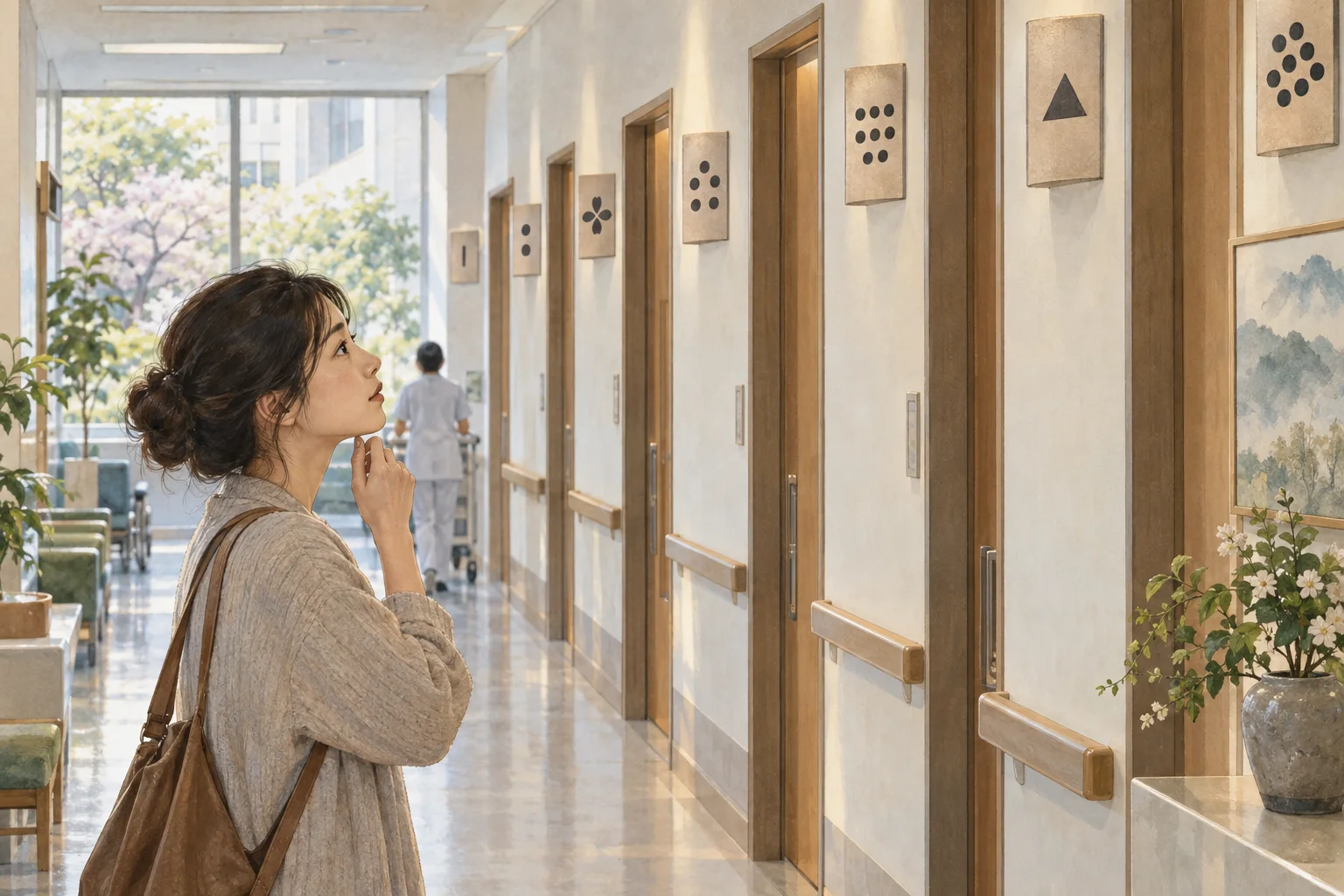
Many hospitals skip room numbers four, nine and sometimes forty-two, which sounds like a phrase meaning to die. Some apartment buildings have no fourth floor. Gift sets of cups or plates usually come in fives, not fours, and giving someone a set of four of anything is avoided.
In speech, people simply use the other reading: yon instead of shi, kyu instead of ku. Hardly anyone thinks a number can actually cause harm. It is closer to the way an English-speaking hotel may skip floor thirteen, a habit that survives regardless of belief.
日本語の数字には読み方が二通りあり、四と九が厄介なのは、その一方の読みが好ましくない語と同じ音になるからです。四を「し」と読めば死と同じ音、九を「く」と読めば苦と同じ音です。そうと知って見れば、その影響はあちこちにあります。
病院の多くは4号室、9号室、ときに42号室を飛ばします。42は死に至るという意味の語と同じ音になるからです。4階のない集合住宅もあります。湯呑みや皿の詰め合わせはたいてい4個ではなく5個組で、何であれ4つ組を人に贈ることは避けられます。
話し言葉では単に別の読みを使い、「し」ではなく「よん」、「く」ではなく「きゅう」と言います。数字そのものが害をなすと本気で思っている人は、ほとんどいません。英語圏のホテルが13階を飛ばす習慣が、信じているかどうかと関係なく残っているのと似ています。
Questions people actually ask
And how to answer them.
Does this affect what I should give as a gift?
Yes, in a small way. Avoid sets of four, and for money at a wedding avoid amounts that divide evenly, since divisible suggests the couple splitting. Sets of five and odd-numbered amounts are the safe choice.
小さいですが影響します。4個組は避けてください。婚礼のお金では、割り切れる額を避けます。割れることが縁の切れることを連想させるからです。5個組や奇数の額が無難です。
Is nine always bad?
No. Nine is also a strong number in older thinking, and the ninth day of the ninth month is a traditional festival. The avoidance is specific to the sound ku, so nine read as kyu carries no problem at all.
いつも悪いわけではありません。九は古い考え方では力のある数でもあり、九月九日は重陽という節句です。避けられるのは「く」という音に限った話で、「きゅう」と読むかぎり何の問題もありません。
A common misunderstanding
MYTHJapanese people are afraid of the numbers themselves.
FACTIt is about the sound, not the quantity. The same numbers are used freely when read with the other pronunciation, and most people treat it as a convention rather than a belief.
Phrases you can use
- Four sounds like the word for death.四は死と同じ音になります。
- That's why there's no room four.だから4号室がありません。
- Don't give a set of four.4個組は贈らないでください。
- People say yon instead to avoid the sound.その音を避けて「よん」と言います。
Words you need
- homophone同じ音の語
- to skip (a number)飛ばす
- unlucky縁起が悪い
- a set of組
Watch
From YouTubeBackground (Japanese)
病室や駐車場で4と9を飛ばす例は多く、自動車のナンバープレートでも42と49は原則として払い出されません。42は「死に」、49は「死苦」と読めるためです。一方で、末広がりの八は好まれ、祝儀の額や商品の値付けに使われます。九は重陽の節句のように吉数として扱われる場面もあり、一律に忌まれているわけではありません。贈答で偶数を避ける習慣は、割り切れることを嫌う考え方から来ています。