yakudoshi
the unlucky years of your life
厄年(やくどし)
In one line
The shortest answer that works
Yakudoshi are the ages considered unlucky in Japan, when people visit a shrine to have the bad luck cleared.
厄年とは、日本で災いが多いとされる年齢で、その年には神社で厄払いを受けます。
In 30 seconds
The standard explanation
Certain ages are treated as unlucky and are called yakudoshi. The main ones are forty-two for men and thirty-three for women, with the years before and after also counted. People born in those years often go to a shrine or temple early in the year for a purification ritual. Shrines post the relevant birth years on a board so you can check whether it is your turn.
特定の年齢は災いが多いとされ、厄年と呼ばれます。中心は男性の42歳と女性の33歳で、その前後の年も前厄・後厄として数えます。その年に当たる人の多くは、年の初めに神社や寺へ行き、厄払いを受けます。神社には該当する生まれ年の表が掲示され、自分の番かどうか確認できます。
As a short speech
A full paragraph you can read aloud
Yakudoshi are the ages in Japanese life that are treated as unlucky. The big ones are forty-two for men and thirty-three for women, and the years immediately before and after count as well, so it is a three-year stretch. The usual explanation is a pun: forty-two can be read as shi-ni, meaning to death, and thirty-three as san-zan, meaning terrible.
That sounds thin, but some people see something practical underneath. One explanation is that these were the ages at which people in earlier centuries took on heavy responsibility, or at which their health began to change, so the custom put a marker there.
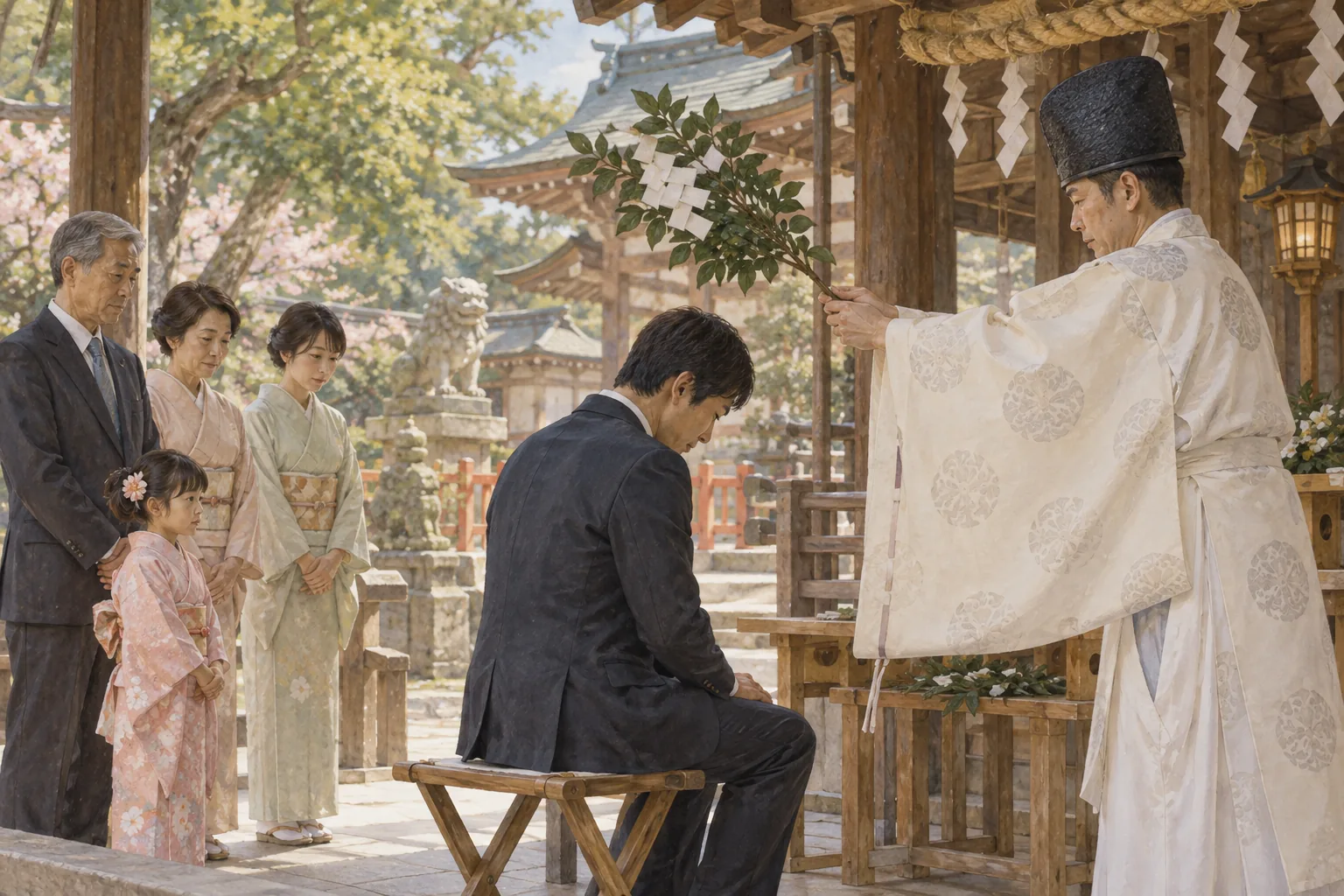
What people do is go to a shrine in January or February for a purification ceremony. A priest reads a prayer, waves a paper wand, and you receive a charm. Whether or not anyone believes it works, it functions as a scheduled moment to stop and check how you are.
厄年は、日本で災いが多いとされる年齢です。中心は男性の42歳、女性の33歳で、その前後の年も含めるので三年続きになります。よく言われる説明は語呂合わせです。四二は「死に」、三三は「散々」と読める。
それだけでは弱いようですが、実際的な意味を見る人もいます。昔、人がこの年ごろに重い責任を負い、あるいは体の変わり目を迎えたため、そこに目印が置かれたという説明です。
何をするかというと、1月か2月に神社へ行って厄払いを受けます。神職が祝詞を読み、大幣を振り、お守りを受け取ります。効き目を信じているかどうかにかかわらず、立ち止まって自分の状態を確かめる機会として働いています。
Questions people actually ask
And how to answer them.
Is it counted by your actual age?
Traditionally it uses kazoedoshi, the old counting system in which you are one at birth and gain a year at New Year. Shrines display the birth years on a board, so you do not have to work it out.
伝統的には数え年で数えます。生まれた時点で1歳、正月ごとに1歳増える数え方です。神社には生まれ年の表が出ているので、自分で計算する必要はありません。
Do people actually change their behavior?
Some do. Avoiding big decisions, house moves or starting a business in that year is a common instinct, especially among older generations. Others simply note it and carry on.
変える人はいます。その年に大きな決断、引っ越し、起業を避ける感覚は、とくに上の世代に根強いです。気に留めるだけで普通に過ごす人も多いです。
What happens at the ceremony?
You apply at the shrine office, pay an offering, and are called into the hall. A priest reads a formal prayer including your name and age, purifies you with a wand, and you receive an arrow or a charm to take home.
社務所で申し込み、初穂料を納め、拝殿に通されます。神職が名前と年齢を入れた祝詞を読み、大幣でお祓いをし、破魔矢やお守りを受けて帰ります。
Phrases you can use
- This is my unlucky year, apparently.今年は厄年らしいんです。
- Forty-two for men, thirty-three for women.男は42歳、女は33歳です。
- The years either side count too.前後の年も前厄・後厄として数えます。
- People go to a shrine to have it cleared.神社で厄払いを受けます。
- It's based on a pun, but it marks a real turning point.語呂合わせですが、人生の節目に当たってはいます。
Words you need
- unlucky year厄年
- purification ritualお祓い、厄払い
- superstition迷信、俗信
- turning point節目、転機
- misfortune災い、不運
Watch
From YouTubeBackground (Japanese)
厄年は数え年で数え、男性は25歳・42歳・61歳、女性は19歳・33歳・37歳が主な厄年とされる。うち男性42歳と女性33歳は「大厄」。前年を前厄、翌年を後厄と呼び、三年続きで意識される。起源は陰陽道にあるとされるが、年齢の根拠は語呂合わせによる説明が一般的で、平安時代の文献にはすでに厄年の記述が見られる。厄払いは神社でも寺でも受けられ、節分までに済ませるのがよいとされる地域が多い。また「厄落とし」として人にご馳走する、身につけていたものを落とすといった習慣も各地にある。