setsubun
the bean-throwing festival at the start of spring
節分(せつぶん)
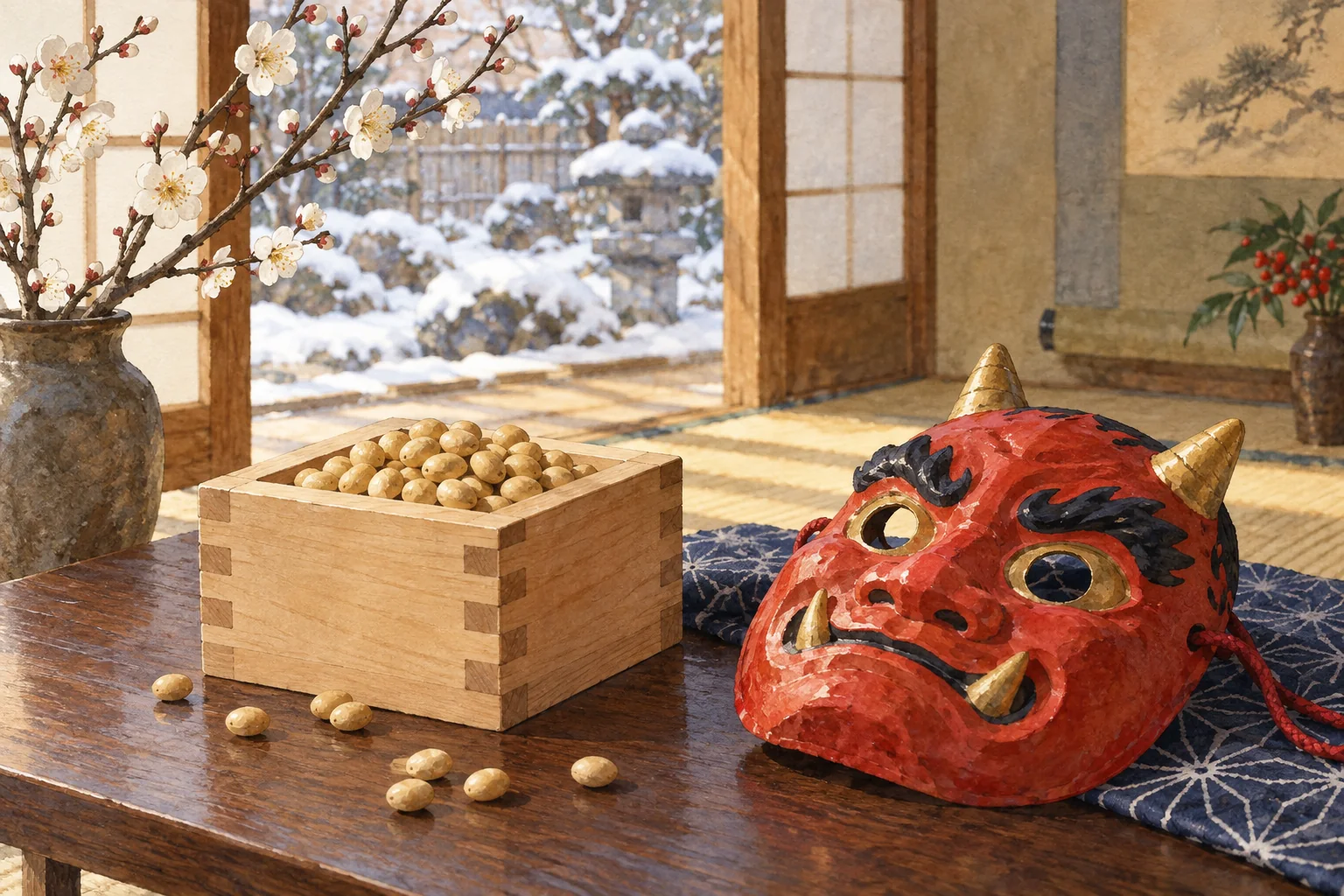
In one line
The shortest answer that works
On Setsubun, people throw roasted soybeans to drive bad luck out of the house.
節分には、炒った大豆をまいて厄を家から追い出します。
In 30 seconds
The standard explanation
Setsubun falls on the day before the first day of spring on the traditional calendar, usually February 3rd. Families throw roasted soybeans out the door shouting "Demons out, luck in," and then eat one bean for each year of their age. At many homes one parent wears a demon mask and gets pelted by the children. Schools and shrines hold public bean-throwing events too.
節分は、暦の上で春が始まる立春の前日にあたり、たいてい2月3日です。家族は「鬼は外、福は内」と言いながら炒った大豆を戸口の外にまき、そのあと自分の年齢の数だけ豆を食べます。多くの家では親のどちらかが鬼の面をかぶり、子どもに豆をぶつけられます。学校や神社でも豆まきの行事が行われます。
As a short speech
A full paragraph you can read aloud
Setsubun is held in early February, on the day before spring begins on the traditional calendar. The idea is simple: the turn of a season is a gap where bad things can slip in, so you push them out before they settle. Families open the door, throw roasted soybeans outside and shout "Demons out, luck in."
Then everyone eats one bean for each year of their age, and in some homes one more for the year ahead. In many houses, a parent puts on a red demon mask and lets the children throw beans at him, which is usually the part children remember.
There is also a newer custom of eating a whole uncut sushi roll while facing a lucky direction in silence. It started as a regional habit and spread nationwide through convenience stores.
節分は2月初め、伝統的な暦で春が始まる前日に行われます。考え方は単純で、季節の変わり目は悪いものが入り込む隙間だから、居つく前に追い出そうというものです。
家族は戸を開け、炒った大豆を外にまいて「鬼は外、福は内」と叫びます。そのあと、自分の年齢の数だけ、家によってはさらに一つ足した数の豆を食べます。多くの家では親が赤い鬼の面をかぶり、子どもに豆をぶつけられます。
子どもが覚えているのはたいていこの部分です。さらに新しい習慣として、切っていない太巻きを、縁起のよい方角を向いて無言で食べるものがあります。もとは地方の習慣で、コンビニを通じて全国に広まりました。
Questions people actually ask
And how to answer them.
Why beans?
The word for bean, mame, is said to echo a phrase meaning "to destroy the demon's eye," and beans were seen as containing the power of grain. They are roasted because a raw bean that sprouted was said to bring the bad luck back.
「豆」の音が「魔目(魔の目)を滅する」に通じるとされ、穀物の力が宿ると考えられました。まく豆は必ず炒ったものです。生の豆が芽を出すと、追い出した厄が戻ると言われるためです。
Are the demons evil in a Christian sense?
Not really. Oni are more like forces of misfortune and disease than moral evil. In some places the shout is changed because the local shrine considers its demons to be protectors.
キリスト教的な「悪」とは違います。鬼は道徳的な悪というより、災いや病の力に近い存在です。地域によっては鬼を守り神とし、掛け声を変える所もあります。
What is the giant sushi roll about?
It is called ehomaki. You face the year's lucky direction and eat the whole roll without cutting it and without speaking. Cutting it is said to cut your luck. It is a modern nationwide custom, heavily pushed by convenience stores since the 1990s.
恵方巻といいます。その年の恵方を向き、切らずに、しゃべらずに一本食べます。切ると縁が切れると言われます。1990年代以降にコンビニが広めた、新しい全国的習慣です。
Phrases you can use
- Demons out, luck in!鬼は外、福は内!
- You eat one bean for each year of your age.年の数だけ豆を食べます。
- Someone has to be the demon.誰かが鬼役をやらないといけません。
- Setsubun marks the day before spring starts on the traditional calendar.節分は、暦の上での立春の前日です。
- You have to eat the whole roll without saying a word.一言もしゃべらずに丸ごと食べきります。
Words you need
- roasted soybeans炒り豆
- ward off evil厄を払う
- demon mask鬼の面
- turn of the season季節の変わり目
- lucky direction恵方
Watch
From YouTubeBackground (Japanese)
節分とは本来「季節を分ける」日のことで、立春・立夏・立秋・立冬それぞれの前日、年に4回あった。今のように立春の前日だけを指すようになったのは、旧暦では立春が一年の始まりに近く、その前日が大晦日にあたる特別な日だったためである。節分の日付は固定ではなく、2021年は124年ぶりに2月2日になった。立春の瞬間が天文学的に決まるためで、今後もときどきずれる。恵方巻は1990年代からコンビニ各社が全国展開して定着した新しい習慣で、当時は関西の一部の習慣だった。大量の売れ残りが出ることから、近年は予約販売に切り替える店が増えている。