ehomaki
the uncut sushi roll eaten facing a set direction at Setsubun
恵方巻(えほうまき)
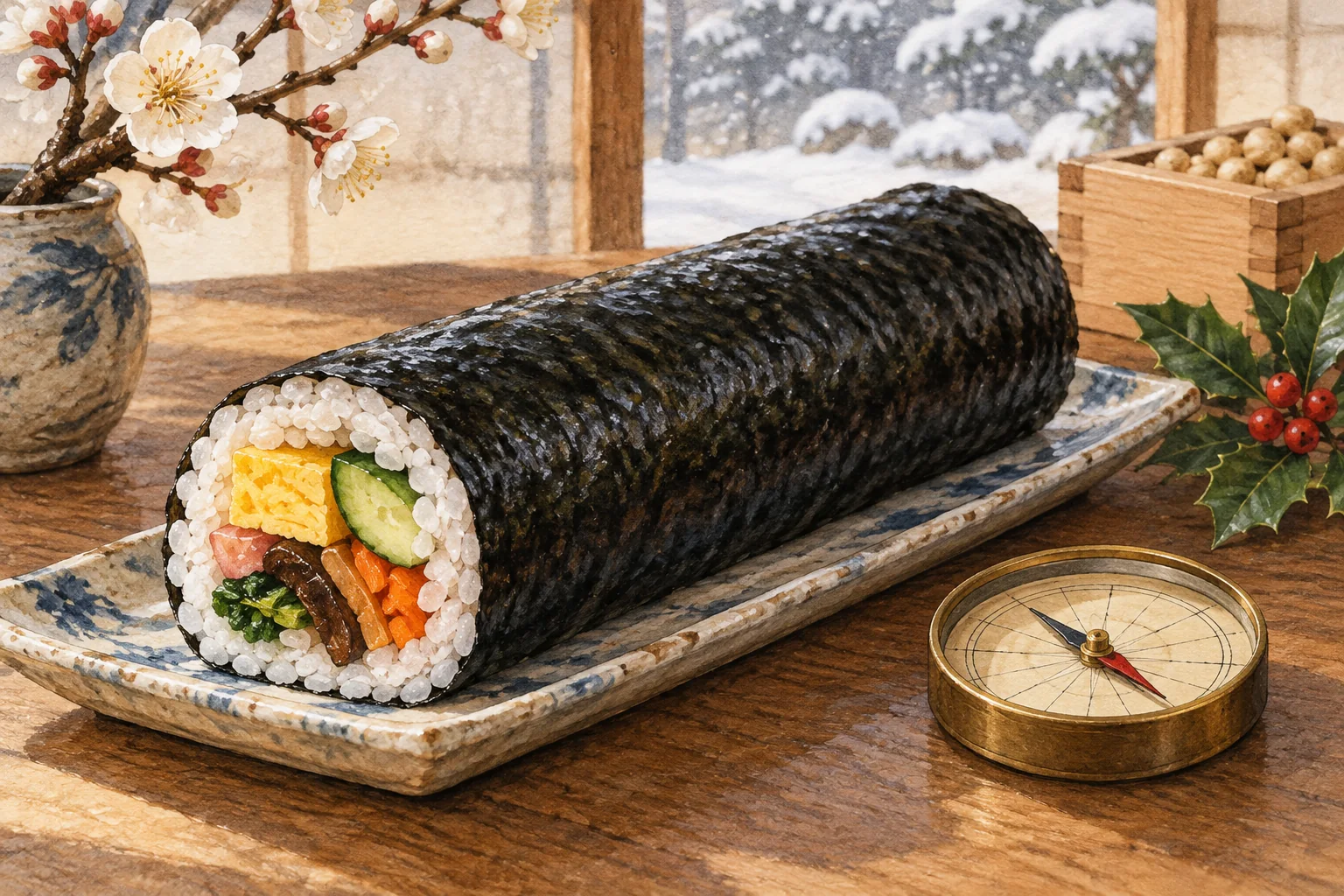
In one line
The shortest answer that works
An ehomaki is a thick sushi roll eaten whole and in silence, facing a set direction, on Setsubun.
恵方巻とは、節分に決まった方角を向いて、黙ったまま丸ごと食べる太巻きのことです。
In 30 seconds
The standard explanation
On Setsubun, in early February, people eat a thick sushi roll called ehomaki. The rules are that you do not cut it, you face the year's lucky direction, and you stay silent until you have finished. Cutting it is said to cut your luck. Convenience stores and supermarkets sell them, often in dozens of versions, and the stacks appear in January.
2月初めの節分に、恵方巻という太巻きを食べます。切らない、その年の恵方を向く、食べ終わるまで黙っている、という決まりです。切ると縁が切れると言われます。コンビニもスーパーも何種類も並べて売り、売り場は1月から立ちます。
As a short speech
A full paragraph you can read aloud
On Setsubun, usually February 3rd, you will see people in Japan eating a thick uncut sushi roll while staring at a wall. This is ehomaki. The rules are specific: do not cut the roll, face the year's lucky direction, which changes annually, and do not speak until you have eaten the whole thing.
Cutting it is said to cut your good fortune, and talking is said to let the luck escape. It looks ancient, and many Japanese people assume it is. It is not, at least not nationally. The origins are disputed, but the version that spread across Japan was pushed by the Osaka seaweed trade in the 1970s to sell more nori, and then by convenience stores.
7-Eleven tried it in a few shops in Hiroshima in 1989 and rolled it out nationwide in 1998. Within a decade it was everywhere. It is a good example of how quickly something can become a tradition when a retail chain decides it should be.
節分(たいてい2月3日)になると、日本では切っていない太巻きを持って壁を見つめている人を見かけます。恵方巻です。決まりは細かくて、巻き寿司を切らない、その年の恵方を向く(毎年変わります)、食べ終わるまで口をきかない。切ると縁が切れる、しゃべると福が逃げると言われます。
いかにも古くからの行事に見えますし、多くの日本人もそう思っています。違います。少なくとも全国的には新しいものです。起源には諸説ありますが、全国に広まったのは、1970年代に大阪の海苔の業界が販売促進のために広めたものを、コンビニが引き継いだ形です。
セブン-イレブンが1989年に広島の一部の店で試し、1998年に全国展開しました。10年ほどで日本中の行事になりました。小売の大手がやると決めれば、伝統はこれほど速くできる、というよい例です。
Questions people actually ask
And how to answer them.
Which direction do I face?
It changes every year and is announced on the packaging, in the shop and in the news. You will not have to work it out yourself; the label on the roll tells you.
毎年変わり、包装にも店にも報道にも出ています。自分で調べる必要はありません。巻き寿司のラベルに書いてあります。
Do I really have to eat the whole thing without talking?
That is the stated rule, and families do play it straight, which is part of the fun. Children usually give up halfway. Nobody minds.
決まりとしてはそうですし、家庭ではまじめにやります。そこが楽しいところでもあります。子どもはたいてい途中で話し出します。誰も気にしません。
Is it connected to throwing beans?
Both happen on Setsubun, but bean-throwing is the much older practice, tied to driving out misfortune at the turn of the season. The roll was added to the same day far more recently.
どちらも節分の行事ですが、豆まきのほうがずっと古く、季節の変わり目に災いを払う行事です。恵方巻が同じ日に加わったのは、かなり最近のことです。
A common misunderstanding
MYTHEhomaki is an ancient nationwide custom.
FACTIts origins are disputed and local, and the nationwide custom dates from the 1990s, spread by convenience stores. It became a tradition very fast.
Phrases you can use
- You eat the whole roll without cutting it.切らずに、丸ごと食べます。
- Face this year's lucky direction while you eat.その年の恵方を向いて食べます。
- Don't talk until you've finished, or the luck escapes.食べ終わるまで黙ります。しゃべると福が逃げるので。
- The direction is printed right on the label.方角はラベルに書いてあります。
- It only became a national thing in the 1990s.全国に広まったのは1990年代です。
Words you need
- sushi roll巻き寿司
- lucky direction恵方
- seaweed sheet海苔
- in silence黙って
- convenience storeコンビニ
Watch
From YouTubeBackground (Japanese)
恵方巻の起源には複数の説があり、大阪の商家や花街の習慣にさかのぼるとする説が語られるが、確かな裏づけは乏しい。全国に広まった経緯ははっきりしていて、1970年代に大阪の海苔の業界が節分に巻き寿司を食べる習慣を販売促進に使い、道頓堀で早食い競争を行って報道された。その後セブン-イレブンが1989年に広島県の一部店舗で売り出し、1998年に全国展開した。「恵方巻」という名称もこのころ広まったとされる。近年は大量の売れ残りが出ることが問題になり、農林水産省が予約販売などによる需要に見合った販売を業界に呼びかけている。