aisatsu
greetings as a social duty
挨拶(あいさつ)
In one line
The shortest answer that works
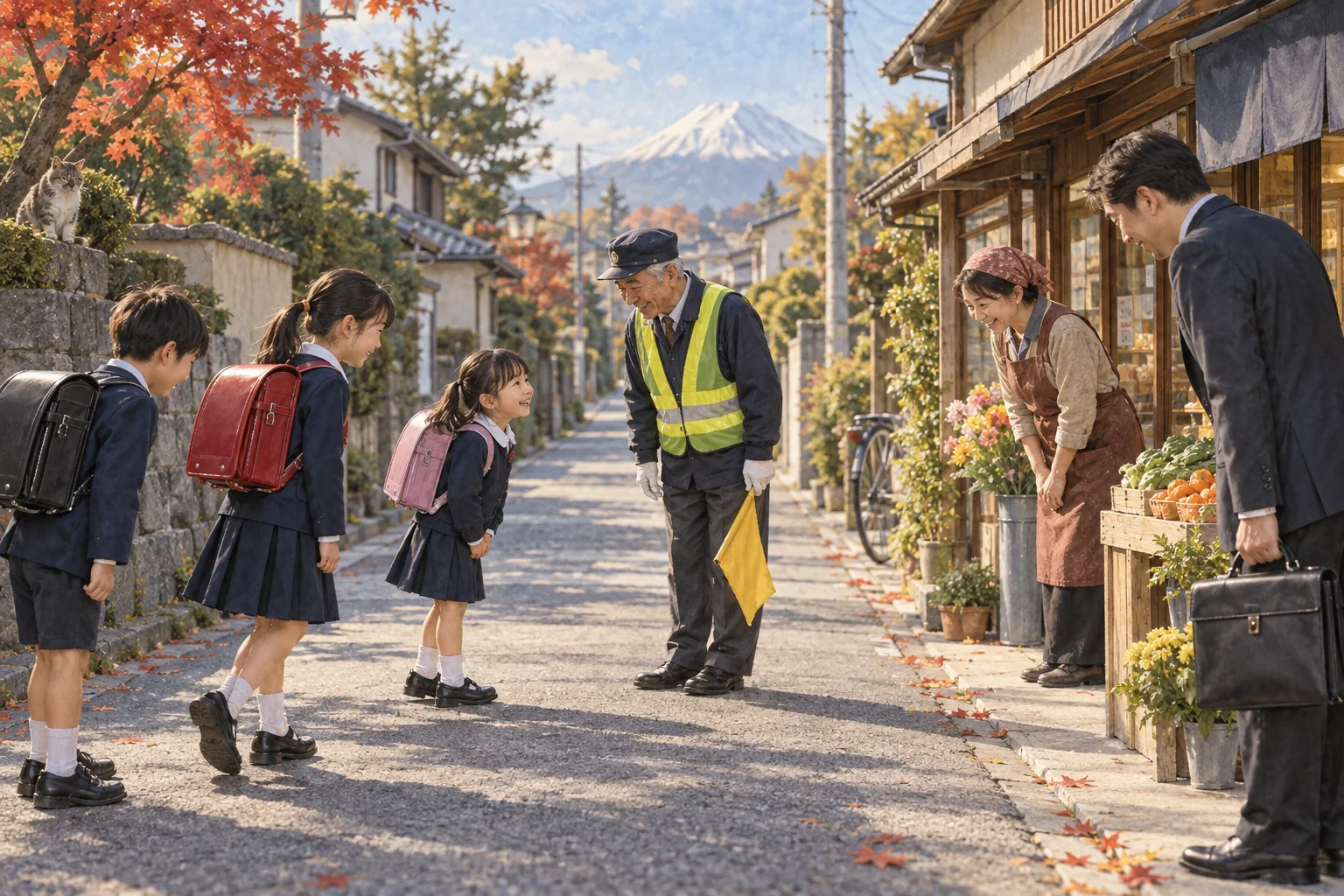
Aisatsu means greetings, and in Japan doing them properly is treated as a basic sign of good character.
挨拶とはあいさつのことで、日本ではきちんとできることが人柄の基本と見なされます。
In 30 seconds
The standard explanation
Aisatsu covers every fixed greeting: good morning, thank you for your hard work, I'm leaving, I'm back. The words matter less than the fact that you say them, clearly and to the right people. Children practice them at school, new employees are trained in them, and a person who skips them is quietly judged as rude. It is how you show you belong to the group.
挨拶とは、おはようございます、お疲れさま、行ってきます、ただいま、といった決まり文句すべてを指します。大事なのは言葉の内容より、はっきりと、しかるべき相手に言うことです。子どもは学校で練習し、新入社員は研修で仕込まれ、挨拶を省く人は静かに「失礼な人」と見なされます。集団の一員だと示す手段なのです。
As a short speech
A full paragraph you can read aloud
The Japanese word aisatsu is usually translated as greetings, but it carries more weight than that. It means the whole set of fixed phrases that mark the moments of a day: good morning when you arrive, a phrase when you leave the house, another when you return, one before eating and one after, and a word of thanks at the end of work.
What matters is not the words, which never change, but that you say them out loud, with a small bow, to everyone concerned. Schools run campaigns to get children to greet each other in the corridor, and companies train new staff in how to say good morning with the right energy.
If a neighbor does not greet you, people take it as a real signal, not a small oversight. I find this comforting, because you always know what to say, but it also means silence is rarely neutral in Japan.
日本語の「挨拶」はふつう英語で greetings と訳されますが、それより重い意味を持ちます。一日の節目を刻む決まり文句の一式のことで、出勤時のおはようございます、家を出るときの行ってきます、帰ったときのただいま、食事の前後の一言、仕事の終わりのお疲れさまなどです。
大事なのは、決して変わらない言葉そのものではなく、関係する全員に、軽くお辞儀をしながら声に出して言うことです。学校は廊下で挨拶し合う運動を行い、会社は新入社員に元気のよいおはようございますの言い方を教えます。
隣人が挨拶をしなければ、人はそれを小さな見落としではなく本気の合図と受け取ります。何を言えばよいかいつも分かるので私は安心しますが、日本では沈黙がめったに中立ではないということでもあります。
Questions people actually ask
And how to answer them.
Why do Japanese people say the same phrase every single time?
Because the phrase is a ritual, not a message. Saying the expected words shows you respect the routine and the people in it, so originality would actually miss the point. Think of it like a handshake: nobody wants a creative one.
言葉が伝達ではなく儀式だからです。期待どおりの言葉を言うことで、その決まりと周りの人を尊重していると示すので、独創的にするとかえって的外れになります。握手と同じで、個性的な握手を求める人はいません。
Do I have to greet people I don't know, like in an elevator?
In a workplace building, a small nod or a quiet good morning is normal even to strangers. On the street in a big city, no. In a small town or an apartment block, a short greeting to neighbors is expected and noticed.
職場の建物なら、知らない人にも軽い会釈か小さな声のおはようございますがふつうです。大都市の路上では不要です。小さな町やマンションでは、近所の人への短い挨拶が期待され、しなければ気づかれます。
What is the aisatsu at a wedding or a meeting?
The same word also means a short formal speech. A guest may be asked to give an aisatsu, which is a few minutes of thanks and good wishes. It follows a set shape, so it is easier than it sounds.
同じ言葉が短い正式なスピーチも指します。来賓は挨拶を頼まれることがあり、数分の感謝と祝いの言葉です。型が決まっているので、聞くほど難しくありません。
A common misunderstanding
MYTHA greeting is just a friendly extra, so skipping it is no big deal.
FACTIn Japan, greeting is treated as the minimum of decent behavior, and not doing it is often read as coldness rather than shyness.
Phrases you can use
- Greetings really matter here, so say them out loud.ここでは挨拶が本当に大事なので、声に出して言ってください。
- Good morning is the first thing you say when you arrive.出勤したらまず、おはようございますと言います。
- Give a little bow when you say it.言うときに軽くお辞儀をします。
- The neighbors will notice if you don't greet them.近所の人に挨拶しないと気づかれますよ。
- I've been asked to give a short speech at the party.パーティーで短い挨拶を頼まれました。
Words you need
- greeting挨拶
- set phrase決まり文句
- a nod / a small bow会釈
- out loud声に出して
- a short speech(式典などの)挨拶
Watch
From YouTubeBackground (Japanese)
「挨拶」の二字はもともと禅宗で、僧が問答を交わして相手の悟りの深さを試す「一挨一拶」に由来するとされ、「挨」も「拶」も押す・迫るという意味を持ちます。そこから人と人が言葉を交わす一般の意味に広がりました。小学校の廊下に「あいさつ運動」の横断幕が掛かり、生徒会が校門で朝の声かけをする風景は全国にあり、通知表の生活面でも挨拶は評価項目の常連です。企業の新人研修でも、おはようございますの声の大きさとお辞儀の角度をそろえる練習をする会社があります。一方で、近年は防犯のために「知らない人には挨拶しない」と子どもに教える地域もあり、挨拶の当たり前が揺れている面もあります。