hinan kunren
the evacuation drills everyone has done
避難訓練(ひなんくんれん)
In one line
The shortest answer that works
Hinan kunren, or evacuation drills, are routine at Japanese schools and workplaces, so everyone knows what to do in earthquakes.
避難訓練とは、日本の学校や職場で定期的に行われ、地震のときの動き方を誰もが覚える訓練です。
In 30 seconds
The standard explanation
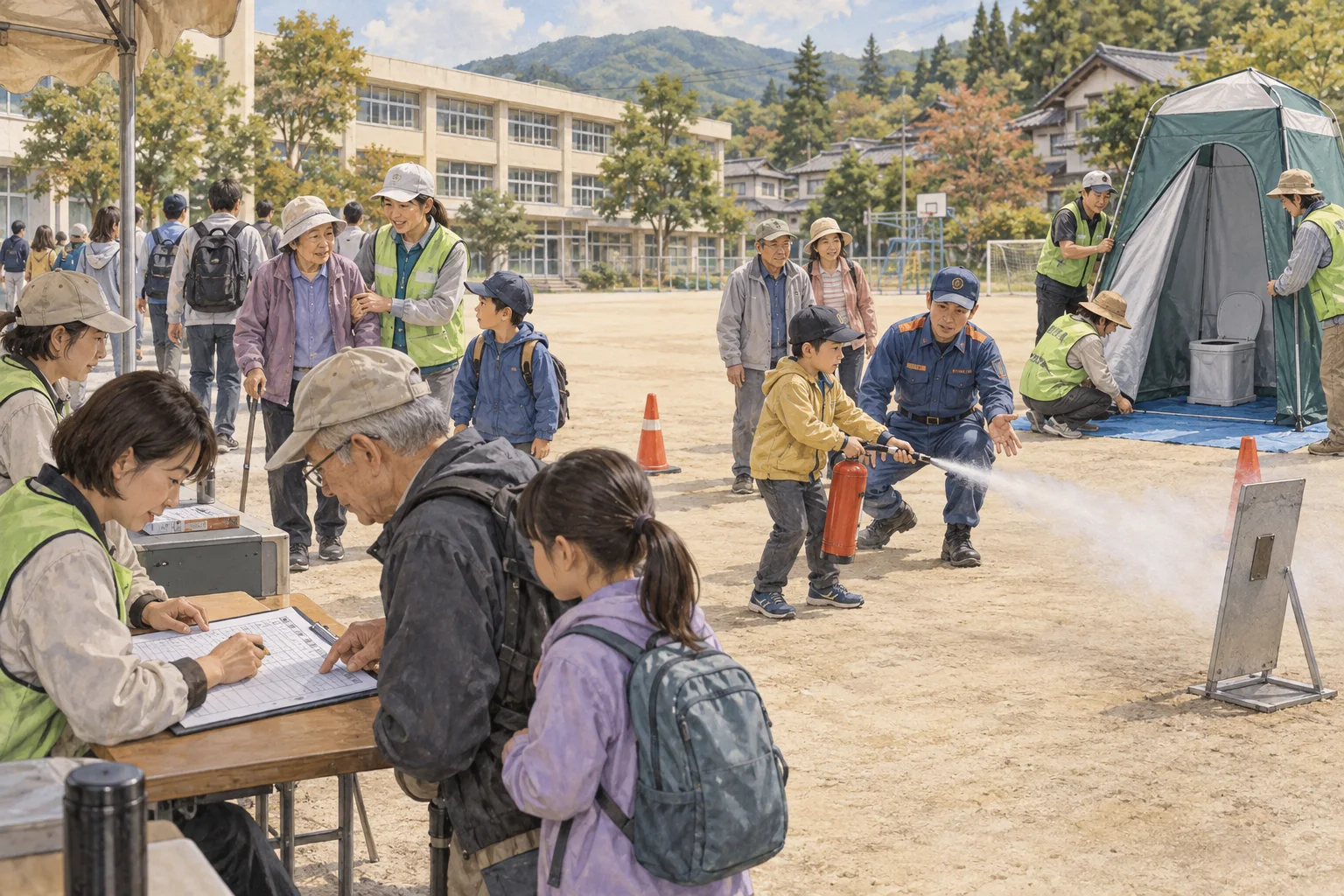
Japanese schools hold evacuation drills several times a year, and workplaces and apartment buildings run them too. A bell or announcement signals an earthquake or fire, everyone gets under a desk or covers their head, then files outside to a designated assembly point where numbers are counted. Children learn a four-part rule about not pushing, not running, not talking and not going back. It is one reason crowds here tend to stay orderly in real emergencies.
日本の学校は年に何度も避難訓練を行い、職場や集合住宅でも実施します。ベルや放送で地震や火災を知らせ、全員が机の下に入るか頭を守り、それから決められた集合場所まで列になって出て、人数を確認します。子どもは押さない、走らない、しゃべらない、戻らないという決まりを覚えます。本当の非常時に人々が落ち着いて動きやすい理由の一つです。
As a short speech
A full paragraph you can read aloud
Japan sits on the meeting point of several tectonic plates, and the response has been to make preparation a habit rather than a subject. From the first year of elementary school, children take part in evacuation drills several times a year. A bell or an announcement signals an earthquake, and everyone ducks under a desk holding the leg, or covers their head with a cushion attached to the chair back.
When the shaking is declared over, classes file outside to a marked assembly area, and teachers count heads and report. Children are taught a rule whose Japanese initials spell a short word: do not push, do not run, do not talk, do not go back.
Workplaces and apartment buildings run their own drills, sometimes with the fire department, and cities hold large exercises around the first of September, the anniversary of the great earthquake of 1923. Households are encouraged to keep water, food and a flashlight. None of this prevents disasters, but it explains why people move calmly and why announcements are followed.
日本はいくつもの構造プレートが出会う場所にあり、その答えは、備えを科目ではなく習慣にすることでした。小学校一年生から、子どもは年に何度も避難訓練に参加します。ベルか放送が地震を知らせると、全員が机の脚をつかんで下に潜るか、椅子の背につけた防災頭巾で頭を覆います。
揺れが収まったと告げられると、クラスは列になって外の決められた集合場所へ出て、先生が人数を数えて報告します。子どもは頭文字が短い言葉になる決まりを教わります。押さない、走らない、しゃべらない、戻らない、です。
職場や集合住宅もそれぞれ訓練を行い、消防が加わることもあり、自治体は1923年の大地震の日にちなんで9月1日前後に大きな訓練を行います。家庭には水、食料、懐中電灯の備えが勧められます。これで災害が防げるわけではありませんが、人が落ち着いて動き、放送に従う理由はこれで説明がつきます。
Questions people actually ask
And how to answer them.
What should I actually do if an earthquake starts?
Protect your head first and get under a sturdy table if there is one, away from windows and tall furniture. Do not run outside while it is shaking, because falling glass and tiles are the danger. Open a door afterward so it does not jam, and wait for instructions before moving.
まず頭を守り、あれば頑丈な机の下に入り、窓や背の高い家具から離れてください。揺れているあいだに外へ走り出さないこと。落ちてくるガラスや瓦が危ないからです。揺れが収まってから扉を開けて閉じ込めを防ぎ、指示を待ってから動きます。
What is the cushion children wear on their heads?
A bosai zukin, a padded hood that doubles as a chair cushion and is pulled on to protect the head and neck from falling objects. Many schools in earthquake-prone areas issue them, though helmets are used in others. Children practice putting them on quickly.
防災頭巾といって、椅子の座布団を兼ねる詰め物入りの頭巾で、落下物から頭と首を守るためにかぶります。地震の多い地域の多くの学校が備え、ヘルメットを使う学校もあります。子どもは素早くかぶる練習をします。
Do visitors need to do anything?
Learn where your building's assembly point is, keep a phone charger and shoes near the bed, and download an app that gives early warnings in English. If your phone sounds a loud alarm and shows a warning, you may have a few seconds before shaking starts, so use them to get your head under something.
泊まっている建物の集合場所を確かめ、携帯の充電器と靴を寝床の近くに置き、英語で緊急地震速報が出るアプリを入れておいてください。携帯が大きな警報音を鳴らして表示を出したら、揺れ始めるまで数秒あるかもしれないので、その時間で頭を何かの下に入れます。
Phrases you can use
- We have an evacuation drill next week.来週、避難訓練があります。
- Get under the desk and hold the leg.机の下に入って脚をつかんでください。
- The assembly point is the school ground.集合場所は校庭です。
- Don't push, don't run, don't talk, don't go back.押さない、走らない、しゃべらない、戻らない。
- Keep shoes and a flashlight by your bed.枕元に靴と懐中電灯を置いておいてください。
Words you need
- evacuation drill避難訓練
- assembly point避難場所・集合場所
- aftershock余震
- emergency supplies非常用の備え
- early warning緊急地震速報
- take cover身を守る・避難する
Watch
From YouTubeBackground (Japanese)
避難訓練は学校では法令に基づく計画のもとで定期的に行われ、地震、火災、不審者への対応など想定を変えて実施されます。子どもに教えられる標語は地域によって違い、「おかしも」(おさない・かけない・しゃべらない・もどらない)や、これに「ちかづかない」を加えた形などが使われます。防災頭巾は座布団を兼ねる形で椅子の背に掛けておく学校が多く、ヘルメットを備える学校もあります。9月1日は1923年の関東大震災にちなむ防災の日で、この時期に自治体や企業の大規模な訓練が集中します。緊急地震速報は、地震の初期の波を検知して強い揺れが来る前に知らせる仕組みで、携帯電話やテレビを通じて配信されます。家庭での備蓄は、水と食料を数日分用意することが広く勧められています。