suidosui ga nomeru koto
why you can drink from the tap
水道水が飲めること(すいどうすいがのめること)
In one line
The shortest answer that works
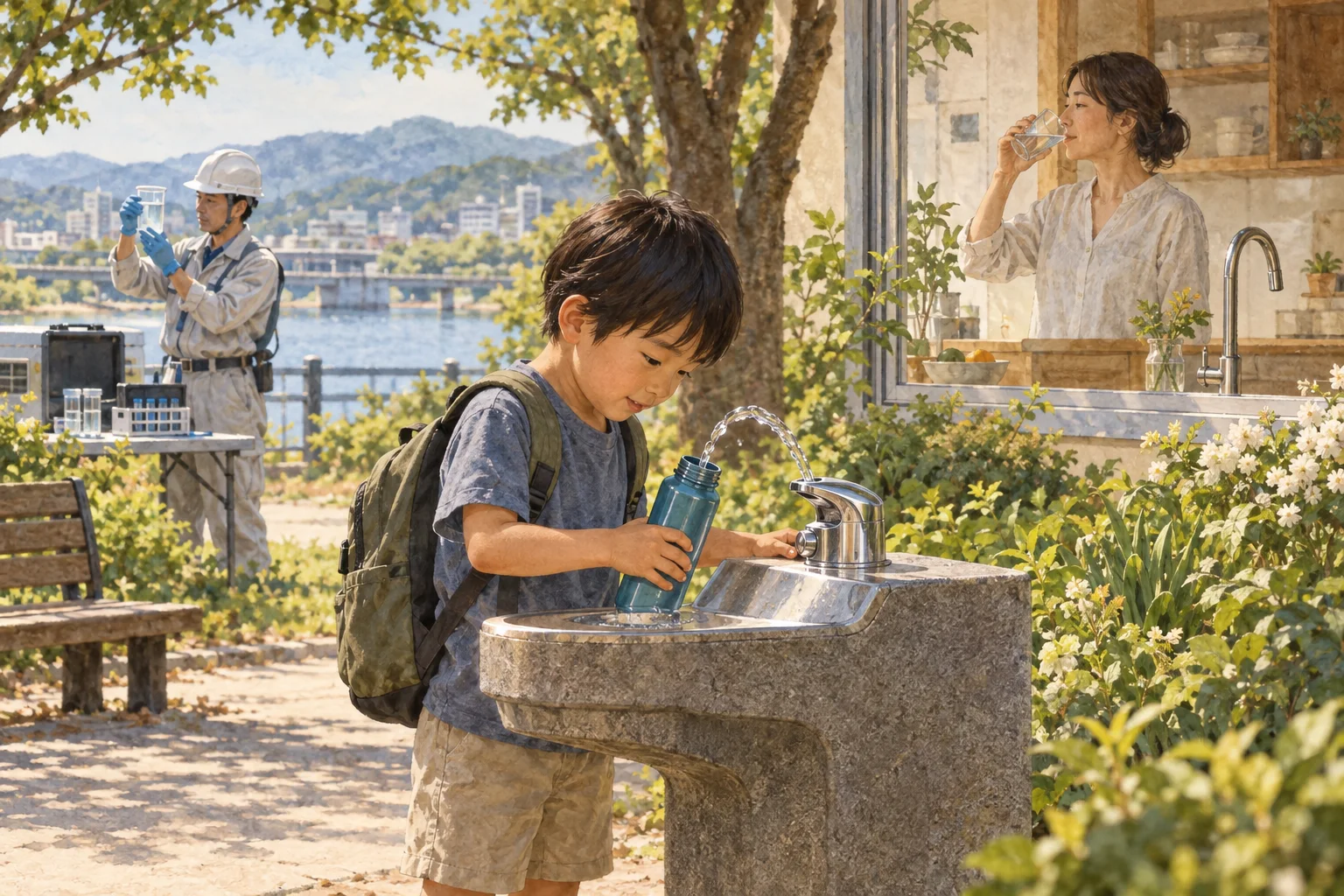
Tap water is safe to drink almost anywhere in Japan, including in public toilets and parks.
日本では公衆トイレや公園も含め、ほぼどこでも水道水をそのまま飲めます。
In 30 seconds
The standard explanation
Almost anywhere in Japan you can fill a glass from the tap and drink it. Water is treated and tested to standards set under the Waterworks Act, and suppliers are legally required to test it. Restaurants serve it free with ice, schools have drinking fountains, and many people fill bottles at home rather than buying water. Taste varies a little by region, and some people still use a filter, but safety is not the reason.
日本ではほぼどこでも蛇口から水を汲んでそのまま飲めます。水道法に基づく水質基準に従って処理と検査が行われ、水道事業者には検査が義務づけられています。飲食店は氷つきで無料で出し、学校には水飲み場があり、水を買わずに家で水筒に詰める人も多くいます。味は地域で少し違い、浄水器を使う人もいますが、理由は安全性ではありません。
As a short speech
A full paragraph you can read aloud
One of the first things visitors notice in Japan is that nobody hesitates at a tap. Water from almost any faucet, in a home, a school, a station or a public toilet, is safe to drink. This is not luck.
Water is treated and then tested against standards set under the Waterworks Act, and the utility that supplies it is legally obliged to run those tests and publish results. Most restaurants bring a glass of iced water the moment you sit down, free and unasked, and refill it without being asked again. Office workers carry a bottle they filled at the kitchen sink.
That said, Japanese people do buy bottled water, mostly for taste, for convenience, or for stockpiles in case an earthquake cuts the supply. And the system has a real problem ahead of it: the pipes laid during the rapid growth years are aging, and small towns with shrinking populations struggle to pay for replacing them.
日本を訪れた人がまず気づくことの一つは、誰も蛇口の前でためらわないことです。家庭でも学校でも駅でも公衆トイレでも、ほぼどの蛇口の水もそのまま飲めます。これは偶然ではありません。
水は処理されたうえで水道法に基づく水質基準に照らして検査され、供給する水道事業者には検査と結果の公表が義務づけられています。多くの飲食店は席に着いた瞬間に氷入りの水を、頼まなくても無料で出し、言わなくてもおかわりを注ぎます。会社員は台所の蛇口で詰めた水筒を持ち歩きます。
とはいえ日本人もペットボトルの水を買います。主に味のため、手軽さのため、そして地震で断水したときの備えのためです。そしてこの仕組みには先々の本当の課題があります。高度経済成長期に敷かれた管が古くなり、人口の減る小さな町では取り替える費用を賄いきれないのです。
Questions people actually ask
And how to answer them.
Even the water in a public toilet?
Yes, unless a sign says otherwise. The same water supply usually feeds every tap in a building. Occasionally you will see a sign meaning not for drinking, usually on a tap fed from a well or a recycled-water system, so read the sign if there is one.
はい、表示がなければ大丈夫です。建物のどの蛇口もふつうは同じ水道から来ています。まれに「飲用不可」の表示がある蛇口があり、井戸水や再利用水の系統であることが多いので、表示があれば読んでください。
Then why do Japanese people buy bottled water?
Mostly for taste and convenience, not safety. Some people dislike the faint chlorine in city water, some want cold water on the go, and many households keep bottled water as earthquake stock. Sales of home water filters are also strong for the same taste reasons.
安全のためではなく、主に味と手軽さのためです。都市の水のかすかな塩素の匂いが苦手な人もいれば、外で冷たい水が欲しい人もおり、多くの家庭は地震への備えとして買い置きしています。家庭用の浄水器が売れているのも同じく味の理由です。
Is it the same in the mountains or on small islands?
Where there is a public water supply, yes. Some remote areas and old houses use well water, which is tested separately and is not automatically covered, and mountain huts may ask you to carry your own. If a tap is fed by a well, there is usually a notice.
公営の水道があるところでは同じです。一部の山間部や古い家では井戸水を使っていて、それは別に検査されるもので自動的に同じ扱いにはならず、山小屋では自分で持参するよう求められることもあります。井戸水の蛇口にはたいてい表示があります。
A common misunderstanding
MYTHDrinkable tap water is normal everywhere, so it says nothing about Japan.
FACTIt is not the global norm, and in Japan it is the product of a legal testing regime, not just clean rivers; the aging of those pipes is now a live policy problem.
Phrases you can use
- You can drink straight from the tap here.ここでは蛇口の水をそのまま飲めます。
- The water's free, and they'll refill it.水は無料で、おかわりも注いでくれます。
- I just fill my bottle at home.水筒は家で詰めています。
- If a sign says not for drinking, don't.「飲用不可」と書いてあったら飲まないでください。
- People buy bottled water for the taste, not for safety.ペットボトルの水を買うのは安全のためではなく味のためです。
Words you need
- tap / faucet蛇口
- tap water水道水
- drinking fountain水飲み場
- water quality standards水質基準
- bottled waterペットボトルの水
- aging pipes老朽化した水道管
Watch
From YouTubeBackground (Japanese)
日本の水道水は、水道法に基づく水質基準に適合することが義務づけられ、水道事業者に検査の義務があります。浄水場では沈殿・ろ過のあと塩素で消毒し、蛇口に届くまで一定の塩素が残るようにしているため、都市によってはわずかに塩素の匂いを感じます。地域ごとに水源が違うので味には差があり、水道局が自前の水をペットボトルに詰めて販売や配布をしている自治体もあります。課題は設備の老朽化で、高度経済成長期に敷設された管が耐用年数を迎える一方、人口減少で収入が細る小規模な事業者ほど更新の費用を賄いにくい構造があります。災害時の断水に備えて水を備蓄しておくことは、防災の基本として広く勧められています。