oshibori to mizu
the wet towel and water that arrive before you order
おしぼりと水(おしぼりとみず)
In one line
The shortest answer that works
In Japanese restaurants a wet towel and a glass of water arrive before you order, at no charge.
日本の飲食店では、注文の前におしぼりと水が無料で出てきます。
In 30 seconds
The standard explanation
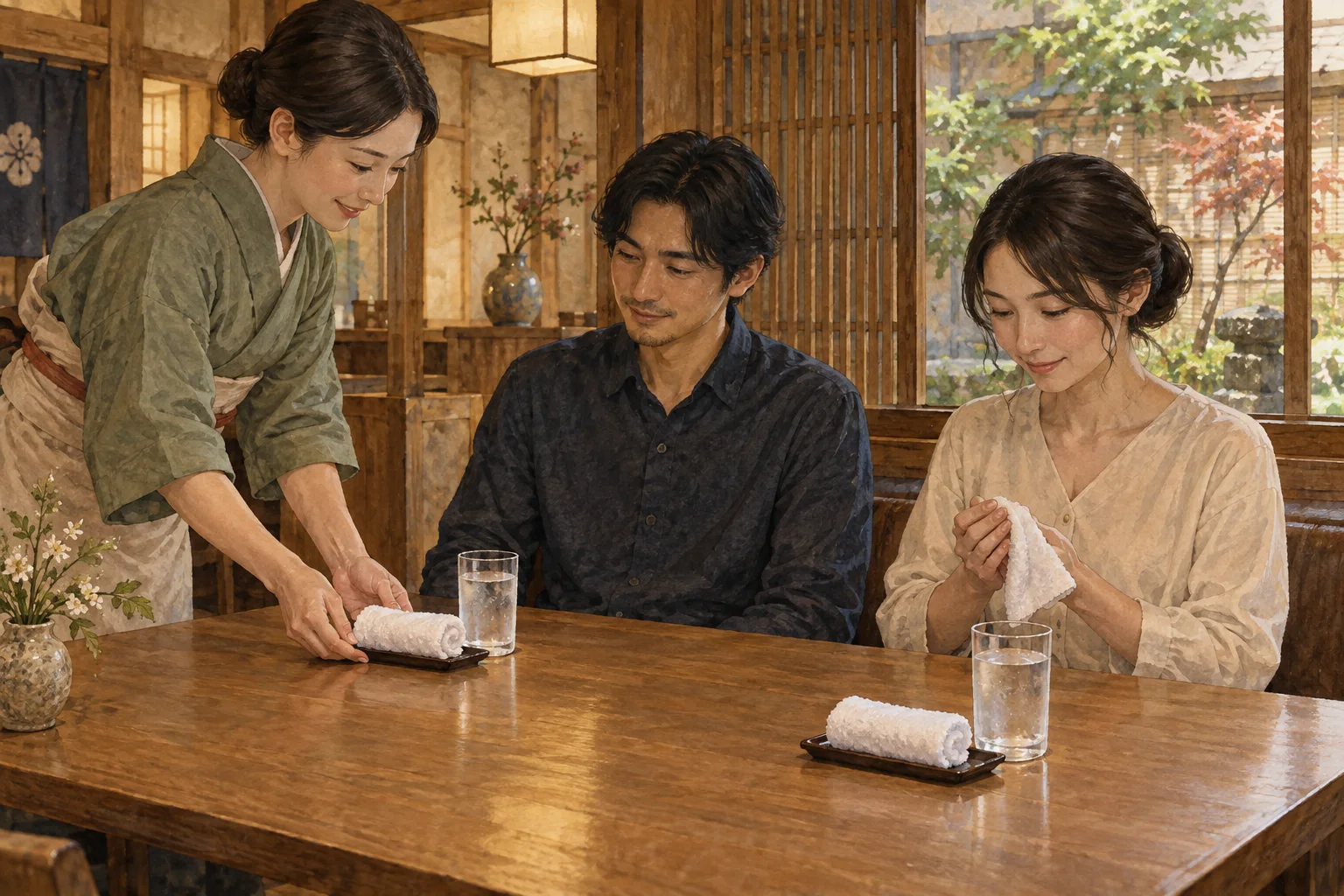
Sit down in almost any Japanese restaurant and two things appear immediately: a rolled wet towel, hot in winter and chilled in summer, and a glass of water or tea. Neither is charged for, and you do not need to ask. The towel is for your hands, not your face, and the water is refilled without being asked.
日本のほとんどの飲食店で席につくと、すぐに二つのものが出てきます。巻いたおしぼり、冬は温かく夏は冷たいもの、そして水かお茶。どちらも無料で、頼む必要もありません。おしぼりは手を拭くもので顔用ではなく、水は言わなくても注ぎ足されます。
As a short speech
A full paragraph you can read aloud
In almost any Japanese restaurant, two things arrive before you have ordered anything. The first is an oshibori, a rolled damp towel, heated in winter and chilled in summer, brought on a small tray. The second is a glass of water, or tea in many places, which will be refilled throughout the meal without you asking.
Neither appears on the bill. To a visitor from a country where restaurants charge for bottled water and a hot towel is a first-class airline feature, this is the clearest everyday example of what Japanese service looks like when there is no tipping. Nobody is doing it for a reward.
It is simply the standard. Two small points of etiquette: the towel is for your hands, and using it to wipe your face is something some older men do and many people avoid. And when you finish with it, fold it roughly and leave it on the tray rather than crumpling it on the table.
日本のほとんどの飲食店では、何も注文しないうちに二つのものが出てきます。一つはおしぼり。巻いた濡れタオルで、冬は温め、夏は冷やし、小さな受け皿に載せて運ばれます。もう一つは水、店によってはお茶で、食事のあいだ、頼まなくても注ぎ足されます。
どちらも会計には載りません。飲食店の水が有料のボトルであることも多く、温かいおしぼりが飛行機のファーストクラスの設備である国から来た方には、これはチップのない国のサービスがどういうものかを示す、最も分かりやすい日常の例です。
誰も見返りのためにやっていません。それが標準なのです。作法を二つ。おしぼりは手を拭くものです。顔を拭くのは年配の男性に見られることで、避ける人が多いです。使い終わったらざっと畳んで受け皿に戻し、テーブルに丸めて置かないようにします。
Questions people actually ask
And how to answer them.
Is the water really free?
Yes, and it is refilled without asking. Ordering tap water in a restaurant is completely normal here and carries no stigma at all.
無料ですし、頼まなくても注ぎ足されます。飲食店で水だけ頼むことも、まったく普通でうしろめたさはありません。
Can I wipe my face with the towel?
You will see older men do it. It is not forbidden, but it is considered a bit unrefined, and it is not what the towel is for. Hands only is the safe choice.
年配の男性がしているのは見かけます。禁じられてはいませんが、やや粗野とされますし、本来の用途ではありません。手だけにしておくのが無難です。
Why is it hot in winter and cold in summer?
Comfort, and it is a small demonstration that the place is paying attention. Some restaurants also scent them. The cost is real, which is why chains use disposable paper versions instead.
快適さのためであり、店が気を配っている証でもあります。香りをつける店もあります。費用はかかるので、チェーン店は紙の使い捨てを使うことが多いです。
Phrases you can use
- The towel and water are free.おしぼりとお水は無料です。
- It's for your hands, not your face.顔ではなく、手を拭くものです。
- They'll refill your water without asking.水は頼まなくても注いでくれます。
- Fold it and put it back on the tray.畳んで受け皿に戻してください。
- There's no tipping, and this is still standard.チップはありませんが、これが標準です。
Words you need
- wet towelおしぼり
- complimentary無料の、サービスの
- refill注ぎ足す
- tap water水道水
- disposable使い捨ての
Watch
From YouTubeBackground (Japanese)
おしぼりの起源は、旅人に手足を洗う濡れ布を差し出した古い接客の習わしにさかのぼるとされ、「しぼる」から名づけられた。現在は専門のリネン業者が回収・洗浄・配送を行う仕組みが全国にあり、飲食店は貸しおしぼりを使うことが多い。日本の水道水は水道法に基づく水質基準を満たしており、そのまま飲める。これは世界的には少数派で、外国人旅行者が驚く点のひとつ。飲食店で水が無料で出るのは法律上の義務ではなく商慣習だが、ほぼ全国的に定着している。近年は衛生と費用の観点から、紙おしぼりへの切り替えが進んでいる。