mugicha
cold barley tea
麦茶(むぎちゃ)
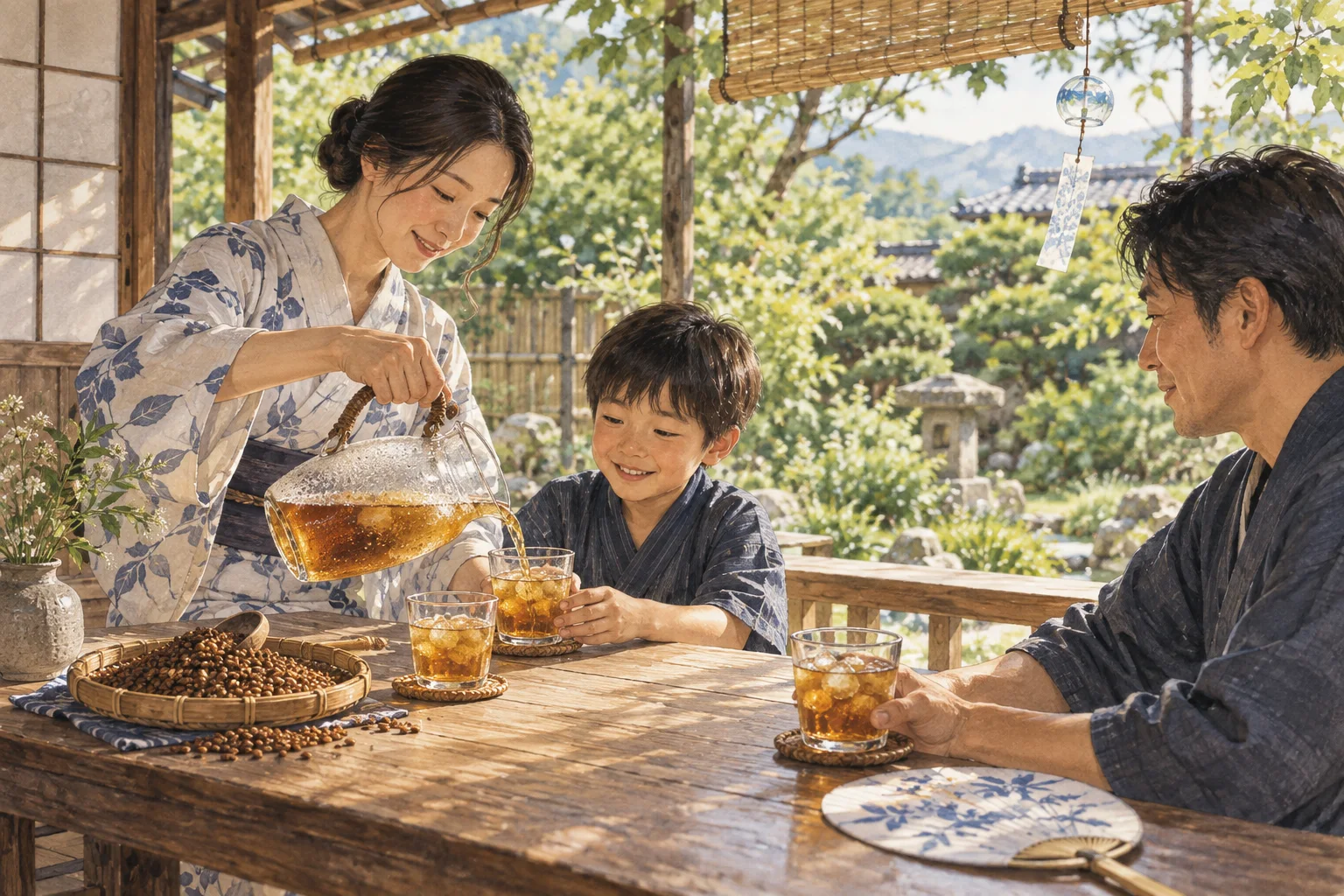
In one line
The shortest answer that works
Mugicha is cold barley tea, a caffeine-free drink kept in a pitcher in many Japanese fridges in summer.
麦茶とは冷たい大麦のお茶で、カフェインがなく、夏には日本の多くの家の冷蔵庫にポットで入っています。
In 30 seconds
The standard explanation
Mugicha is made by steeping roasted barley in water, giving a brown, slightly nutty, unsweetened drink. It contains no caffeine, so children drink it, and it is served cold all summer in homes, schools and offices. Restaurants often bring it instead of water. The most common way to make it is a large tea bag dropped into a pitcher of cold water in the fridge.
麦茶とは、煎った大麦を水に浸して作る、茶色くて少し香ばしい甘くない飲み物です。カフェインを含まないので子どもも飲み、夏の間は家庭、学校、職場で冷やして出されます。飲食店で水の代わりに出されることもよくあります。いちばん多い作り方は、大きなティーバッグを冷蔵庫の水のポットに落としておくことです。
As a short speech
A full paragraph you can read aloud
Ask a Japanese person what they drank as a child on a hot day and the answer is often mugicha, barley tea. It is not tea in the strict sense, because it contains no tea leaves. Barley grains are roasted until dark, then steeped in water, which gives a brown drink with a toasty, slightly bitter taste and no sweetness.
Because there is no caffeine, it is the default summer drink for babies, schoolchildren and anyone who wants something cold without sugar. Many families keep a plastic pitcher of it in the refrigerator from June to September and refill it constantly, using inexpensive tea bags designed for cold brewing.
Restaurants sometimes serve it instead of ice water, and sports clubs hand it out at practice. Visitors sometimes expect it to be sweet, like iced tea, and are surprised. I think its plainness is the point: it tastes like a Japanese summer afternoon.
日本人に暑い日に子どものころ何を飲んだかと聞けば、答えは麦茶であることが多いでしょう。厳密には茶ではなく、茶葉を含みません。大麦を濃い色になるまで煎り、水に浸して作る茶色い飲み物で、香ばしくわずかに苦く、甘みはありません。
カフェインがないので、赤ちゃんや小学生、砂糖なしで冷たいものが欲しい人にとって夏の定番の飲み物です。多くの家庭は六月から九月まで冷蔵庫にプラスチックのポットを入れて絶えず作り足し、水出し用の安いティーバッグを使います。
飲食店では氷水の代わりに出されることがあり、運動部は練習で配ります。外国人はアイスティーのように甘いものを期待して驚くことがあります。この素っ気なさこそが肝心で、日本の夏の午後の味がすると私は思います。
Questions people actually ask
And how to answer them.
Is it sweet?
No. It has a light roasted flavor and no sugar, so it tastes closer to a very weak, cold coffee than to iced tea. Most people do not sweeten it, and adding milk or lemon is unusual, though nothing stops you.
甘くありません。軽い香ばしさがあり砂糖は入っていないので、アイスティーよりごく薄い冷たいコーヒーに近い味です。甘くする人は少なく、牛乳やレモンを入れるのも珍しいですが、やってはいけない決まりはありません。
Why do restaurants serve it instead of water?
It is cheap, caffeine-free and refreshing, and a pitcher of it can sit on the table for self-service. It also signals summer. In cooler months the same restaurant usually switches back to hot green tea or water.
安く、カフェインがなく、さっぱりしていて、ポットごとテーブルに置いてセルフサービスにできるからです。夏の合図にもなります。涼しい季節には同じ店がたいてい熱い緑茶か水に戻します。
Can I drink it hot?
Yes, and it was originally drunk hot. In winter some families make it warm, and it is sometimes served hot at ryokan. Cold is simply the modern habit, made easy by cold-brew tea bags and refrigerators.
はい、もともとは熱くして飲むものでした。冬に温かくして飲む家庭もあり、旅館で熱い麦茶が出ることもあります。冷たいのは単に今の習慣で、水出し用ティーバッグと冷蔵庫のおかげで簡単になったものです。
A common misunderstanding
MYTHMugicha is a kind of green tea.
FACTIt contains no tea leaves at all; it is roasted barley steeped in water, which is why it has no caffeine and a brown color.
Phrases you can use
- There's barley tea in the fridge; help yourself.冷蔵庫に麦茶があるから、自由に飲んでね。
- It's caffeine-free, so it's fine for kids.カフェインが入っていないので子どもにも大丈夫です。
- It's not sweet; it's more like a roasted grain drink.甘くはなくて、煎った穀物の飲み物という感じです。
- Could we have some barley tea instead of water?水の代わりに麦茶をもらえますか。
- Just drop the bag in cold water and wait an hour.袋を冷たい水に入れて一時間待つだけです。
Words you need
- barley大麦
- roasted煎った・焙煎した
- caffeine-freeカフェインを含まない
- pitcherポット・ピッチャー
- cold brew水出し
Watch
From YouTubeBackground (Japanese)
麦茶は煎った大麦を煮出すか水出しにした飲み物で、茶葉を使わないためカフェインを含みません。江戸時代には「麦湯」として熱いものが屋台などで売られていたとされ、冷やして飲む習慣は冷蔵庫が普及した戦後に広まりました。1960年代ごろから家庭用のティーバッグが売られ、さらに水出し用の製品が出て、夏の冷蔵庫のポットが定番になりました。乳児向けの麦茶製品もあり、離乳期の飲み物として使われます。ペットボトルの麦茶は夏の売り場の主力で、コンビニやスーパーでは緑茶と並んで大容量のものが並びます。「麦茶」は俳句で夏の季語の一つとされ、風鈴や蚊取り線香と並ぶ日本の夏の生活の小道具として親しまれています。