kakigori
shaved ice
かき氷(かきごおり)
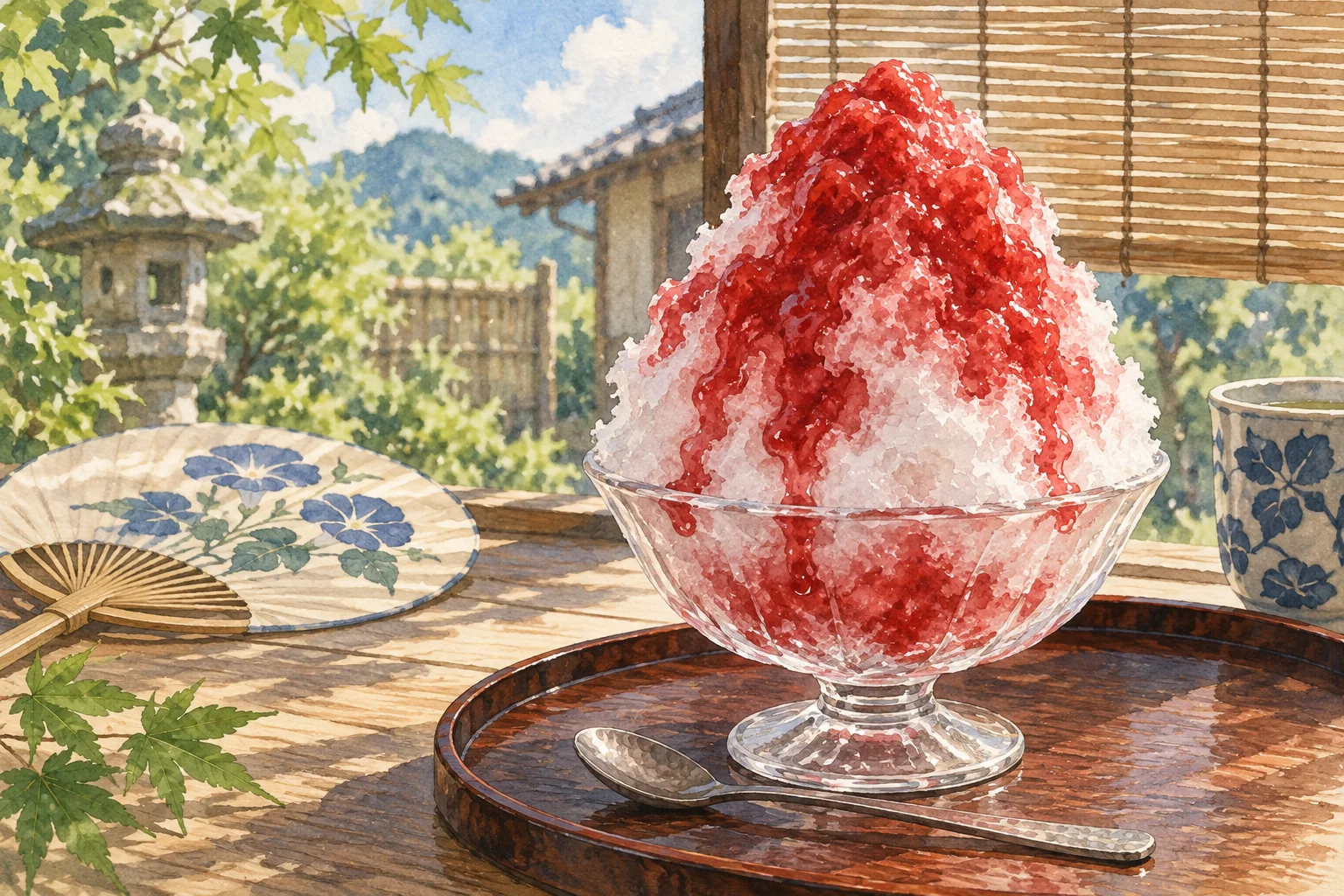
In one line
The shortest answer that works
Kakigori is finely shaved ice with syrup, eaten all summer and recorded in Japan a thousand years ago.
かき氷とは細かく削った氷に蜜をかけたもので、夏じゅう食べられ、千年前の書物にも記されています。
In 30 seconds
The standard explanation
Kakigori is ice shaved into fine flakes and topped with flavored syrup, often with condensed milk or sweet bean paste. A white flag with the red character for ice above blue waves marks a shop that sells it. Modern specialist shops use slowly frozen blocks of ice shaved thin enough to melt on the tongue.
かき氷は氷を細かく削り、色のついた蜜をかけたもので、練乳やあんを添えることもよくあります。白地に赤い「氷」の字と青い波を染めた旗が、売っている店の目印です。近年の専門店は、ゆっくり凍らせた氷の塊を、舌の上で溶けるほど薄く削ります。
As a short speech
A full paragraph you can read aloud
Kakigori is shaved ice, and it is far older in Japan than the machine that makes it. A collection of court essays written around the year 1000 describes shaved ice served with a sweet vine syrup in a metal bowl, which at the time meant ice cut in winter and stored in an ice house, so it was a luxury of the aristocracy. Now it is summer street food, marked by a white flag with the red character for ice, and sold at festivals, pools and old sweet shops.
The syrups look dramatic, strawberry red, melon green, blue Hawaii, and here is a detail Japanese people enjoy: several of the classic syrups are essentially the same flavor with different coloring and aroma, so the difference you taste is mostly in your eyes. Specialist shops have taken it much further, using ice frozen slowly over days, shaved into something closer to snow.
かき氷は削った氷で、それを作る機械よりずっと古くから日本にあります。西暦千年ごろに書かれた宮廷の随筆に、金属の器に盛った削り氷に甘い蔓の蜜をかけたものが出てきます。当時それは冬に切り出して氷室に蓄えた氷を使うことを意味し、貴族の贅沢でした。
今では夏の街の食べ物で、白地に赤く「氷」の字を染めた旗が目印になり、祭りやプール、古い甘味処で売られます。蜜の色は鮮やかです。苺の赤、メロンの緑、青いブルーハワイ。ここに日本人が面白がる事実があります。
定番の蜜のいくつかは、実質的に同じ味に色と香りを変えただけのもので、感じている違いの多くは目のほうにあります。専門店はこれをさらに先へ進め、何日もかけてゆっくり凍らせた氷を、雪に近いものへと削っています。
Questions people actually ask
And how to answer them.
Do the different syrups actually taste different?
Less than you would think. Several of the classic ones share a base and differ mainly in color and added aroma, which is a well-known piece of trivia in Japan. Modern specialist shops use real fruit and the difference is real.
思うほどは違いません。定番のいくつかは同じ素地で、主に色と加えた香りが違うだけで、これは日本ではよく知られた豆知識です。今の専門店は本物の果実を使うので、違いは本物です。
What is the flag with the character on it?
It is the standard sign for a shop selling shaved ice: a white banner with the character for ice written large in red, often above a blue wave pattern. If you see one hanging, the shop sells shaved ice.
かき氷を売る店の定番の目印で、白地に赤く「氷」の字を大きく書き、青い波の模様を添えた旗です。これが掛かっていれば、その店でかき氷が食べられます。
Phrases you can use
- That flag means they sell shaved ice.あの旗はかき氷を売っている印です。
- Eat it slowly or you'll get brain freeze.ゆっくり食べないと頭が痛くなります。
- Condensed milk on top is the usual extra.練乳を追加するのが定番です。
- It's been eaten here for a thousand years.千年前から食べられています。
Words you need
- shaved iceかき氷
- syrup蜜
- condensed milk練乳
- ice house氷室
Watch
From YouTubeBackground (Japanese)
清少納言の『枕草子』には、削った氷に甘葛の蜜をかけ、新しい金属の器に盛ったものが「あてなるもの」として挙げられています。冷凍の技術がなかった時代、氷は冬に切り出して氷室に蓄えたもので、宮中の贅沢でした。7月25日は「かき氷の日」とされ、かつて日本最高気温を記録した日にちなむと説明されます。「宇治金時」は抹茶の蜜にあずきを合わせたもので、甘味処の定番です。台湾や韓国の削り氷とは、氷の削り方と具の載せ方が異なります。