furin
wind chimes
風鈴(ふうりん)
In one line
The shortest answer that works
Furin are small wind chimes hung at the window in summer to make the heat feel bearable.
風鈴とは、夏に窓辺に吊るして暑さをしのぐ、小さな風の鈴です。
In 30 seconds
The standard explanation
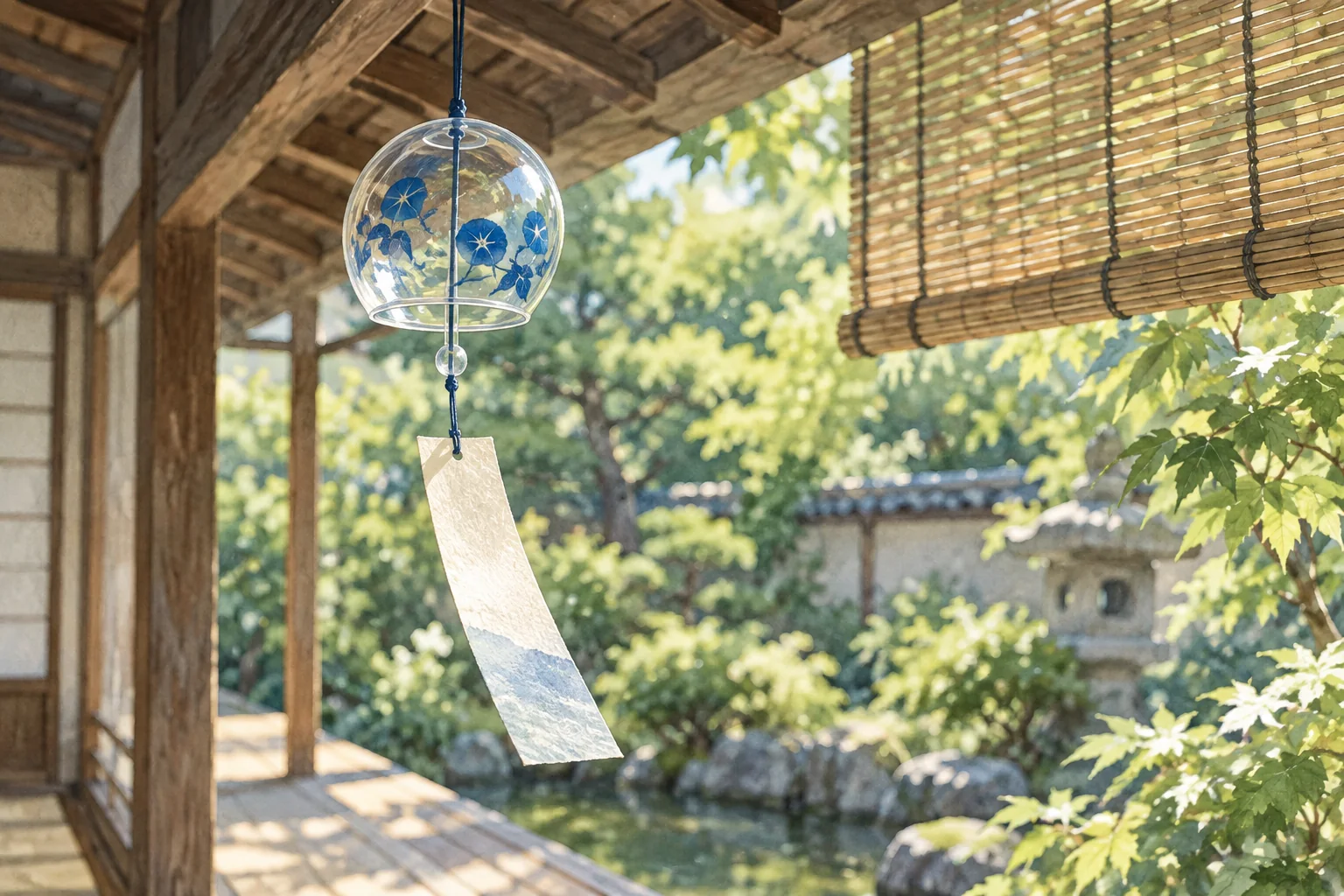
A furin is a small wind chime, usually glass or cast iron, hung at a window or eave in summer. A paper strip below it catches the breeze and swings the clapper. It does not lower the temperature, but the sound is associated with moving air, so people report feeling cooler. Shrines and temples hold summer events with thousands of them.
風鈴は小さな風の鈴で、たいていガラスか鋳鉄でできていて、夏に窓や軒に吊るします。下の短冊が風を受けて舌を揺らします。気温が下がるわけではありませんが、その音が風と結びついているため、人は涼しく感じると言います。夏には何千個も吊るす催しを開く寺社もあります。
As a short speech
A full paragraph you can read aloud
A furin is a summer wind chime, hung at a window or under the eaves. It is usually blown glass, painted from the inside, or cast iron from the ironware towns of the north, and a paper strip hangs below to catch the breeze. The honest position is that it does nothing to the temperature.
What it does is tell you that air is moving, and in a Japanese summer that information is welcome enough that people genuinely feel cooler. The custom descends from bronze bells hung at temple eaves to ward off bad influences, and the shift from protection to pleasure happened as glass became affordable in the Edo period.
There is a modern complication: in dense housing, a neighbor's chime at three in the morning is not poetic, and this is now a recognized small source of friction, so many people take them in at night.
風鈴は夏の風の鈴で、窓辺や軒下に吊るします。たいていは内側から絵を描いた吹きガラスか、北の鋳物の町の鋳鉄でできていて、下には風を受ける短冊が下がっています。正直に言えば、気温には何の影響もありません。
風鈴がするのは、空気が動いていると知らせることで、日本の夏ではその知らせがありがたいので、人は本当に涼しく感じます。この習慣は、よくないものを避けるために寺の軒に吊るされた青銅の鈴に由来し、守りから楽しみへの変化は、江戸時代にガラスが手に入りやすくなったころに起きました。
現代ならではの難しさもあります。住宅が密集した土地では、午前三時に隣家の風鈴が鳴るのは風流ではありません。今では小さな摩擦のもととして知られていて、夜はしまう人も多くいます。
Questions people actually ask
And how to answer them.
Does it actually make you cooler?
Not physically. The usual explanation is that the association is learned: the sound means wind, wind means relief, so you respond to the expectation. People who did not grow up with the sound often say they do not feel the same effect.
物理的には涼しくなりません。ふつうは、結びつきが学習されたものだと説明されます。音は風を意味し、風は涼しさを意味するので、その期待に反応するというわけです。この音に親しまずに育った人からは、同じようには感じないという声もよく聞かれます。
Do neighbors mind?
Sometimes, yes. Noise complaints over wind chimes are a real if minor category in dense housing, and the polite practice is to bring it in at night or hang it where it is sheltered. Do not assume a balcony in an apartment block is fine.
苦情が出ることもあります。住宅が密集した場所では、風鈴の音をめぐる騒音の相談は小さいながら実在します。夜はしまう、風の当たりすぎない場所に吊るす、というのが礼儀です。集合住宅のベランダなら大丈夫だとは考えないでください。
Phrases you can use
- The sound tells you there's a breeze.音で風があるのが分かります。
- The paper strip catches the wind.短冊が風を受けます。
- We take it in at night.夜はしまいます。
- The glass ones are painted from inside.ガラスのものは内側から絵を描きます。
Words you need
- wind chime風鈴
- eaves軒
- breezeそよ風
- blown glass吹きガラス
Watch
From YouTubeBackground (Japanese)
風鈴の原型は、中国から伝わり寺の軒に吊るされた青銅の風鐸だとされ、もとは魔除けの意味がありました。江戸時代にガラスが広まり、庶民が吊るす江戸風鈴が生まれます。岩手の南部風鈴は鋳鉄製で、澄んで長く響く音が特徴です。夏に境内に数千個の風鈴を吊るす寺社の催しは各地で行われ、短冊に願いを書いて吊るす形式のものもあります。環境省の「残したい日本の音風景100選」には、風鈴に関わる風景も選ばれています。