amido
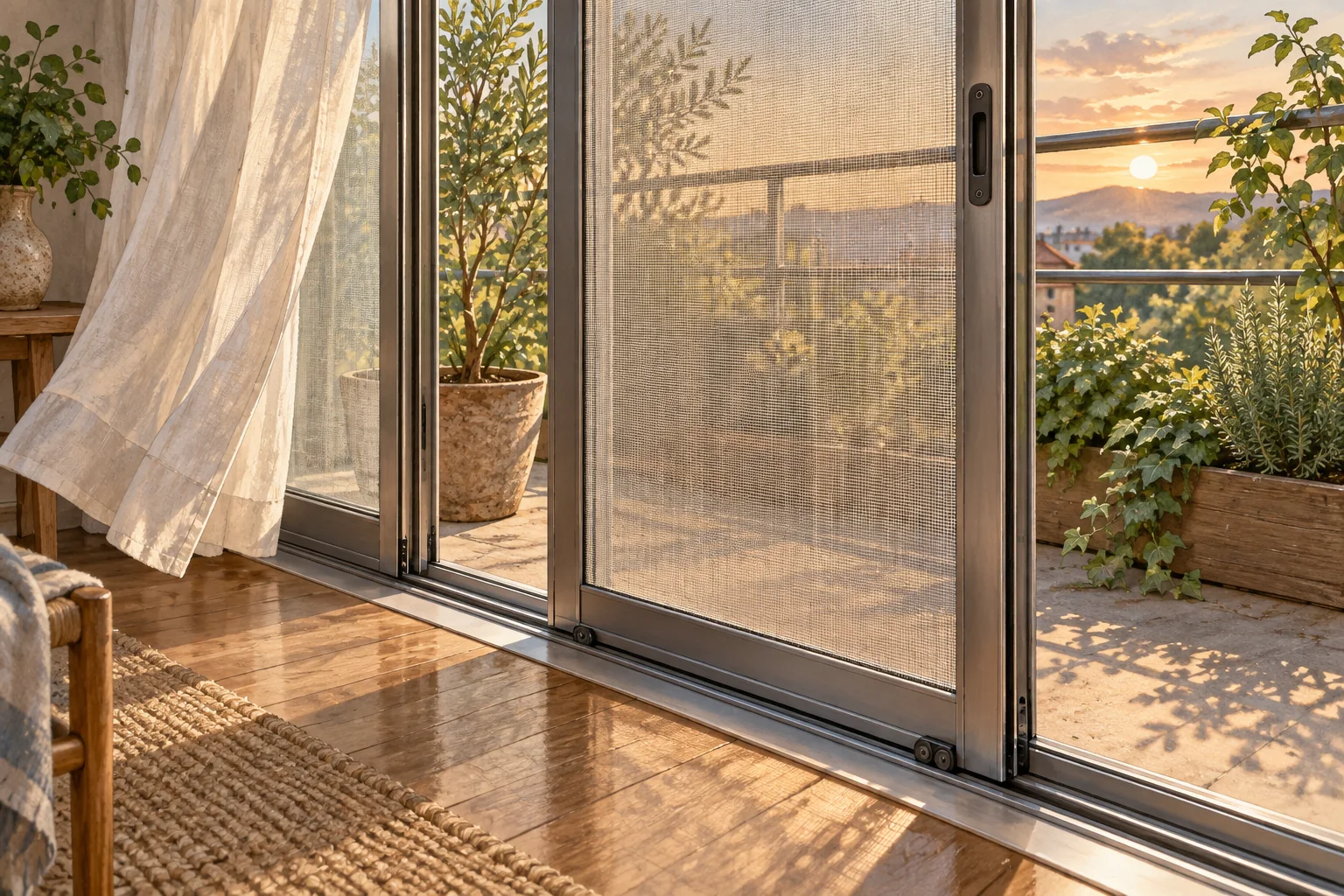
the sliding screen door
網戸(あみど)
In one line
The shortest answer that works
Japanese windows have a second sliding screen so you can open them without letting insects in.
日本の窓にはもう一枚の引き戸があり、虫を入れずに開けられるようになっています。
In 30 seconds
The standard explanation
An amido is a fine mesh screen that slides across a window or balcony door. Because Japanese summers are humid and air conditioning is expensive to run, people open the house in the evening and rely on the screen to keep mosquitoes out. Screens are removable, and washing them is a normal chore.
網戸は、窓やベランダの戸に沿って動く細かい網の戸です。日本の夏は湿気が多く、冷房の電気代もかかるため、夕方に家を開け放ち、蚊を防ぐのは網戸にまかせます。網戸は取り外せて、洗うのはふつうの家事の一つです。
As a short speech
A full paragraph you can read aloud
The amido is a small piece of Japanese housing that visitors rarely notice until it matters. Almost every window and balcony door has a second track holding a fine mesh screen, so a house can be opened up in the evening without filling with mosquitoes.
This matters because Japanese summers are humid, and the traditional response to heat has been ventilation rather than sealing the house: windows on opposite sides are opened to pull air through. Screens are designed to be removed, and washing them, usually with a brush on the balcony, is a normal seasonal chore.
Two practical notes for anyone staying here. The screen and the glass door slide on different tracks, so if the screen is on the wrong side you will open the window straight into the gap, which is how mosquitoes get in. And a torn screen is easy to patch with tape sold at any home center.
網戸は日本の住まいの小さな部品で、必要になるまで訪日客はめったに気づきません。ほとんどの窓やベランダの戸には、細かい網を張った戸のためのもう一本の溝があり、夕方に家を開け放っても蚊が入りません。これが大事なのは、日本の夏が湿気を含むからです。
暑さへの昔ながらの応じ方は、家を閉めきることではなく風を通すことでした。向かい合う窓を開けて、空気を引き抜くのです。網戸は外せるように作られており、ベランダでブラシを使って洗うのは季節の家事の一つです。
ここに滞在する人への実用的な注意を二つ。網戸とガラス戸は別の溝を走るので、網戸が反対側にあると、窓を開けたときにそのまま隙間が空きます。蚊が入るのはそこからです。破れた網は、ホームセンターで売っている補修テープで簡単にふさげます。
Questions people actually ask
And how to answer them.
Why not just use air conditioning?
People do, but electricity is expensive and many prefer fresh air in the evening when temperatures drop. Opening the house for an hour before sleeping is a common habit.
使いますが、電気代が高く、気温の下がる夕方には外の空気を入れたい人が多いのです。寝る前の一時間ほど家を開ける習慣はよくあります。
How do mosquitoes still get in?
Usually because the screen is on the same side as the opened glass door, leaving a gap at the frame. Slide the screen to the side you are opening, and check the brush seal along its edge.
たいていは、開けたガラス戸と網戸が同じ側にあって、枠のところに隙間ができているからです。開ける側に網戸を寄せ、縁の毛の部分がすり切れていないか確かめてください。
Can I take the screen out to clean it?
Yes. Lift it slightly and pull the bottom toward you; most screens come out easily. Wash it with water and a soft brush, dry it, and slide it back on the same track.
できます。少し持ち上げて下側を手前に引けば、たいていの網戸は簡単に外れます。水とやわらかいブラシで洗い、乾かして、同じ溝に戻します。
Phrases you can use
- Close the screen, not just the window.窓だけでなく網戸も閉めてください。
- The screen has a small tear.網戸が少し破れています。
- Let's get some air through the house.風を通しましょう。
- The mosquitoes are bad this evening.今晩は蚊が多いです。
- I'll wash the screens this weekend.今週末に網戸を洗います。
Words you need
- insect screen網戸
- to ventilate風を通す
- mosquito蚊
- sliding trackサッシの溝
- humid蒸し暑い
Watch
From YouTubeBackground (Japanese)
日本の住宅では、アルミサッシの窓に網戸用の溝が設けられているのがふつうです。夏の暑さに対して、伝統的には風を通すことで対応してきた歴史があり、簾や葦簀とともに網戸はその延長にあります。網の材質はポリプロピレンやグラスファイバーが多く、色の濃いもののほうが外から見えにくく、内からは見通しがよくなります。網戸は外して洗えるように作られており、破れは市販の補修テープや張り替えキットで直せます。蚊取り線香と組み合わせて使う家庭もあります。