ramen
Chinese-style noodle soup, remade in Japan
ラーメン(らーめん)
In one line
The shortest answer that works
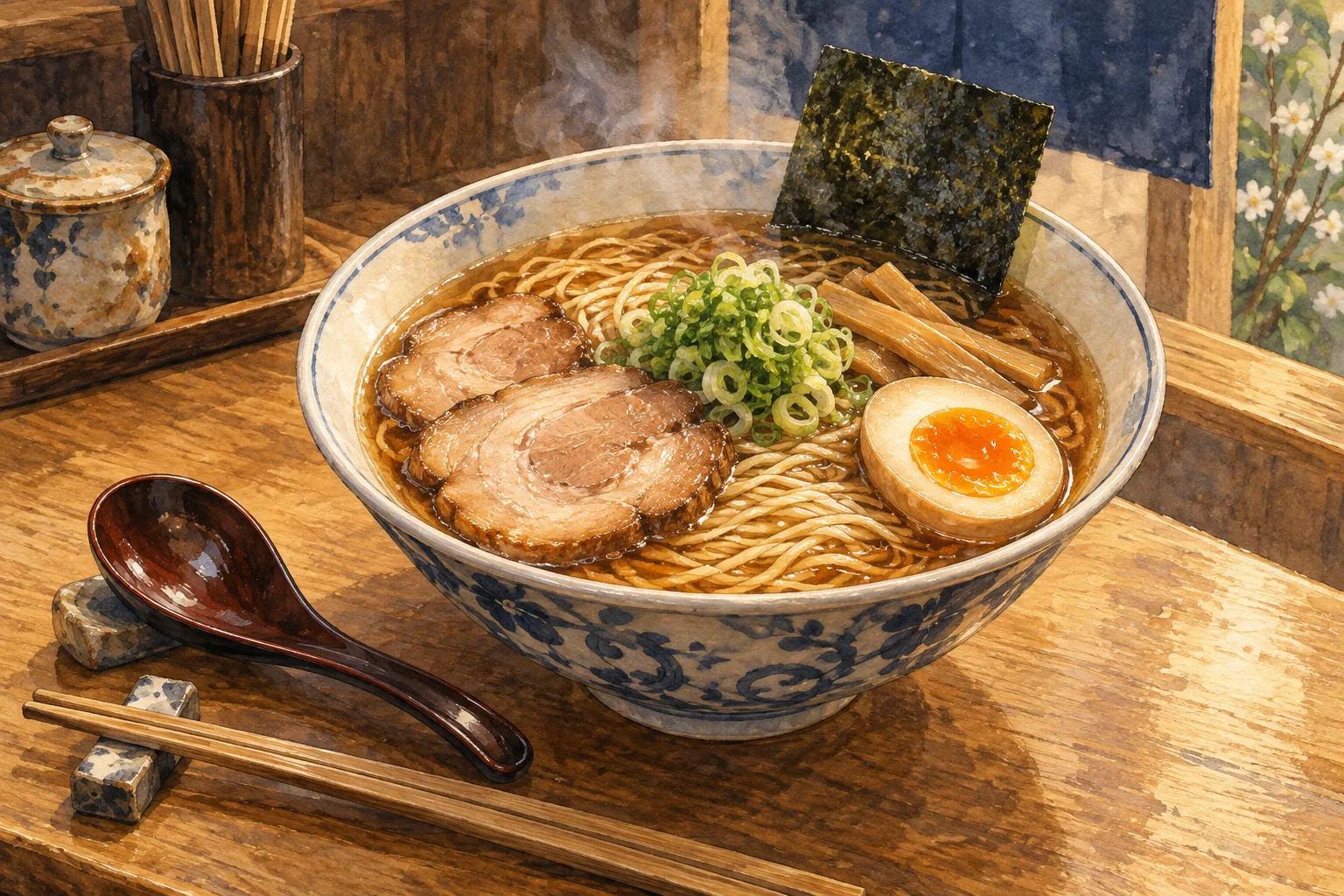
Ramen is a wheat noodle soup that came from China and was reinvented in Japan.
ラーメンは中国から伝わり、日本で作り変えられた小麦の麺料理です。
In 30 seconds
The standard explanation
Ramen is wheat noodles in a seasoned broth, with toppings like pork, egg and spring onion. It arrived from China, probably in the late 1800s, and became a nationwide food after the Second World War when American wheat was plentiful. Every region has its own version, and Japanese people argue about them seriously. It is cheap, fast food, not formal cuisine.
ラーメンは、味つけしたスープに小麦の麺を入れ、豚肉・卵・ねぎなどをのせた料理です。中国から、おそらく1800年代後半に伝わり、戦後に小麦が豊富になったことで全国的な食べものになりました。地域ごとに独自の型があり、日本人はそれについて真剣に議論します。安価な大衆食であって、正式な料理ではありません。
As a short speech
A full paragraph you can read aloud
Ramen is probably the Japanese food foreigners love most, and it is worth being accurate about it. It is not a traditional Japanese dish. Wheat noodles in soup came from China, and the word itself is generally thought to come from Chinese.
What made ramen Japanese was what happened after the Second World War, when cheap American wheat flooded the country and noodle stalls spread everywhere. From there, each region built its own version: heavy pork broth in Fukuoka, miso in Sapporo, soy sauce in Tokyo.
Today there are thousands of shops, and people queue for an hour outside the good ones. One thing to know is that ramen is fast food. You eat it, you leave, and the whole visit takes fifteen minutes. Slurping is normal, and nobody will look at you.
ラーメンはおそらく外国の方がいちばん好きな日本の食べものですが、説明は正確にしたいところです。日本の伝統料理ではありません。スープに小麦の麺を入れるものは中国から来ましたし、語そのものも中国語に由来するとされます。
ラーメンを日本のものにしたのは第二次世界大戦後の状況でした。安いアメリカの小麦が大量に入り、屋台が全国に広がったのです。そこから各地が独自の型を作りました。福岡の濃い豚骨、札幌の味噌、東京の醤油。
今では何千という店があり、評判の店には1時間並びます。知っておいてほしいのは、ラーメンはファストフードだということです。食べて、出る。滞在は15分ほどです。音を立ててすするのは普通で、誰も見ていません。
Questions people actually ask
And how to answer them.
Is slurping really okay?
Yes, for noodles and soup. It cools the noodles as they go in and is not considered rude. Doing it with anything else, like rice or curry, is a different matter.
麺とスープなら大丈夫です。すすることで麺が冷めますし、無作法とは見なされません。ご飯やカレーで同じことをするのは別の話です。
Why do I have to buy a ticket from a machine?
It lets one person run the shop and keeps the queue moving. You choose on the machine, hand the ticket over, and nobody has to take an order or handle money at the counter.
一人で店を回せて、行列がさばけるからです。券売機で選び、券を渡せば、注文も会計もカウンターで発生しません。
Should I drink all the soup?
You can, and shop owners are pleased when you do, but it is very salty and plenty of Japanese people leave it. There is no rule either way.
飲みきっても構いませんし、店主は喜びます。ただ塩分はかなり高く、残す日本人も多いです。どちらでも決まりはありません。
A common misunderstanding
MYTHRamen is an ancient Japanese dish.
FACTIt arrived from China, became widespread only after the Second World War, and instant ramen was invented in 1958. It is one of the newest things people think of as traditional Japanese food.
Phrases you can use
- Buy your ticket from the machine by the door.入口の券売機で食券を買ってください。
- Slurping is completely normal here.ここでは音を立ててすするのが普通です。
- Each region has its own style of broth.地域ごとにスープの型が違います。
- It's fast food — people eat and leave.ファストフードなので、食べたらすぐ出ます。
- You don't have to finish the soup.スープは飲みきらなくて大丈夫です。
Words you need
- brothだし、スープ
- slurp音を立ててすする
- ticket machine券売機
- topping具、トッピング
- regional variation地域ごとの違い
Watch
From YouTubeBackground (Japanese)
インスタントラーメンは1958年、安藤百福が開発した「チキンラーメン」が最初とされ、1971年にはカップ麺が発売された。日本のラーメン店の数は2万軒を超えるとされ、ミシュランガイドの掲載店も出ている。地域の型としては、札幌の味噌、喜多方・佐野などの醤油、博多の豚骨、和歌山・徳島などがよく知られる。「ラーメン」という表記は戦後に広まったもので、それ以前は「支那そば」「中華そば」と呼ばれた。今でも「中華そば」を名乗る店は多い。なお家系・二郎系といった呼び方は特定の店に由来する系統の名称で、伝統的な分類ではない。