soba and udon
the two traditional Japanese noodles
そばとうどん(そばとうどん)
In one line
The shortest answer that works
Soba and udon are thin buckwheat noodles and thick wheat noodles, and Japan is divided over which is better.
そばとうどんとは、そば粉の細い麺と小麦の太い麺で、どちらが良いかで日本が分かれる二つの麺です。
In 30 seconds
The standard explanation
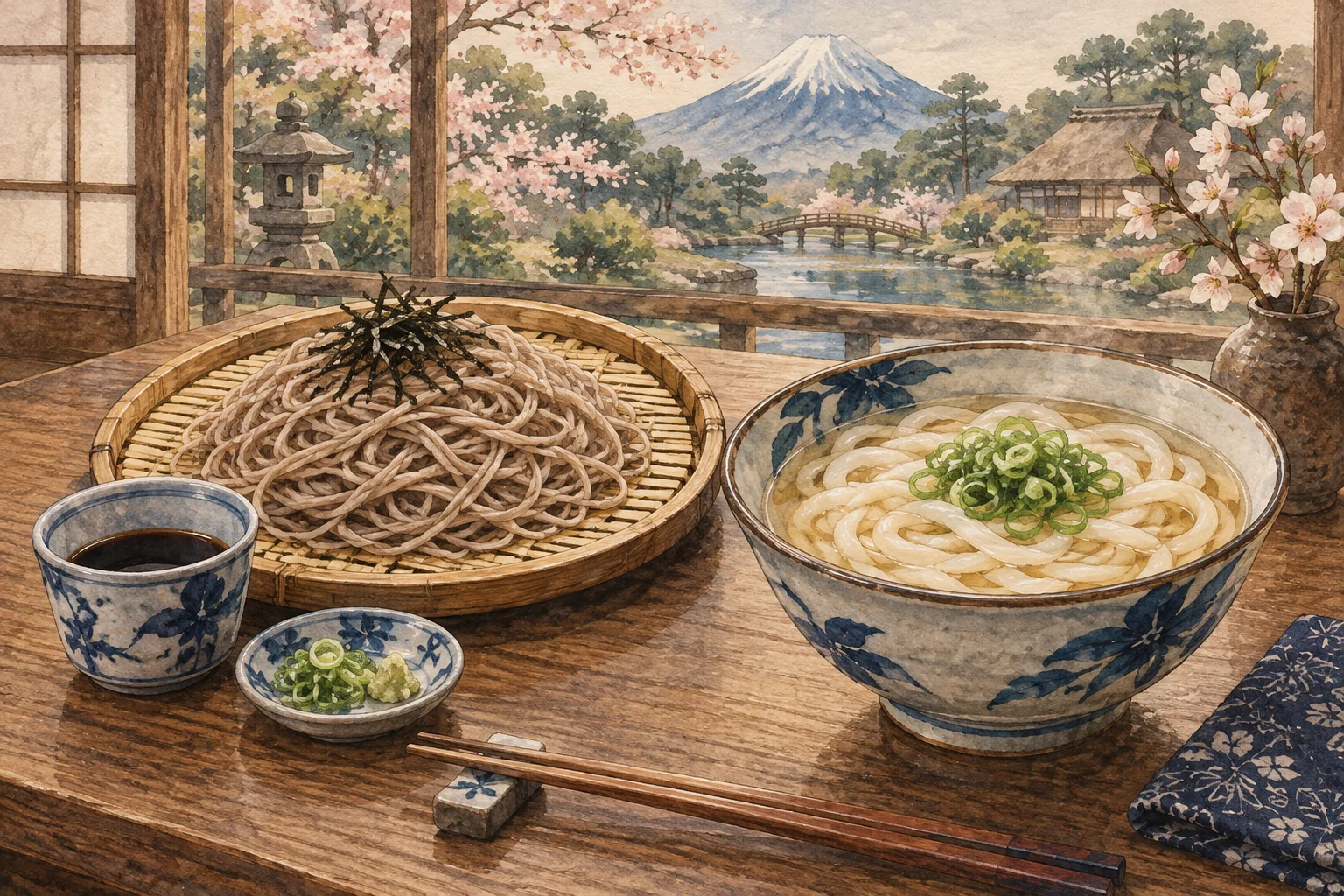
Soba are thin brown noodles made from buckwheat, served hot in broth or cold with a dipping sauce. Udon are thick, white, chewy wheat noodles, usually served hot. Eastern Japan leans toward soba and a dark soy broth, western Japan toward udon and a pale broth. The same dish genuinely tastes different depending on where you order it.
そばはそば粉で作る細い茶色の麺で、温かいつゆでも、冷やしてつけつゆでも食べます。うどんは太くて白く、もちもちした小麦の麺で、たいてい温かくして食べます。東日本はそばと濃い色のつゆ、西日本はうどんと薄い色のつゆに寄ります。同じ料理でも、注文する場所によって本当に味が違います。
As a short speech
A full paragraph you can read aloud
Japan has two traditional noodles that predate ramen by centuries. Soba are thin and brownish, made from buckwheat, and can be eaten hot in broth or cold on a bamboo tray with a small cup of dipping sauce. Udon are thick, white and chewy, made from wheat, and are usually served hot.
The geography matters. Eastern Japan, and Tokyo in particular, is soba country, and the broth there is dark, made with a strong soy sauce. Western Japan, especially around Osaka, is udon country, and the broth is pale gold, made with light soy sauce and more kelp.
If you order the same dish in both cities, the bowl will look like two different foods. There is one detail worth mentioning for visitors: you are expected to make noise. Slurping cools the noodles as they go in and is completely normal, and at a standing soba shop at a station, the whole room sounds like it.
日本には、ラーメンより何世紀も古い麺が二つあります。そばはそば粉で作る細い茶色の麺で、温かいつゆでも、せいろに盛って冷たいままつけつゆでも食べます。うどんは小麦で作る太く白いもちもちした麺で、たいてい温かくして出されます。
地理が効いてきます。東日本、とくに東京はそばの土地で、つゆは濃口醤油の黒いものです。西日本、とくに大阪あたりはうどんの土地で、つゆは薄口醤油と昆布の効いた金色です。
同じ料理を両方の都市で頼むと、別の食べものに見えます。訪日の方に伝えておきたい点が一つ。音を立ててよいのです。すすることで麺が冷めますし、まったく普通のことです。駅の立ち食いそば屋では、店じゅうがその音で満ちています。
Questions people actually ask
And how to answer them.
Why is the broth a different color in Tokyo and Osaka?
Different soy sauce. Kanto uses dark koikuchi soy sauce, Kansai uses pale usukuchi, which is actually saltier but lighter in color. The Kansai broth also leans more on kelp than on dried fish.
醤油が違います。関東は濃口、関西は薄口。薄口は色が淡いぶん塩分はむしろ高めです。関西のつゆは鰹より昆布に寄っています。
What is the hot water they bring at the end?
Sobayu, the water the soba was boiled in. You pour it into your leftover dipping sauce and drink it. It carries nutrients from the buckwheat and is part of the meal.
そば湯です。そばを茹でた湯で、残ったつゆに注いで飲みます。そばの栄養が溶けており、食事の一部です。
Is soba gluten-free?
Usually not. Most soba contains wheat flour as a binder; pure buckwheat soba, juwari soba, exists but is a minority. Buckwheat is also a serious allergen in Japan and is labeled.
たいてい違います。多くのそばはつなぎに小麦粉を使います。十割そばもありますが少数です。なお日本ではそばは重大なアレルゲンとして表示義務があります。
Phrases you can use
- Soba is buckwheat, udon is wheat.そばはそば粉、うどんは小麦です。
- The broth is much darker in Tokyo.東京のつゆはずっと色が濃いです。
- Slurping is normal — it cools the noodles.すするのは普通です。麺が冷めます。
- Pour the cooking water into the leftover sauce.残ったつゆにそば湯を注いでください。
- We eat soba on New Year's Eve.大晦日にはそばを食べます。
Words you need
- buckwheatそば(蕎麦)
- chewyこしのある、もちもちした
- dipping sauceつけつゆ
- brothつゆ、だし汁
- allergenアレルゲン
Watch
From YouTubeBackground (Japanese)
そばが現在の麺の形(そば切り)で食べられるようになったのは16〜17世紀ごろとされ、それ以前はそばがきなどの形で食べられていた。江戸ではそばが、大阪ではうどんが定着した背景として、水質や醤油の生産地の違いが挙げられる。関東の濃口醤油は野田・銚子、関西の薄口醤油は龍野が産地。香川県は「うどん県」を自称し、一人あたりのうどん消費量が突出している。立ち食いそば屋は、駅の構内やホームで広く親しまれてきた。そばアレルギーは重篤な症状を起こすことがあり、食品表示法で特定原材料8品目のひとつに指定されている。