dashi
the stock at the base of Japanese cooking
出汁(だし)
In one line
The shortest answer that works
Dashi is the light stock that sits under a huge number of Japanese dishes.
出汁は、非常に多くの日本料理の土台になっている、澄んだだしのことです。
In 30 seconds
The standard explanation
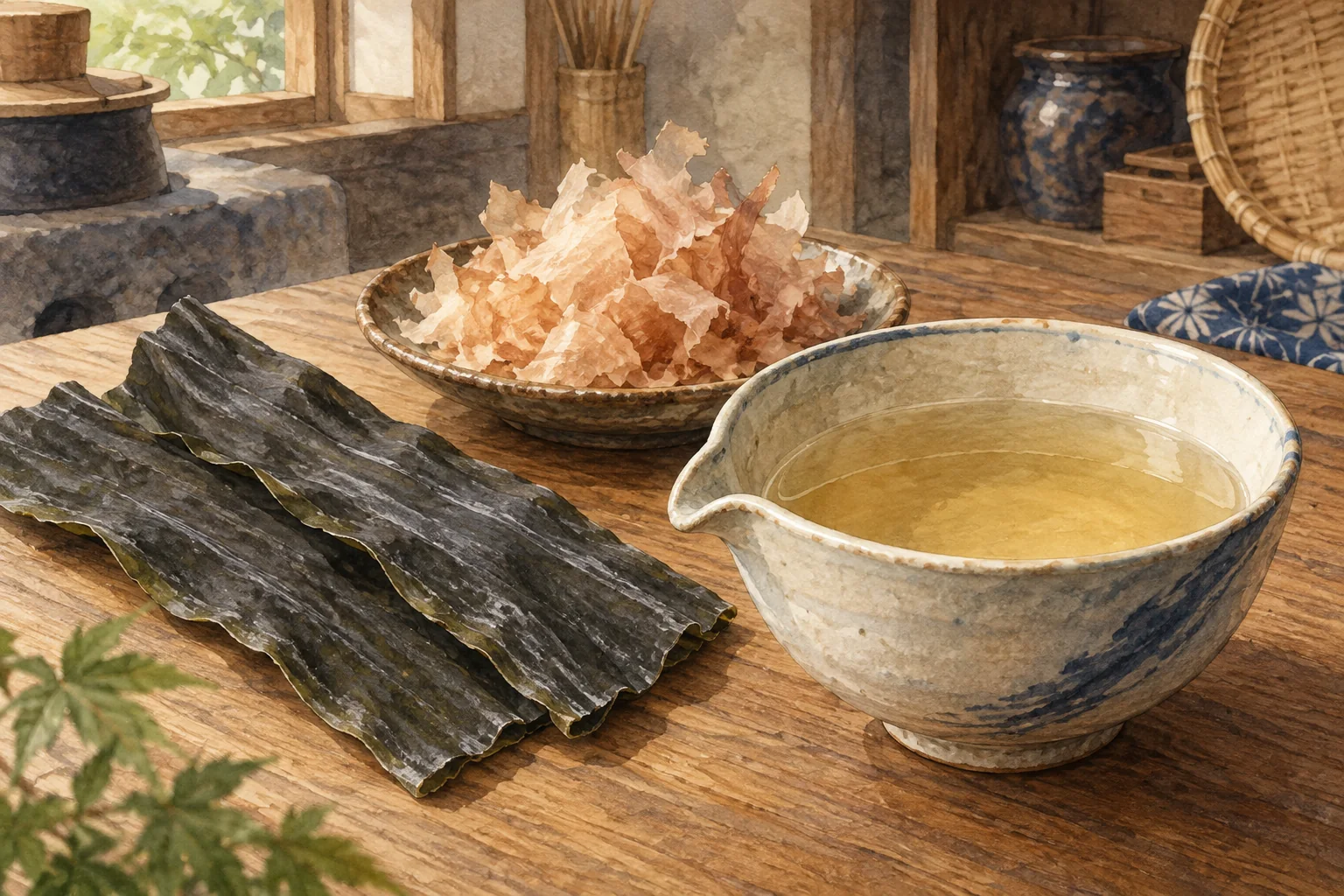
Dashi is made by steeping kelp and dried fish flakes in hot water for a few minutes. Unlike Western stock, it is not simmered for hours, and it tastes clean rather than rich. It is the base of miso soup, noodle broth, simmered dishes and sauces. The savory taste it carries is umami, a word that entered English from Japanese research on exactly this stock.
出汁は、昆布と削り節を熱湯に数分ひたして取ります。西洋のストックのように何時間も煮込まず、濃厚というより澄んだ味です。味噌汁、麺つゆ、煮物、たれの土台になります。その旨みが「うま味」で、この語は、まさにこの出汁の研究から英語に入りました。
As a short speech
A full paragraph you can read aloud
If you want to understand Japanese food, the place to start is not sushi. It is dashi. Dashi is a stock made by putting a piece of dried kelp and a handful of shaved dried fish into hot water for a few minutes. That is the whole process.
A French stock is simmered for hours and gets richer and heavier; dashi is quick and tastes clean and almost transparent. A huge share of Japanese home cooking sits on top of it: miso soup, noodle broth, simmered vegetables, dipping sauces.
There is a scientific footnote here. In 1908 a Japanese chemist studying kelp broth identified glutamate as a distinct basic taste and named it umami. That word is now used in English, and it came out of somebody trying to explain why this simple stock tastes of so much.
日本の食を理解したいなら、出発点は寿司ではありません。出汁です。出汁は、乾いた昆布一枚と削り節ひとつかみを熱湯に数分入れて取るだしです。工程はそれだけです。
フランスのストックは何時間も煮込んで濃く重くなりますが、出汁は短時間で、澄んでほとんど透明な味がします。日本の家庭料理の大部分がその上に載っています。味噌汁、麺つゆ、煮物、つけだれ。ここに科学の脚注がつきます。
1908年、昆布のだしを研究していた日本の化学者が、グルタミン酸を独立した基本味と特定し、「うま味」と名づけました。この語は今では英語でも使われています。この単純なだしがなぜこれほど味がするのかを説明しようとした人から生まれた言葉なのです。
Questions people actually ask
And how to answer them.
Is dashi vegetarian?
Usually not. Most dashi contains katsuobushi, dried skipjack tuna, so miso soup is generally not vegetarian. Kelp-only dashi, called kombu dashi, is, and shiitake dashi is another plant-based option.
たいていは違います。多くの出汁には鰹節が入るため、味噌汁は基本的にベジタリアン対応ではありません。昆布だけの昆布だしは該当し、しいたけだしという選択肢もあります。
What exactly is katsuobushi?
Skipjack tuna that has been simmered, smoked, dried and sometimes fermented with mold until it is hard enough to be shaved like wood. It is often described as one of the hardest foods in the world.
カツオを煮て、燻して、干し、ものによってはカビをつけて発酵させ、木のように削れるほど硬くしたものです。世界で最も硬い食品のひとつと紹介されることもあります。
Do Japanese people make it from scratch?
Less and less. Instant dashi powder is in almost every kitchen, and there is no shame in it. Making it from kelp and flakes is something people do when they have time or when they care about a particular dish.
だんだん減っています。顆粒の出汁の素はほぼどの台所にもあり、それを使うことに引け目はありません。昆布と削り節から取るのは、時間があるときや、その料理にこだわるときです。
Phrases you can use
- Dashi is the base of almost everything here.出汁は、ほとんどの料理の土台です。
- It only takes a few minutes to make.取るのに数分しかかかりません。
- Be careful — most dashi contains fish.注意してください。多くの出汁には魚が入っています。
- The word umami comes from research on this stock.「うま味」という語は、この出汁の研究から生まれました。
- Kombu dashi is made from kelp only.昆布だしは昆布だけで取ります。
Words you need
- stock / brothだし
- kelp昆布
- dried fish flakes削り節、鰹節
- savoryうま味のある、塩気のきいた
- steep(湯に)ひたす
Watch
From YouTubeBackground (Japanese)
「うま味」を科学的に位置づけたのは、1908年に東京帝国大学の池田菊苗が昆布だしからグルタミン酸を抽出し、甘味・酸味・塩味・苦味とは別の基本味として提唱したことによる。英語でも umami がそのまま使われている。鰹節は、煮る・燻す・干すに加え、本枯節ではカビ付けと天日干しを数か月繰り返す。旨み成分は昆布のグルタミン酸と鰹節のイノシン酸で、両方を合わせると旨みが単独の和より強くなる「うま味の相乗効果」が知られている。一番だしと二番だしがあり、澄んだ吸い物には一番だし、煮物には二番だしを使い分ける。