konbu
the kelp that gives Japanese stock its savory depth
昆布(こんぶ)
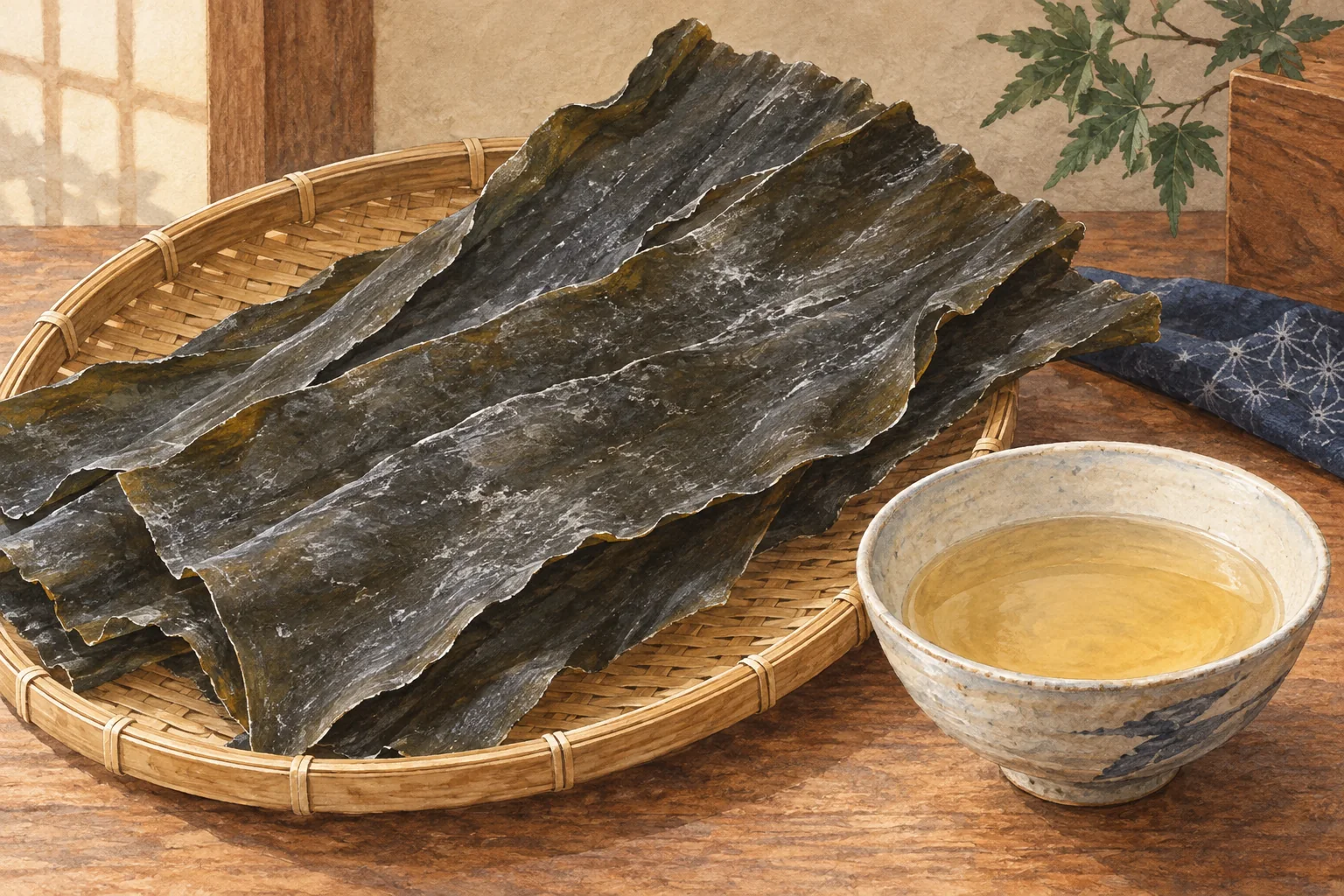
In one line
The shortest answer that works
Konbu is kelp, dried and used to make stock, and it is where umami was first identified.
昆布は干した海藻で、だしを取るのに使います。うま味が最初に見つかったのもこの昆布です。
In 30 seconds
The standard explanation
Konbu is a large brown kelp, harvested mostly in the cold seas around Hokkaido and dried. Soaked in water it releases glutamate, which gives a savory depth without adding a flavor of its own. In 1908 a Japanese chemist isolated that compound from konbu stock and named the taste umami, which is now recognized as a basic taste alongside sweet, sour, salty and bitter.
昆布は大きな褐色の海藻で、多くは北海道の冷たい海で採れ、干して使います。水に浸すとグルタミン酸が出て、それ自体の味を足さずに、奥行きのある味を生みます。1908年、日本の化学者が昆布のだしからその成分を取り出し、その味を「うま味」と名づけました。いまでは甘・酸・塩・苦と並ぶ基本の味とされています。
As a short speech
A full paragraph you can read aloud
Konbu is kelp, and it is quietly one of the most important ingredients in Japanese cooking. It grows in the cold water off Hokkaido, which produces most of Japan's konbu, and it is dried in the sun before use. You do not boil it hard.
You soak a piece in water, warm it slowly, and take it out before the water reaches a full boil, because boiling brings out a slimy texture and a stronger smell. What you get is a clear liquid that tastes of almost nothing on its own but makes everything else taste more like itself.
That is because of glutamate. In 1908 the chemist Ikeda Kikunae isolated it from konbu stock and argued that the sensation it produces is a separate basic taste, which he called umami. For a long time the idea was treated as a local curiosity outside Japan, and it is now standard in food science worldwide.
昆布は海藻で、日本料理のいちばん大事な材料の一つでありながら、目立ちません。北海道の冷たい海で育ち、国内のほとんどはそこから来ます。天日で干してから使います。強く煮てはいけません。
水に浸して、ゆっくり温め、沸き立つ前に引き上げます。煮立てるとぬめりが出て、においも強くなるからです。できるのは、それ自体はほとんど味のない澄んだ液体で、しかしほかのすべてを「そのものらしく」感じさせます。理由はグルタミン酸です。
1908年、化学者の池田菊苗が昆布のだしからこれを取り出し、その感覚は独立した基本の味だと唱え、「うま味」と名づけました。長いあいだ日本の外では地域的な珍説のように扱われ、いまでは世界の食品科学で当たり前のものになっています。
Questions people actually ask
And how to answer them.
Should I wash the white powder off?
No. That white bloom is mostly mannitol, a naturally sweet compound, along with some glutamate, and it is part of the flavor you want. Wipe it lightly with a dry cloth if you want to remove dust, and no more.
いいえ。あの白い粉は主にほのかに甘いマンニトールで、グルタミン酸も含まれ、味の一部です。ほこりを取りたければ乾いた布で軽く拭く程度にしてください。
Can vegetarians use konbu stock?
Yes. Konbu alone makes a stock with no animal ingredient, which is why temple cooking relies on it, usually with dried shiitake added for depth.
使えます。昆布だけなら動物性のものは入りません。だから精進料理はこれを土台にし、干し椎茸を足して深みを出します。
What do I do with the kelp afterwards?
Do not throw it out. Cut it into strips and simmer it with soy sauce, sugar and vinegar to make a side dish called tsukudani, which keeps for days in the refrigerator.
捨てないでください。細く切って、醤油と砂糖と酢で煮ると佃煮になります。冷蔵で数日もちます。
Phrases you can use
- Konbu is kelp, dried and used for stock.昆布は干した海藻で、だしに使います。
- Don't boil it — take it out before the water boils.煮立てないでください。沸く前に引き上げます。
- The white powder is flavor, not dirt.白い粉は汚れではなく、うま味です。
- Umami was identified from konbu in 1908.うま味は1908年に昆布から見つかりました。
- Konbu stock has no animal ingredients.昆布だしに動物性のものは入っていません。
Words you need
- kelp昆布
- to soak浸す
- savory taste, umamiうま味
- simmered in soy sauce佃煮
- dried shiitake mushroom干し椎茸
Watch
From YouTubeBackground (Japanese)
国内で使われる昆布のおよそ9割が北海道産とされる。産地によって性質が違い、真昆布は澄んだ上品なだし、羅臼昆布は濃く香りが強い、利尻昆布は京料理で好まれ、日高昆布は煮て食べるのに向く。明治41年(1908年)、東京帝国大学の池田菊苗が昆布のだしからグルタミン酸を取り出し、「うま味」と名づけた。江戸時代には北前船が北海道の昆布を大阪へ運び、さらに薩摩を経て琉球にも渡った。沖縄の料理に昆布が多く使われるのは、そのころの交易の名残とされる。