nori
the sheets of dried seaweed used for rice balls and sushi rolls
海苔(のり)
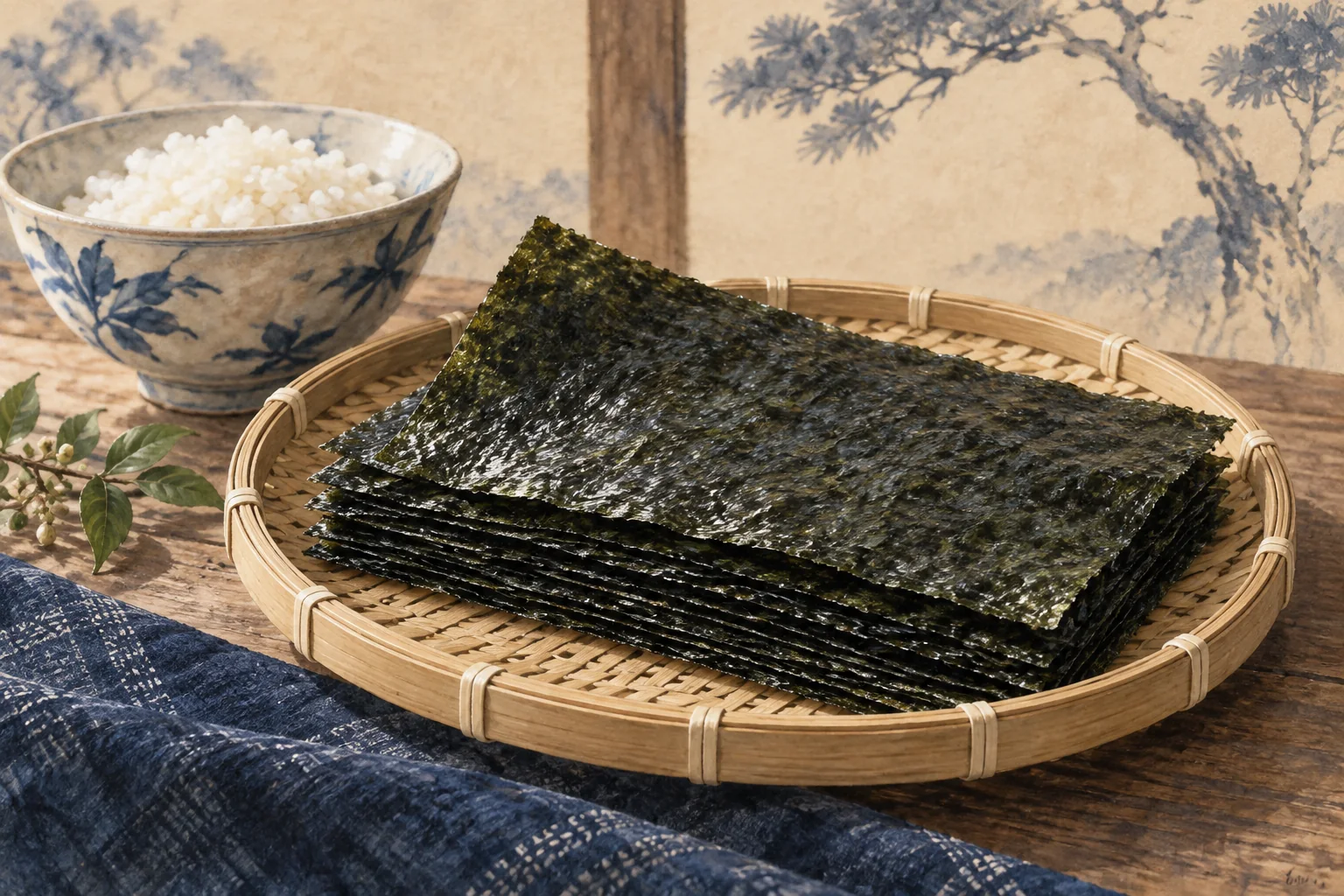
In one line
The shortest answer that works
Nori is seaweed pressed into thin sheets, used for rice balls, sushi rolls and rice at breakfast.
海苔は海藻を薄い紙状にしたもので、おにぎり、巻き寿司、朝のご飯に使います。
In 30 seconds
The standard explanation
Nori is made by chopping a red seaweed into a slurry, spreading it on a frame and drying it into a sheet, in much the same way as paper. It is used to wrap rice balls and sushi, cut into strips over noodles, and eaten with rice at breakfast. Farmed nori is grown on nets in shallow bays in winter.
海苔は、アマノリの仲間を細かく刻んで水に混ぜ、簾の上に広げて干し、紙のように仕上げたものです。おにぎりや寿司を巻き、麺の上に刻んで散らし、朝のご飯にも食べます。養殖は冬、浅い湾に張った網で育てます。
As a short speech
A full paragraph you can read aloud
Nori is the black sheet around a rice ball, and it is made almost exactly like paper: the seaweed is chopped into a slurry, poured onto a frame, drained and dried. What I find worth telling is how the farming works today. For centuries nobody knew where young nori came from each autumn.
Farmers put out nets and hoped, and some years nothing grew, so it was called the gambler's crop. Then in 1949 a British scientist, Kathleen Drew-Baker, working in Manchester on a related British species, showed that the plant spends part of its life as tiny filaments burrowing inside shells.
Japanese researchers used that to grow seed on oyster shells, and the harvest became reliable. She never visited Japan. There is a monument to her on the coast at Uto in Kyushu, and local growers still hold a ceremony there.
海苔はおにぎりを巻いている黒い紙で、作り方はほとんど紙と同じです。海藻を細かく刻んで水に混ぜ、簾に流し、水を切って干す。話しておきたいのは、いまの養殖がどう成り立っているかです。何百年ものあいだ、秋になると海苔の芽がどこから来るのか誰も知りませんでした。
漁師は網を張って祈るだけで、何も採れない年もあり、「運まかせの作物」と呼ばれました。1949年、イギリスのマンチェスターで近縁のイギリス産の海藻を研究していたキャスリーン・ドリュー=ベーカーが、この植物が生涯の一部を、貝殻の中にもぐり込む細い糸の姿で過ごすことを示しました。
日本の研究者がそれを使って牡蠣殻に種をつける方法を確立し、収穫は安定しました。彼女は一度も日本に来ていません。九州の宇土の海辺に記念碑があり、いまも地元の人が集まって式を行っています。
Questions people actually ask
And how to answer them.
Why does the convenience store rice ball have that plastic film?
It keeps the nori dry and separate from the rice until you open it, so the sheet is still crisp. Follow the numbered steps on the wrapper: pull the strip, then remove each side.
開けるまで海苔をご飯から離して乾いたままに保つためです。だから、はがした瞬間はぱりっとしています。包みの番号の順に、中央を引いて、左右を抜いてください。
Is there a difference between the cheap and expensive kind?
Yes, in thickness, evenness and how it melts on the tongue. The first harvest of the season is thin and tender and costs several times more. For a rice ball the everyday grade is fine.
違います。厚み、むらのなさ、口の中でのほどけ方です。その季節の一番摘みは薄くて柔らかく、値段も何倍かします。おにぎりなら普段の等級で十分です。
Can people outside Japan digest it?
There is research suggesting some Japanese people carry gut bacteria with enzymes for breaking down nori, picked up from marine bacteria. It does not mean anyone else cannot eat it; nori is food, not a test.
海の細菌から得た、海苔を分解する酵素を持つ腸内細菌が、日本人の一部にいるという研究はあります。ほかの人が食べられないという話ではありません。海苔は食べ物であって、試験ではありません。
Phrases you can use
- Nori is seaweed, dried in sheets like paper.海苔は海藻を紙のように干したものです。
- The film keeps it crisp until you open it.フィルムは、開けるまで海苔をぱりっと保つためです。
- The first harvest of the season is the best.その季節の一番摘みがいちばん上等です。
- It's farmed on nets in shallow bays in winter.冬に、浅い湾の網で養殖します。
- Toast it lightly and it smells completely different.軽くあぶると、香りがまるで変わります。
Words you need
- seaweed海藻
- sheet一枚(海苔の数え方)
- to toast lightlyあぶる
- crispぱりっとした
- seaweed farming海苔の養殖
Watch
From YouTubeBackground (Japanese)
板海苔は江戸時代の浅草で、和紙の作り方を応用して生まれたとされ、「浅草海苔」の名はここから来ている。アマノリ類の生活史は長く不明で、養殖は種の付き方が運まかせだった。1949年、イギリスの藻類学者キャスリーン・ドリュー=ベーカーが、貝殻の中で糸状体として過ごす世代があることを突き止めた。これが熊本県の水産試験場に伝わり、1953年に人工採苗が成功して養殖が安定した。熊本県宇土市の住吉公園には1963年、地元の海苔漁民によって彼女の記念碑が建てられた。