koban
the neighborhood police box
交番(こうばん)
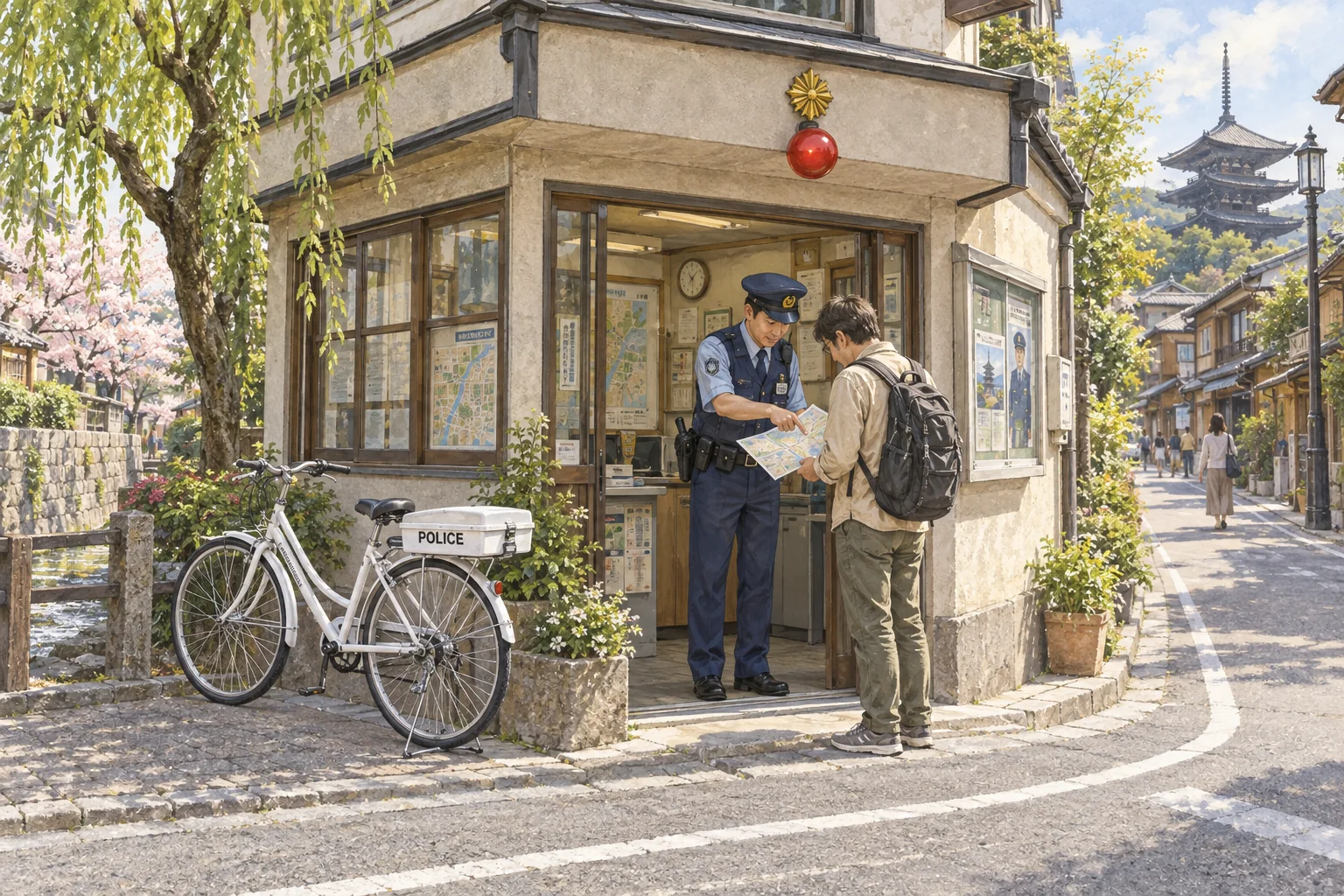
In one line
The shortest answer that works
A koban is a small neighborhood police box, where you can ask for directions or hand in lost property.
交番とは、地域にある小さな警察の詰所で、道を尋ねたり落とし物を届けたりできる場所です。
In 30 seconds
The standard explanation
Japan has thousands of koban, small police posts scattered through neighborhoods and near stations. Officers there patrol on foot and bicycle, deal with lost property, and spend a great deal of time giving directions. Because they are small, permanent and local, the police are physically present in ordinary streets rather than concentrated in stations.
日本には交番が数千か所あり、住宅街や駅の近くに小さな警察の詰所が点在しています。そこの警察官は徒歩や自転車で巡回し、落とし物を扱い、そして道案内に多くの時間を使います。小さく、常設で、地域に密着しているため、警察が大きな署に集中せず、普通の街角に物理的に存在しています。
As a short speech
A full paragraph you can read aloud
A koban is a small police box, usually one or two rooms, staffed twenty-four hours by a handful of officers. There are thousands of them across Japan, near stations and in residential areas. The officers patrol on foot and by bicycle, respond to calls in the immediate area, take reports of lost property, and spend an enormous amount of time telling people how to get somewhere.
That last part is not a joke: in a country where most streets have no names, the koban is the practical way to find an address, and officers keep detailed local maps for exactly this purpose. What makes the system distinctive is proximity.
Rather than concentrating officers in large stations and dispatching them, Japan keeps them permanently inside neighborhoods, where they know the shops and the residents. The model has been studied and exported, and several countries have set up versions of it with Japanese assistance.
交番は小さな警察の詰所で、たいてい一、二部屋、数人の警察官が24時間交代で詰めています。日本じゅうに数千か所あり、駅の近くや住宅街にあります。そこの警察官は徒歩と自転車で巡回し、近くの通報に対応し、落とし物を受け付け、そして人に道を教えることに膨大な時間を使います。
最後のは冗談ではありません。ほとんどの通りに名前がないこの国では、住所を探すのに交番が現実的な方法で、警察官はそのために詳しい地図を備えています。この仕組みが際立っているのは、近さです。
大きな署に人を集めて出動させるのではなく、日本は警察官を地域の中に常駐させます。店も住民も知っている場所に、です。この方式は研究され、輸出もされていて、日本の協力で同様の制度を導入した国がいくつもあります。
Questions people actually ask
And how to answer them.
Can I really just walk in and ask for directions?
Yes, and that is one of its normal functions. Officers expect it, keep detailed maps, and will often walk out to the corner and point. No appointment, no explanation needed.
できますし、それが本来の役割のひとつです。警察官も想定していて、詳しい地図を備え、角まで出て指し示してくれることもあります。予約も理由の説明も要りません。
Why do Japanese addresses need this?
Because most streets have no names. Addresses are based on nested areas and block numbers, and buildings within a block were historically numbered in the order they were built rather than in sequence.
ほとんどの通りに名前がないからです。住所は地域を入れ子にした区画と番号で示され、区画内の建物は並び順ではなく建てられた順に番号がついた時期もありました。
What do I do if I lose something?
Go to the nearest koban and report it. Found property is registered and forwarded, and Japan's return rate for lost wallets and phones is unusually high.
最寄りの交番に届け出てください。拾得物は登録されて回されます。日本では財布やスマートフォンが持ち主に戻る割合が、きわめて高いことで知られています。
Phrases you can use
- Ask at the police box on the corner.角の交番で聞いてください。
- Officers work shifts around the clock, but they're often out on patrol.24時間交代で勤務していますが、巡回で留守のこともよくあります。
- Most streets here don't have names.日本の通りには、たいてい名前がありません。
- I'd like to report something I found.落とし物を届けたいのですが。
- Giving directions is a normal part of the job.道案内も、警察官の普通の仕事です。
Words you need
- police box交番
- patrol巡回する
- lost property落とし物、遺失物
- directions道案内
- on duty勤務中の
Watch
From YouTubeBackground (Japanese)
交番制度は1874年に東京で「交番所」として始まり、当初は警察官が交代で立つ場所という意味だった。現在は全国に交番・駐在所があわせて1万2千か所前後置かれている(それぞれ6千か所前後で、いずれも長期的には減少傾向にある)。駐在所は警察官が家族とともに居住する形式で、主に地方に置かれる。koban は英語でもそのまま通用する語になっており、シンガポール、ブラジル、インドネシアなどが日本の協力を受けて類似の制度を導入した。日本の住所は「街区方式」で、通りではなく区画に番号を振る。米国など多くの国が「街路方式」を採るのと対照的である。