gomi bunbetsu
sorting your garbage
ゴミの分別(ごみのぶんべつ)
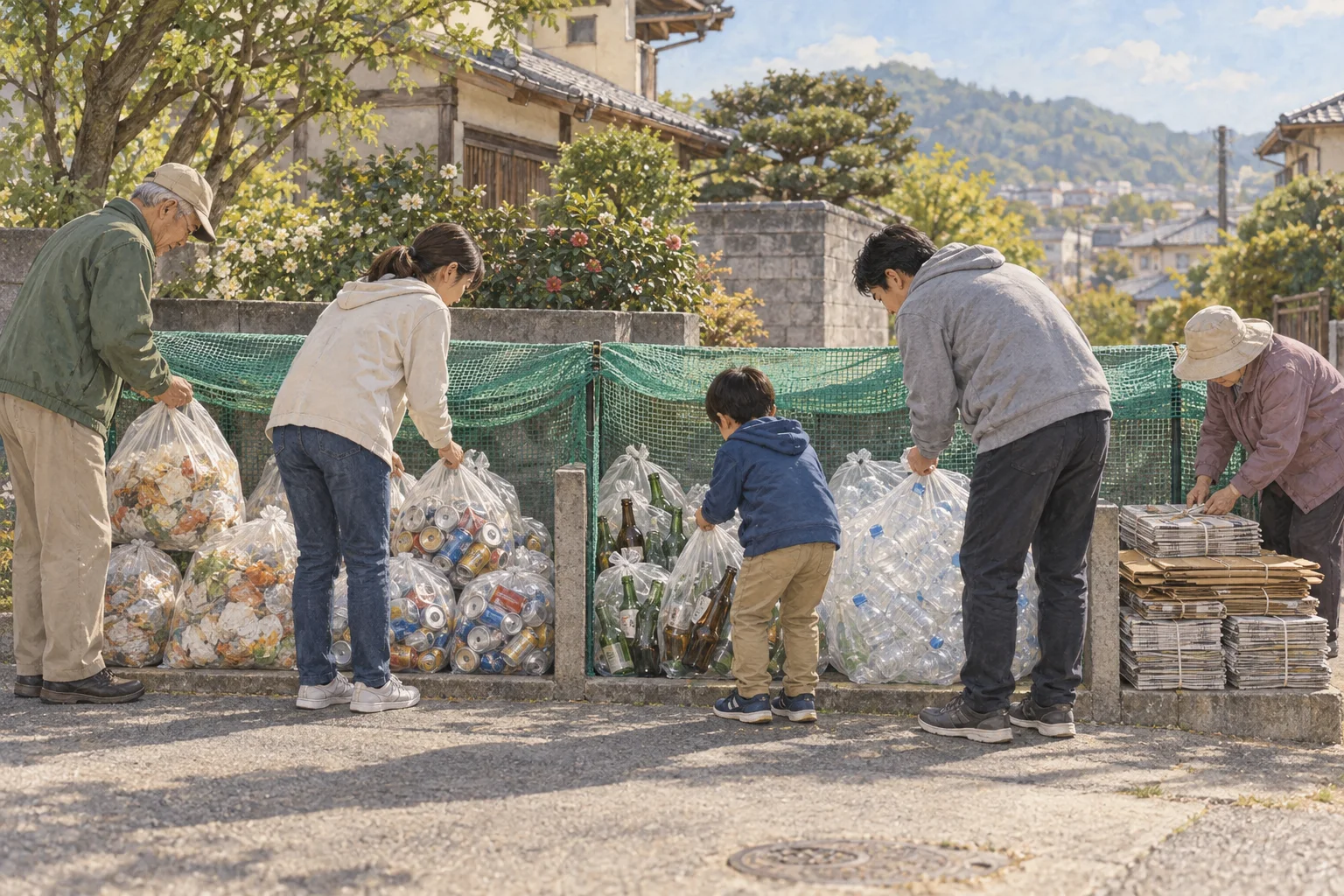
In one line
The shortest answer that works
In Japan you have to separate your garbage into several categories and put each one out on its own day.
日本ではごみを何種類にも分け、それぞれ決められた曜日に出さなければなりません。
In 30 seconds
The standard explanation
Every household sorts its garbage. Burnable, non-burnable, plastic containers, PET bottles, cans, glass, paper and large items all go out on different days. A single plastic bottle is taken apart into three pieces: cap, label and bottle. The exact rules are set by each city, so they change when you move, and new residents are given a printed calendar.
どの家庭もごみを分けます。可燃・不燃・プラスチック容器・ペットボトル・缶・びん・紙・粗大ごみが、それぞれ別の曜日に出されます。ペットボトル1本はキャップ・ラベル・本体の3つに分解します。細かい規則は市区町村ごとに決まっているため、引っ越すと変わり、新しい住民には分別カレンダーが配られます。
As a short speech
A full paragraph you can read aloud
One thing that catches visitors off guard in Japan is how garbage works. You cannot simply throw things away. Every household separates waste into categories: burnable, non-burnable, plastic containers, PET bottles, cans, glass and paper.
Each category has its own collection day, and if you put the wrong bag out, it is left behind with a sticker on it. A single plastic bottle is taken apart into three parts. What makes it harder is that the rules are decided by each city, so a system you learned in one town does not apply in the next.
There is a real reason for all this. Japan is small, densely populated and has very little space for landfill, so most burnable waste is incinerated and as much as possible is recovered. It is genuinely annoying, and most people do it anyway.
日本に来た方が戸惑うことのひとつが、ごみの扱いです。ただ捨てる、ということができません。どの家庭もごみを可燃・不燃・プラスチック容器・ペットボトル・缶・びん・紙に分けます。
それぞれに収集日があり、違う袋を出すと、シールを貼られて置いていかれます。ペットボトル1本は3つに分解します。やっかいなのは、規則が市区町村ごとに決まっていることです。ある町で覚えた方式が、隣の町では通用しません。
これには理由があります。日本は国土が狭く人口密度が高く、埋め立てる場所がほとんどないため、可燃ごみの多くを焼却し、できるかぎり資源として回収しているのです。正直めんどうですが、それでもみんなやっています。
Questions people actually ask
And how to answer them.
Why are there no trash cans on the street?
Public trash cans were removed from stations and streets after the 1995 subway attack, and most never came back. People are expected to carry their garbage home, and most do.
1995年の地下鉄での事件のあと、駅や路上のごみ箱が撤去され、多くは戻りませんでした。ごみは持ち帰るのが前提で、実際みんなそうしています。
What happens if I get the sorting wrong?
The collectors leave your bag, usually with a warning sticker. In an apartment building the caretaker may work out whose it was. It is embarrassing rather than punished.
回収されず、警告のシールを貼られて残されます。集合住宅では管理人が誰のものか突き止めることもあります。罰則というより、気まずい思いをします。
Is Japan actually good at recycling?
Mixed. Recovery rates for PET bottles and cans are high, but Japan also uses a great deal of packaging and burns most of its household waste. Incineration with energy recovery is counted differently from country to country, which makes comparisons tricky.
一概には言えません。ペットボトルや缶の回収率は高い一方、包装の量も多く、家庭ごみの大半は焼却されます。熱回収を伴う焼却をどう数えるかは国によって違い、単純な比較は難しいのが実情です。
Phrases you can use
- Burnable garbage goes out on Tuesdays and Fridays.可燃ごみは火曜と金曜です。
- Take the cap and label off the bottle first.ペットボトルはキャップとラベルを外してください。
- The rules are different in every city.ルールは市区町村ごとに違います。
- There are hardly any trash cans on the street, so take it with you.路上にごみ箱はほとんどないので、持ち帰ってください。
- If you sort it wrong, they won't collect it.分別を間違えると、回収してもらえません。
Words you need
- sort / separate garbageごみを分別する
- burnable / non-burnable可燃/不燃
- collection day収集日
- landfill埋め立て地
- bulky waste粗大ごみ
Watch
From YouTubeBackground (Japanese)
分別の細かさで知られるのが徳島県上勝町で、13分類45種類という区分を採用し、ごみ収集車を走らせず住民が自分でごみステーションへ持ち込む方式をとっている。2003年に日本で初めて「ゼロ・ウェイスト宣言」を出した自治体でもある。一方で全国的には、日本は家庭ごみの多くを焼却しており、焼却施設の数は世界的に見ても多い。国土が狭く埋め立て地が限られることが背景にある。路上のごみ箱が少ないのは1995年の地下鉄サリン事件後の保安対策が発端で、その後も設置が戻らないまま定着した。