nihon no harowin
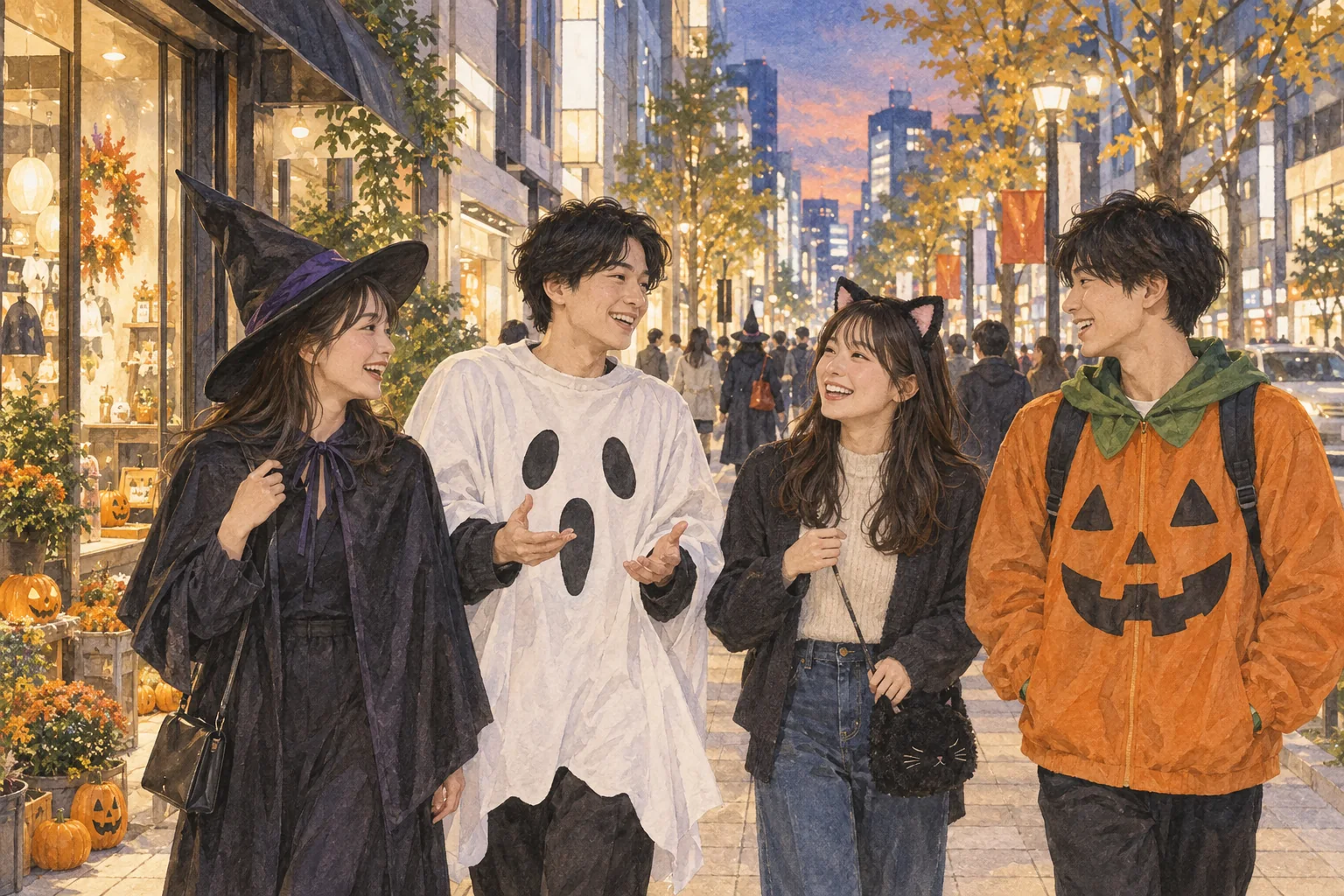
Halloween as a street costume event
日本のハロウィン(にほんのはろうぃん)
In one line
The shortest answer that works
Halloween in Japan is an adult costume event in city centers, not a children's trick-or-treat custom.
日本のハロウィンは、子どもの菓子集めではなく、大人が仮装して繁華街に集まる行事です。
In 30 seconds
The standard explanation
Halloween arrived in Japan as a costume event rather than a door-to-door custom. Trick-or-treating is rare because it requires knocking on strangers' doors, which does not fit. Instead, adults dress up and gather in entertainment districts, most famously Shibuya, where crowding grew severe enough that the local government now asks people not to come.
ハロウィンは、家々を回る習慣ではなく仮装の行事として日本に入りました。見知らぬ家の戸を叩く必要があるトリック・オア・トリートは、なじまないためほとんど行われません。かわりに大人が仮装して繁華街に集まり、とくに渋谷が有名になりましたが、混雑が深刻になり、区は今では来ないよう呼びかけています。
As a short speech
A full paragraph you can read aloud
Halloween in Japan took a different shape from the original. Trick-or-treating never established itself, for a straightforward reason: it requires children to knock on the doors of people they do not know and ask for something, and that does not sit comfortably here. What did establish itself was the costume.
Adults dress up and go out, and shops, theme parks and bars run Halloween events through October. Shibuya in Tokyo became the focal point, with crowds gathering in the street on the night of the thirty-first, and the scale eventually became a public safety problem, with damage, injuries and enormous quantities of rubbish.
The ward government has responded by banning street drinking during the period and publicly asking people not to come to Shibuya for Halloween at all. So it is a useful example of how an imported festival gets rebuilt: the part that fitted, dressing up, took root, and the part that did not simply never arrived.
日本のハロウィンは、もとの形とは違う姿になりました。トリック・オア・トリートは定着しませんでした。理由は単純で、子どもが知らない家の戸を叩いて物をねだる必要があり、それが日本ではなじまないからです。定着したのは仮装のほうです。
大人が仮装して出かけ、店もテーマパークもバーも、10月のあいだハロウィンの催しを行います。東京の渋谷が中心地になり、31日の夜には路上に人が集まりました。やがてその規模は公共の安全の問題になり、器物の損壊、けが、膨大なごみが出ました。
区はこれを受けて、期間中の路上での飲酒を禁じ、ハロウィンで渋谷に来ないでほしいと公に呼びかけています。輸入された祭りがどう作り変えられるかの、分かりやすい例です。なじんだ部分、つまり仮装だけが根づき、なじまなかった部分は、そもそも入ってきませんでした。
Questions people actually ask
And how to answer them.
Do children go trick-or-treating?
Rarely, and when it happens it is usually organized: a shopping street, an international school, or a housing complex where the route is arranged in advance. Knocking on strangers' doors is not done.
ほとんどしません。行う場合も、商店街、インターナショナルスクール、団地など、あらかじめ回る先が決められた形が普通です。知らない家の戸を叩くことはしません。
Is Shibuya still the place to go?
The ward has asked people not to come, banned street drinking during the period and increased security. Costume events have shifted toward ticketed venues and theme parks.
区は来ないよう呼びかけ、期間中の路上飲酒を禁じ、警備を強化しています。仮装の催しは、チケット制の会場やテーマパークへ移りつつあります。
When did it become popular?
Theme parks ran Halloween events from the late 1990s, and the street gatherings grew through the 2010s. It is a recent custom, well within living memory for most adults here.
テーマパークが1990年代後半から催しを行い、路上の集まりは2010年代に大きくなりました。新しい習慣で、日本の大人の多くはそれ以前を覚えています。
A common misunderstanding
MYTHJapanese children go trick-or-treating like American children.
FACTIt is rare and usually pre-arranged. The imported part of Halloween in Japan is the costume, and the door-to-door custom never took root.
Phrases you can use
- It's mostly adults in costume.仮装するのは、ほとんど大人です。
- Trick-or-treating isn't really done here.トリック・オア・トリートはあまりしません。
- The ward has asked people not to gather.区は集まらないよう呼びかけています。
- Street drinking is banned during the period.期間中、路上での飲酒は禁止です。
- It only became big in the last couple of decades.大きくなったのは、ここ二十年ほどのことです。
Words you need
- costume仮装
- crowd control雑踏警備
- ban (verb)禁止する
- take root定着する
- imported custom外から入ってきた習慣
Watch
From YouTubeBackground (Japanese)
日本でのハロウィンは、1997年に東京ディズニーランドがイベントを始めるなど、テーマパークの催しを通じて広く知られるようになった。渋谷の路上に人が集まる形は2010年代に拡大し、2018年には軽トラックが横倒しにされる事件が起き、複数の逮捕者が出た。渋谷区は2019年に「渋谷駅周辺地域の安全で安心な環境の確保に関する条例」を施行し、ハロウィンや年末年始の期間に駅周辺での路上飲酒を禁止した。2024年10月からは、夜間の路上飲酒が通年で禁止されている。2023年以降、区長が繰り返し「ハロウィン目的で渋谷に来ないで」と呼びかけている。菓子メーカーにとっては10月の商戦として定着しており、市場規模はバレンタインに匹敵する年もあるとされる。