kaidan
Japanese ghost stories
怪談(かいだん)
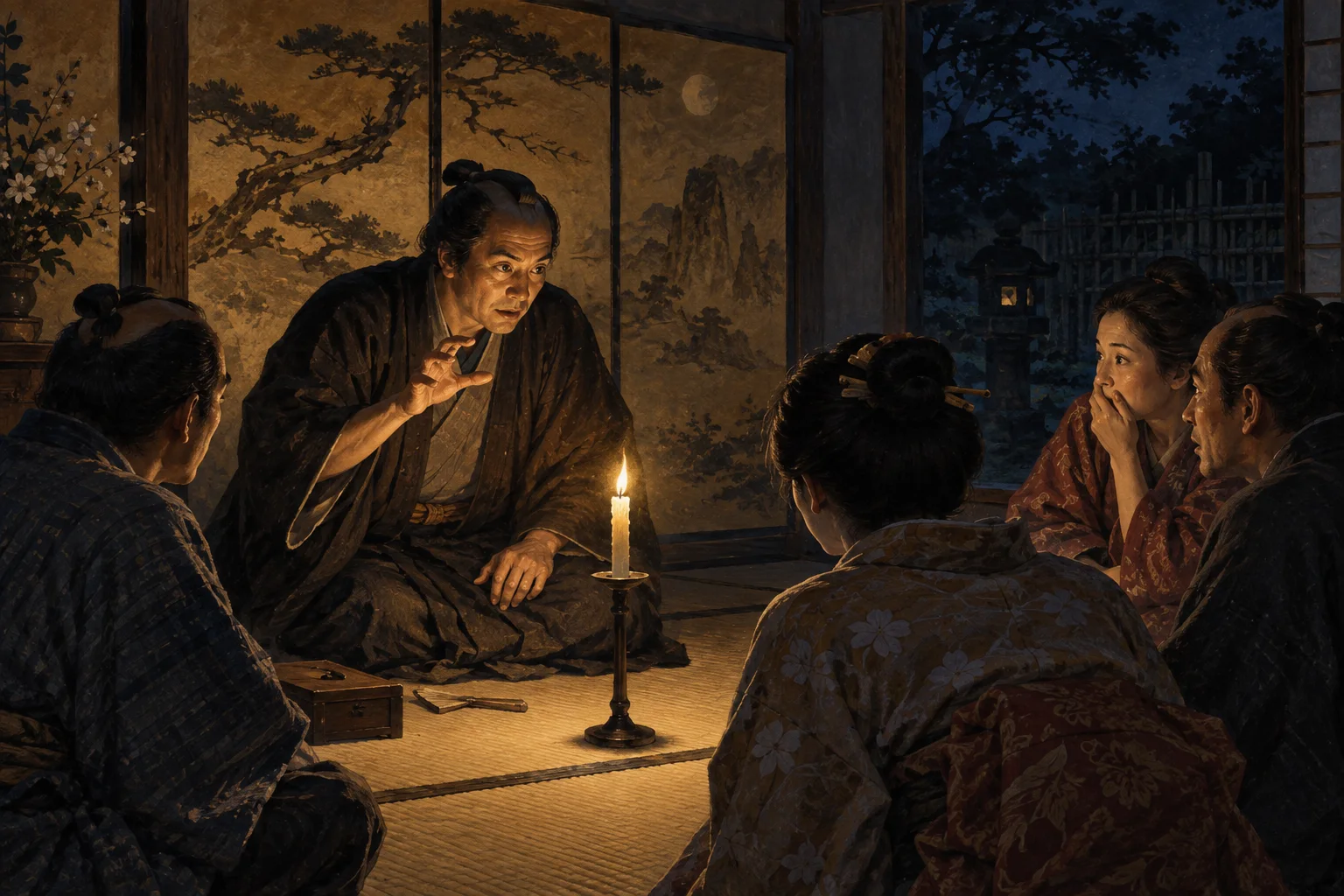
In one line
The shortest answer that works
Kaidan are Japan's ghost stories, and in Japan they belong to summer rather than autumn.
怪談は日本の怖い話で、日本では秋ではなく夏のものとされています。
In 30 seconds
The standard explanation
Kaidan means a tale of the strange. Japanese ghost stories are told in summer, not at Halloween, and television has long run ghost specials in August. The classic ghost is a woman in white with long loose hair and no visible feet, who returns because of a wrong done to her. The most famous tales, such as Yotsuya Kaidan, came from the Edo-period stage.
怪談とは、不思議なことを語る話のことです。日本では怖い話は夏のもので、ハロウィーンには結びつきません。八月にはテレビで心霊特番が組まれてきました。典型的な幽霊は、白い着物に長い髪をほどき、足が見えない女性で、受けた仕打ちのために戻ってきます。四谷怪談のような代表作は、江戸の芝居から生まれました。
As a short speech
A full paragraph you can read aloud
In Japan ghost stories are a summer genre. The usual explanation is that a chill down the spine is welcome in August, and the season also overlaps with Obon, when the dead are said to come home. Theme parks open haunted houses in July, and television runs ghost specials.
The standard ghost is female, dressed in a white burial robe, with long unbound hair and no visible feet, and she is usually not evil but wronged. Yotsuya Kaidan, first staged in 1825, is the best known: a wife betrayed by her husband and disfigured by poison returns to destroy him.
Actors often visit a shrine connected with her before performing it. The modern horror films that traveled abroad, with their crawling long-haired figures, are drawing on this older stock of images.
日本では、怖い話は夏の読み物です。背筋が冷えるのが八月にはありがたい、という説明がよくされます。死者が帰るとされる盂蘭盆と季節が重なることも大きいでしょう。
遊園地は七月にお化け屋敷を開け、テレビは心霊特番を流します。定型の幽霊は女性で、白い経帷子を着て、髪をほどき、足が見えません。悪意のある存在というより、ひどい目に遭った側です。
よく知られる四谷怪談は1825年の初演で、夫に裏切られ、毒で顔が崩れた妻が戻り、夫を滅ぼします。今も、上演の前にゆかりの社に参る役者が多くいます。海外に渡った日本のホラー映画に出てくる、長い髪で這う人影も、この古い型を受け継いでいます。
Questions people actually ask
And how to answer them.
Why summer?
Two reasons are usually given: the shiver cools you down, and Obon in August is when the dead are believed to return. Edo theaters also programmed ghost plays in summer, and the habit stuck.
理由は二つ挙げられます。ぞっとして涼しくなること、そして死者が帰るとされる盂蘭盆が八月にあることです。江戸の芝居小屋が夏の興行に怪談物をかけたことも、習慣として残りました。
Why do Japanese ghosts have no feet?
It is a painting convention that spread in the Edo period and was fixed by woodblock prints and the stage. It is a visual sign that the figure is not of this world, not something anyone believes literally.
江戸時代に広まった絵の約束事で、版画と芝居によって定着しました。この世のものではないと見せるための描き方で、本当に足がないと信じられているわけではありません。
Is a yurei different from a yokai?
Yes. A yurei is the spirit of a particular dead person with unfinished business, tied to a place or a target. Yokai are a much wider class of strange creatures, many of them mischievous rather than frightening.
違います。幽霊は、思いを残した特定の死者の霊で、場所や相手に結びついています。妖怪はもっと広い括りの不思議な存在で、恐ろしいというより、いたずら好きなものも多くいます。
A common misunderstanding
MYTHJapan tells ghost stories at Halloween like everyone else.
FACTGhost stories here belong to summer. Haunted houses open in July and television runs ghost specials in August, around Obon, when the dead are said to return.
Phrases you can use
- Do you want to hear a scary story?怖い話を聞きたいですか。
- Ghost stories are a summer thing here.日本では怖い話は夏のものです。
- That house is supposed to be haunted.あの家は出ると言われています。
- It is based on a real incident.実際にあった話がもとになっています。
- I cannot handle haunted houses.お化け屋敷は苦手です。
Words you need
- ghost story怪談
- ghost幽霊
- haunted house attractionお化け屋敷
- to be cursed祟られる
- spine-chilling背筋が凍る
Watch
From YouTubeBackground (Japanese)
怪談が夏に語られるのは、涼を取るためとも、盂蘭盆に死者が帰るという考えによるともいわれます。江戸の芝居小屋が夏の興行に怪談物をかけたことも大きいとされます。百物語は、百本の蝋燭を灯して順に怪談を語り、一話ごとに一本消していく座興で、最後の一本が消えると本物が現れると言われました。小泉八雲が英語で書き直した怪談は、耳なし芳一や雪女の話を世界に広めました。