kosupure
dressing as a character
コスプレ(こすぷれ)
In one line
The shortest answer that works
Cosplay is dressing as a character from anime, games or manga, and the word was coined in Japan.
コスプレとは、アニメ・ゲーム・漫画の登場人物の格好をすることで、この語は日本で作られました。
In 30 seconds
The standard explanation
Cosplay means making and wearing the costume of a fictional character and, ideally, carrying their pose and manner too. The word is a Japanese contraction of costume play, coined in the 1980s, which then went back out into English. Costumes are often made by hand, and the craft side is taken as seriously as the performance.
コスプレとは、架空の人物の衣装を作って着ることで、できればその立ち方や仕草まで再現します。この語は costume play を日本で縮めた造語で、1980年代に生まれ、そのまま英語へ戻っていきました。衣装は手作りのことが多く、その工作の面は演じる面と同じくらい真剣に扱われます。
As a short speech
A full paragraph you can read aloud
Cosplay means dressing as a character from anime, manga or games, and doing it properly means more than putting on a costume: you take on the pose, the expression and the way the character stands. The word itself is Japanese.
It was coined in the early 1980s by contracting the English words costume and play, and then it traveled back into English, which makes it one of the clearest examples of a Japanese-made English word becoming global. In Japan there is a strong craft culture around it.
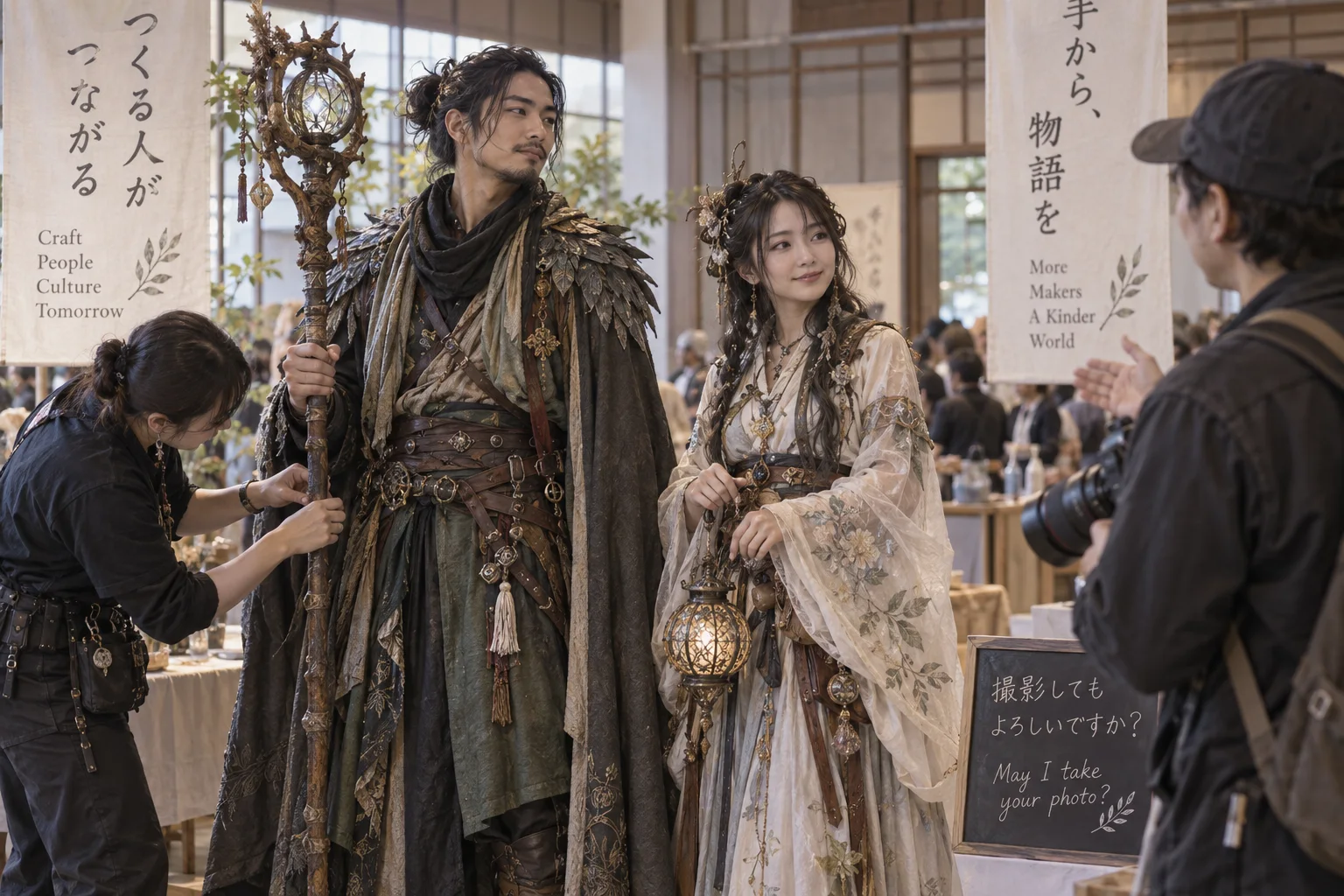
Serious cosplayers make their own costumes, including armor and wigs, and the sewing and prop-making is respected in itself. There are rules, though, that visitors should know. At most events you change at the venue rather than arriving in costume, and photographing a cosplayer without asking first is not acceptable. Ask, and almost everyone will pose for you happily.
コスプレは、アニメ・漫画・ゲームの登場人物の格好をすることですが、きちんとやるなら衣装を着るだけではありません。その人物の立ち方、表情、身のこなしまで引き受けます。この語自体が日本語です。1980年代初めに英語の costume と play を縮めて作られ、そのまま英語へ戻っていきました。
日本製の英語が世界語になった、最も分かりやすい例のひとつです。日本では作る文化が強くあります。本格的なコスプレイヤーは鎧やウィッグも含めて衣装を自作し、その裁縫や造形そのものが敬意をもって見られています。
ただし訪れる人が知っておくべき決まりもあります。多くのイベントでは会場で着替えることになっており、衣装のまま来場するものではありません。そして、断りなく撮影するのは許されません。ひと声かければ、ほとんどの人が喜んでポーズを取ってくれます。
Questions people actually ask
And how to answer them.
Can I take photos?
Ask first, every time. At events, cosplayers expect to be asked and will pose. Photographing without asking, or from behind, is treated as a serious breach and can get you removed.
毎回、先に断ってください。イベントでは声をかけられることが前提で、ポーズも取ってくれます。無断撮影や背後からの撮影は重大な違反とされ、退場になることもあります。
Can I wear my costume on the train?
Generally no. Most events require you to change in the venue's changing rooms, and wearing costume in public outside designated areas is discouraged. Halloween is a partial exception, though Shibuya now asks people not to gather there for it.
ふつうはできません。多くのイベントは会場の更衣室での着替えを求めており、指定された場所以外で衣装のまま出歩くのは避けられます。ハロウィンは例外的ですが、渋谷区は近年、ハロウィンに集まらないよう呼びかけています。
Is it only for anime characters?
No. Game characters, vocaloids, idols, and Western film and comic characters are all common. There is also a long tradition of cosplaying original characters.
違います。ゲーム、ボーカロイド、アイドル、そして海外の映画やコミックの人物も一般的です。オリジナルの人物を演じる系統も古くからあります。
Phrases you can use
- May I take your photo?お写真よろしいですか。
- You change at the venue, not at home.着替えは家ではなく会場でします。
- A lot of people make their own costumes.衣装を自作する人が多いです。
- The word was made in Japan from English words.この言葉は英語から日本で作られました。
- Always ask before photographing someone.撮影の前に必ず声をかけてください。
Words you need
- costume衣装
- wigウィッグ、かつら
- prop小道具
- in characterその人物になりきって
- convention / eventイベント、即売会
Watch
From YouTubeBackground (Japanese)
「コスプレ」という語は、1980年代前半に高橋信之がアニメ雑誌などで「コスチュームプレイ」を縮めて用いたのが広まりのきっかけとされ、そこから日本国内に広まり、英語圏へ cosplay として逆輸入された。和製英語が国際語になった数少ない例のひとつである。日本のイベントでは更衣室の利用、撮影時の許諾、コスプレのまま公道を歩かないといったルールが運営側から明示されるのが一般的。世界コスプレサミットは2003年から名古屋で開催され、各国代表が集まる国際大会になっている。なお銃刀法や軽犯罪法との関係で、模造刀などの持ち歩きには注意が必要とされる。