dojinshi to komike
self-published fan comics and Comiket
同人誌とコミケ(どうじんしとこみけ)
In one line
The shortest answer that works
Doujinshi are self-published comics, and Comiket is the huge fair where they are sold.
同人誌とは自費出版の漫画のことで、コミケはそれを売る巨大な即売会です。
In 30 seconds
The standard explanation
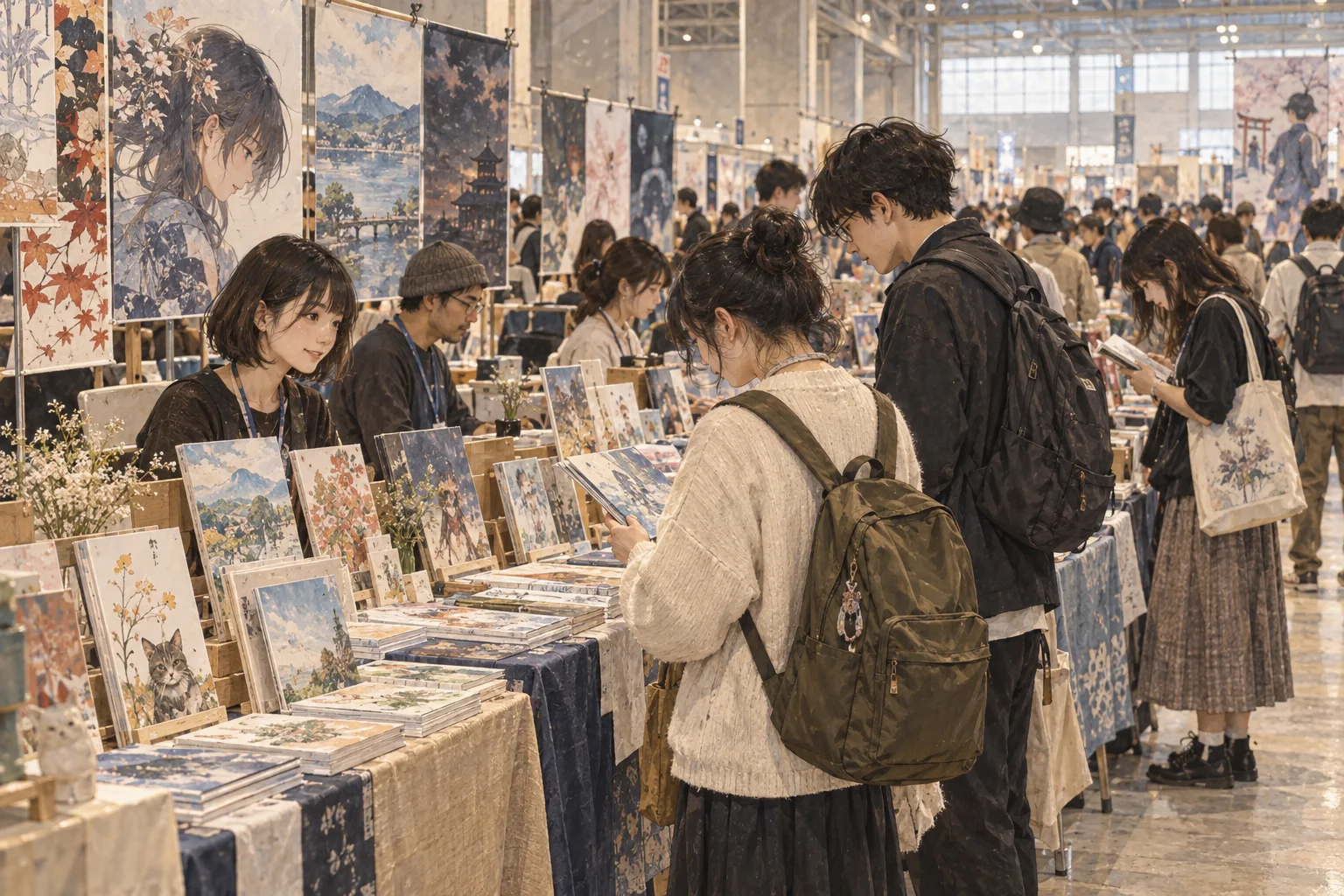
Doujinshi are comics and books that people publish themselves, usually in small print runs. Many are fan works based on an existing series, but plenty are completely original. Comic Market, called Comiket, is the largest place they are sold: a fair held twice a year in Tokyo where tens of thousands of groups rent a table and sell what they made. Sellers and buyers are all called participants.
同人誌とは、自分たちで出す漫画や本で、たいていは少部数です。既存の作品をもとにした二次創作も多いですが、完全な創作も数多くあります。コミックマーケット、通称コミケは、それが売られる最大の場です。東京で年に2回開かれ、何万もの団体が机を借りて自作を売ります。売る側も買う側もみな「参加者」と呼ばれます。
As a short speech
A full paragraph you can read aloud
Doujinshi means a self-published book, usually a comic, made by a small group called a circle. Some are original stories, but most are fan works: you take a series you love and draw what happens between the scenes. Comic Market, or Comiket, is where they are sold.
It started in December 1975 with about thirty circles and a few hundred people, and it now fills the Tokyo Big Sight convention center twice a year with tens of thousands of circles. What surprises foreign visitors most is that it is not a company event.
It is run by a volunteer committee, and even the people queuing are officially called participants rather than customers. A remarkable number of professional manga artists in Japan started at a table there.
同人誌とは、サークルと呼ばれる少人数の集まりが自費で出す本のことで、たいていは漫画です。創作のものもありますが、多くは二次創作、つまり好きな作品の場面と場面の間を自分で描いたものです。
それが売られるのがコミックマーケット、通称コミケです。1975年12月に約30サークル、数百人で始まり、今では年2回、東京ビッグサイトを何万ものサークルで埋めます。
外国から来た人が一番驚くのは、これが企業の催しではないことです。運営はボランティアの準備会で、並んでいる人さえ正式には客ではなく参加者と呼ばれます。日本のプロの漫画家には、ここの机から出てきた人が驚くほど多くいます。
Questions people actually ask
And how to answer them.
Isn't publishing fan comics illegal?
Strictly speaking many doujinshi do use characters without permission. In practice most publishers do not act against small print runs, because the scene trains artists and keeps series alive between volumes. It is a tolerated gray zone, not a legal right, and creators who push it too far do get stopped.
厳密に言えば、多くの同人誌は許可なくキャラクターを使っています。実際には出版社の多くが少部数のものに動かないのは、この世界が描き手を育て、続巻までの間も作品を生かすからです。法的な権利ではなく黙認された灰色の領域で、やりすぎた場合は止められます。
Is it all adult material?
No. Adult works exist and are sold in a separate area with age checks, but a great deal of Comiket is for all ages: fan art, novels, music, cosplay, and books about railways, military history or cooking.
いいえ。成人向けもあり、年齢確認のある別区画で売られますが、コミケの多くは全年齢向けです。イラスト集、小説、音楽、コスプレ、そして鉄道や軍事史、料理の本まであります。
Can a foreign visitor go?
Yes, and there is usually an information desk for overseas participants. Read the rules first: no photographs of people without asking, no blocking aisles, and bring cash, water and a bag you can carry in a crowd.
行けますし、海外からの参加者向けの案内所もふつう用意されています。先にルールを読んでください。人の写真は断りなく撮らない、通路をふさがない、現金と水、人混みで持てる鞄を用意することです。
A common misunderstanding
MYTHComiket is a comics trade show run by publishers.
FACTIt is run by a volunteer committee, and the tables are rented by amateur circles. Company booths exist but are a separate, smaller part of the event.
Phrases you can use
- It's sold by the people who made it.作った本人が売っています。
- Please ask before taking anyone's photo.人の写真を撮る前にひと声かけてください。
- Bring cash. Most circles don't take cards.現金を持ってきてください。多くのサークルはカードが使えません。
- The adult section has an age check.成人向けの区画では年齢確認があります。
- Everyone here is called a participant, not a customer.ここでは全員が客ではなく参加者と呼ばれます。
Words you need
- self-published自費出版の
- fan work二次創作
- circle (a doujinshi group)サークル
- print run発行部数
- convention即売会
Watch
From YouTubeBackground (Japanese)
コミックマーケットの第1回は1975年12月、参加サークルは約30、来場は数百人だったとされます。「サークル」という呼び方も、売り手と買い手をともに参加者と呼ぶ習慣も、この時代の同人の文化から続いています。会場では通路の歩き方や列の作り方が細かく決められ、それを参加者自身が守ることで運営が成り立っています。夏と冬の年2回が基本で、猛暑の中で並ぶ夏の回は体調管理そのものが話題になります。