otaku
someone obsessively into a hobby
オタク(おたく)
In one line
The shortest answer that works
Otaku means someone deeply obsessed with a hobby, and in Japan the word still carries a slight edge.
オタクとは何かに深く没頭している人のことで、日本語では今もわずかに棘のある語です。
In 30 seconds
The standard explanation
In English, otaku usually means an anime fan, and is often worn as a badge. In Japanese it is broader: there are train otaku, military otaku, idol otaku. It is also not automatically positive. The word carried a strong negative charge for years, and while that has faded a great deal, calling someone otaku to their face still depends on the relationship.
英語のオタクはたいていアニメファンを指し、誇りを持って名乗る語にもなっています。日本語ではもっと広く、鉄道オタク、軍事オタク、アイドルオタクがいます。そして自動的に肯定的な語でもありません。長く強い負の響きを帯びており、それは大きく薄れましたが、面と向かって「オタク」と呼ぶかどうかは、今も関係によります。
As a short speech
A full paragraph you can read aloud
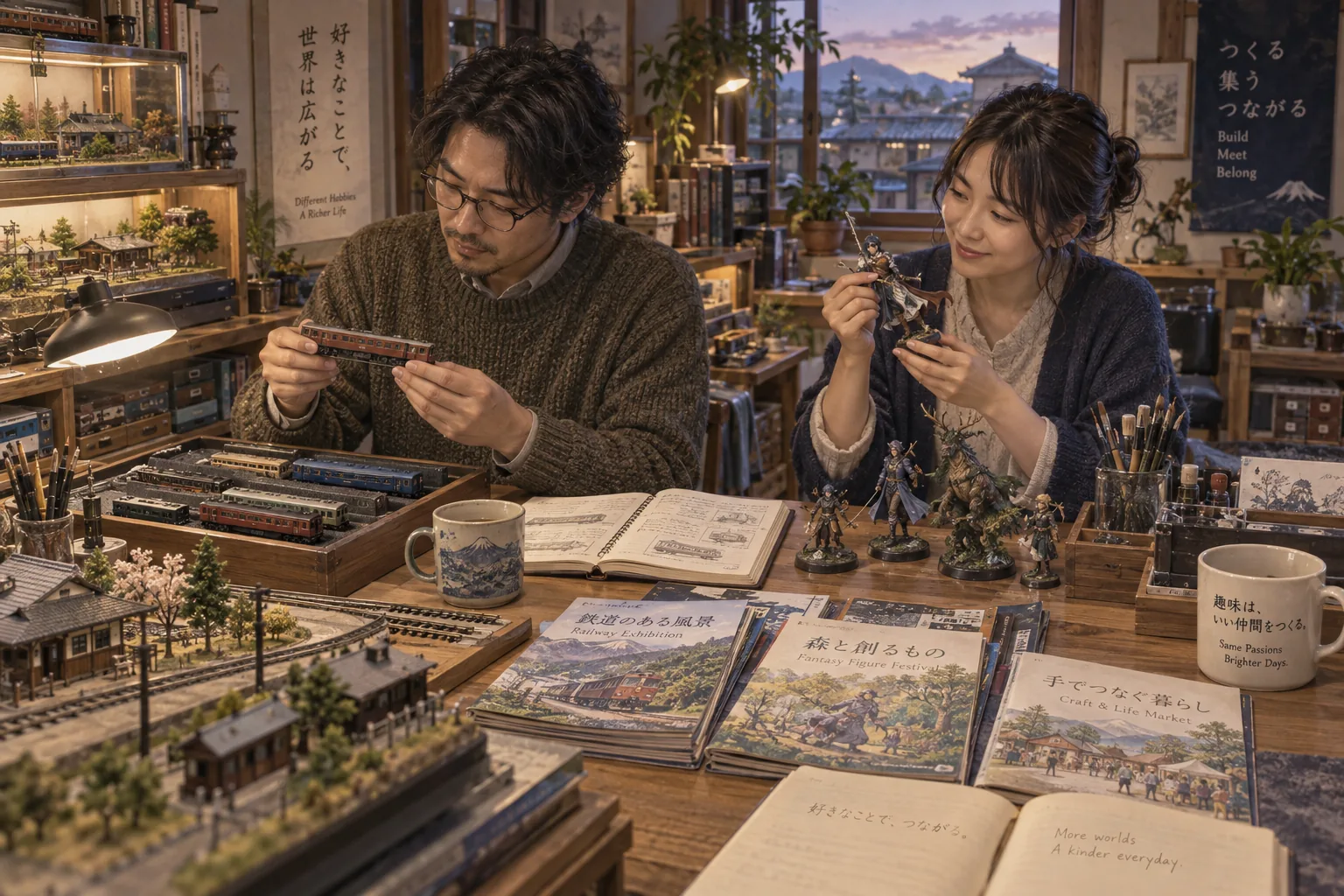
Otaku is a word that has traveled abroad and changed meaning on the way. In English it usually means a fan of anime and manga, and people apply it to themselves with pride. In Japanese it is broader and older. You can be a train otaku, a camera otaku, a military history otaku, an idol otaku.
The literal origin is a formal word for your house, which fans in the early 1980s reportedly used to address each other, and a writer picked it up as a label for the group. The word then went badly wrong: after a high-profile criminal case in 1989 involving a man described in the media as an otaku, it carried a heavy stigma for years.
That has softened enormously. Government tourism campaigns now use otaku culture as an export, and younger people use it lightly about themselves. But it is not entirely neutral yet, and using it about someone else still depends on how well you know them.
オタクは海外へ渡る途中で意味が変わった語です。英語ではたいていアニメと漫画のファンを指し、誇りを持って自称する人もいます。日本語ではもっと広く、もっと古い語です。鉄道オタク、カメラオタク、軍事オタク、アイドルオタクがいます。
語源は「お宅」という相手の家を指す丁寧語で、1980年代初めのファン同士が互いをそう呼んでいたことから、ある書き手が集団の呼び名として使ったと伝えられます。その後、この語は大きくつまずきます。1989年の事件で容疑者がメディアにオタクとして描かれたことで、長く重い偏見を帯びました。
それは大きくやわらぎました。今では政府の観光施策がオタク文化を輸出資源として扱い、若い世代は自分について軽く使います。それでも完全に中立ではなく、他人に使うかどうかは、どれだけ親しいかによります。
Questions people actually ask
And how to answer them.
Is it rude to call someone otaku?
It depends on the person and the tone. Many people use it about themselves happily. Using it about someone you do not know well can still land as a judgment rather than a description.
相手と言い方によります。自分について楽しげに使う人は多いです。あまり親しくない相手に使うと、描写ではなく評価として受け取られることが今もあります。
What's the difference from a hardcore fan?
Depth and specificity. An otaku does not just consume; they collect, catalog, travel to locations, memorize details and often produce their own work about it.
深さと具体性です。オタクは受け取るだけでなく、集め、整理し、現地へ行き、細部を覚え、しばしば自分で何かを作ります。
Where do I go if I want to see it?
Akihabara in Tokyo is the well-known district, and Nakano Broadway is denser and stranger. Osaka has Den Den Town. But the largest event is Comic Market, held twice a year, with hundreds of thousands of attendees.
東京の秋葉原が有名で、中野ブロードウェイのほうが濃く変わっています。大阪には日本橋のでんでんタウンがあります。最大の催しは年2回のコミックマーケットで、来場者は数十万人規模です。
A common misunderstanding
MYTHOtaku is a neutral word in Japanese meaning fan.
FACTIt carried a strong stigma for years and is only partly rehabilitated. The English usage is friendlier than the Japanese one still is.
Phrases you can use
- In Japanese it covers any obsessive hobby, not just anime.日本語ではアニメに限らず、どんな没頭にも使います。
- There are train otaku and camera otaku too.鉄道オタクもカメラオタクもいます。
- The word used to carry a real stigma.以前は本当に強い偏見を伴う語でした。
- A lot of people now use it about themselves.今は自分について使う人が多いです。
- Akihabara is the district people visit for it.その文化を見に行くなら秋葉原です。
Words you need
- obsessiveのめり込んだ、極端に熱心な
- enthusiast愛好家
- stigma偏見、汚名
- niche限られた層向けの
- fandomファンの集まり、ファン文化
Watch
From YouTubeBackground (Japanese)
「おたく」が集団の呼称として使われた最初期の例として、コラムニストの中森明夫が1983年に雑誌『漫画ブリッコ』に書いた文章がよく挙げられる。1989年の連続幼女誘拐殺人事件の報道で、容疑者の部屋にあったビデオテープが繰り返し取り上げられ、オタクへの偏見が強まった。その後、2000年代に入って『電車男』のヒットや、政府の「クールジャパン」政策のなかでイメージは大きく変わった。コミックマーケットは1975年に始まり、現在は年2回、東京ビッグサイトで開催され、来場者数は数十万人規模。同人誌の即売会として世界最大級である。なお「推し」「沼」といった語も、この文化圏から一般語へ広がった。