terebi gemu
home video games
テレビゲーム(てれびげーむ)
In one line
The shortest answer that works
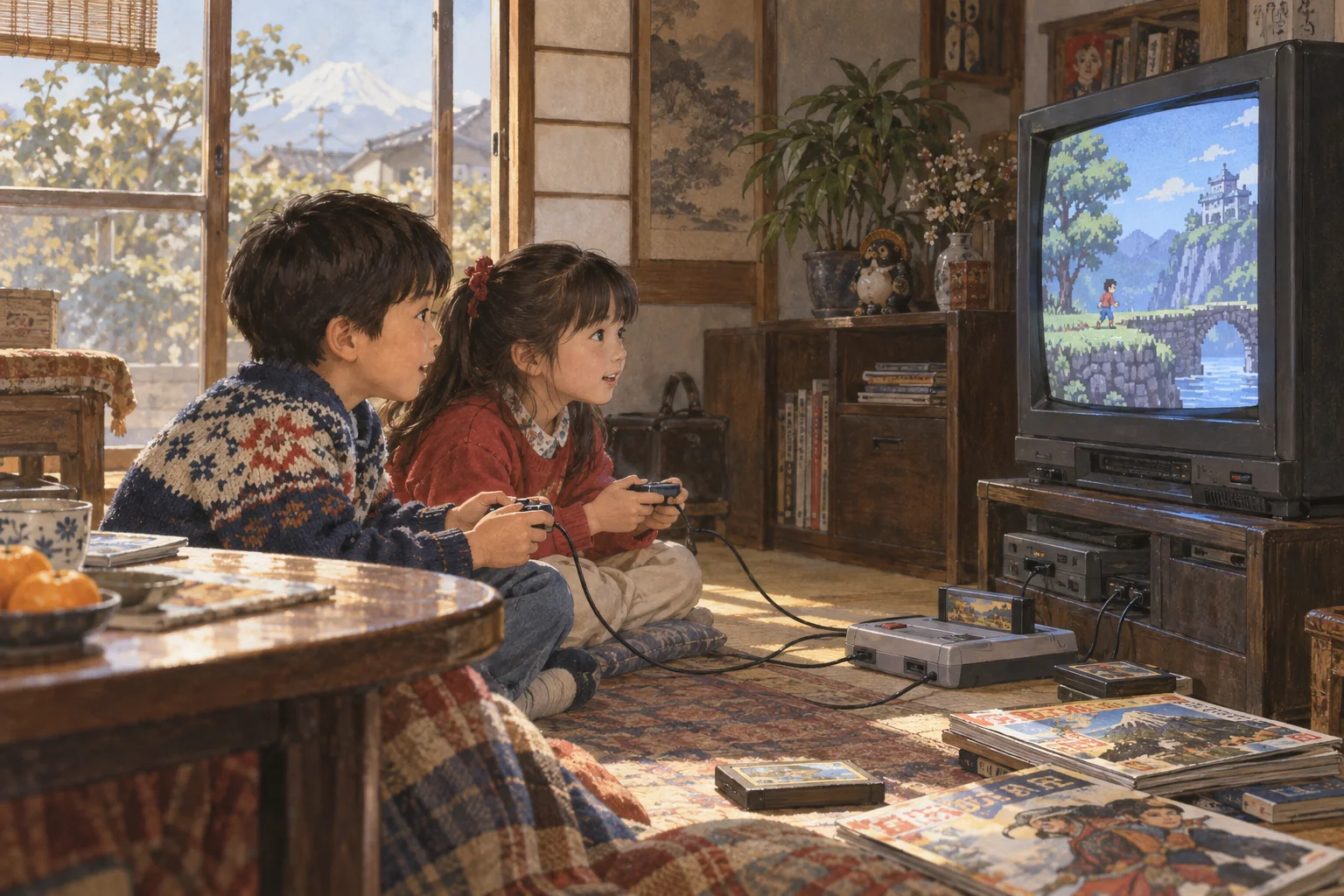
Terebi gemu is the Japanese term for home video games, and Japan shaped much of the industry.
テレビゲームとは家庭用ゲームを指す日本語で、この産業の多くを日本がかたちづくってきました。
In 30 seconds
The standard explanation
Terebi gemu literally means television game and is the everyday Japanese word for a home video game. Japanese companies defined the home console market from the 1980s onward, and several of the characters they created are among the most recognized in the world. In English, people say video game, not television game.
テレビゲームは文字どおりには「テレビの遊び」で、家庭用ゲームを指す日常の日本語です。1980年代以降、日本の企業が家庭用ゲーム機の市場を定義し、そこで生まれたキャラクターのいくつかは世界で最も知られたものになりました。なお英語では television game ではなく video game と言います。
As a short speech
A full paragraph you can read aloud
Terebi gemu, literally television game, is the ordinary Japanese word for a home video game, and it is a good example of a Japanese-made English compound that does not exist in English. The industry itself is a serious part of Japan's cultural export.
The home console that arrived in 1983 went on to rebuild a market that had collapsed in North America, and the handheld launched in 1989, the disc console of 1994 and the hybrid machine of 2017 each reshaped how games were sold and played. Several Japanese-created characters are recognized worldwide by people who have never played the games.
Two cultural notes are worth adding. First, arcade play remained important in Japan long after it faded abroad, which is why fighting games and rhythm games developed the way they did. Second, mobile games now account for a very large share of the Japanese market, and the monetization mechanic they use is named after the capsule toy machine.
テレビゲームは文字どおりには「テレビの遊び」で、家庭用ゲームを指す日常の日本語です。英語には存在しない和製英語の良い例でもあります。この産業そのものは、日本の文化の輸出として重い位置を占めます。1983年に登場した家庭用ゲーム機は、のちに北米で崩壊していた市場を立て直しました。
1989年の携帯機、1994年のディスクを使う機械、2017年の据置と携帯を兼ねた機械は、それぞれゲームの売り方と遊び方を作り変えました。日本で生まれたキャラクターのいくつかは、そのゲームを遊んだことのない人にも世界中で知られています。文化の面で二つ付け加える値打ちがあります。
第一に、日本ではアーケードでの対戦が、海外で衰えたあとも長く重要であり続けました。格闘ゲームや音楽ゲームがあのように発展したのはそのためです。第二に、今の日本の市場では携帯電話向けのゲームが非常に大きな割合を占め、その課金の仕組みはカプセル玩具の機械にちなんで名づけられています。
Questions people actually ask
And how to answer them.
Why is the word terebi gemu and not video game?
It is a Japanese-made compound from the era when playing meant plugging a console into a television set. Video game exists as a loanword too, and younger speakers often just say gemu, but terebi gemu is still widely understood.
ゲームといえば機械をテレビにつなぐことだった時代に日本で作られた複合語です。ビデオゲームという借用語もありますし、若い世代は単にゲームと言うことも多いのですが、テレビゲームは今も広く通じます。
Why do Japanese games feel different?
Partly because of the arcade lineage, which favored short sessions and precise controls, and partly because character design and story are treated as central rather than as decoration. That said, the industry is global and the distinction is blurrier than it once was.
ひとつには短い遊びと精密な操作を重んじたアーケードの系譜のためであり、もうひとつは、キャラクターの造形と物語が飾りではなく中心として扱われてきたためです。とはいえ産業は世界規模になり、この区別は以前ほど明確ではありません。
Phrases you can use
- The word is Japanese-made English.この言葉は和製英語です。
- The 1983 console rebuilt the market.1983年の機械が市場を立て直しました。
- Arcades stayed important here much longer.日本ではアーケードが長く重要であり続けました。
- Mobile games are the biggest share now.今は携帯向けが最も大きな割合です。
Words you need
- consoleゲーム機
- handheld携帯機
- to release (a product)発売する
- in-app purchase課金
Watch
From YouTubeBackground (Japanese)
家庭用ゲーム機は1983年の機種が市場を再建し、1989年の携帯機、1994年のディスク機、2017年の据置と携帯を兼ねる機種が、それぞれ遊び方を変えました。「テレビゲーム」は和製英語で、英語では video game と言います。携帯電話向けのゲームで、課金してランダムに出るアイテムを引く仕組みを「ガチャ」と呼びますが、これはカプセル玩具の機械が語源です。日本で生まれたゲームのキャラクターは、映画や遊園地の施設にも展開されています。