baraeti bangumi
Japanese TV variety programs
バラエティ番組(ばらえてぃばんぐみ)
In one line
The shortest answer that works
Japanese variety shows mix comedians, games and talk, with on-screen subtitles and reaction windows.
日本のバラエティ番組は芸人とゲームとトークを混ぜ、画面に字幕とワイプを重ねて見せます。
In 30 seconds
The standard explanation
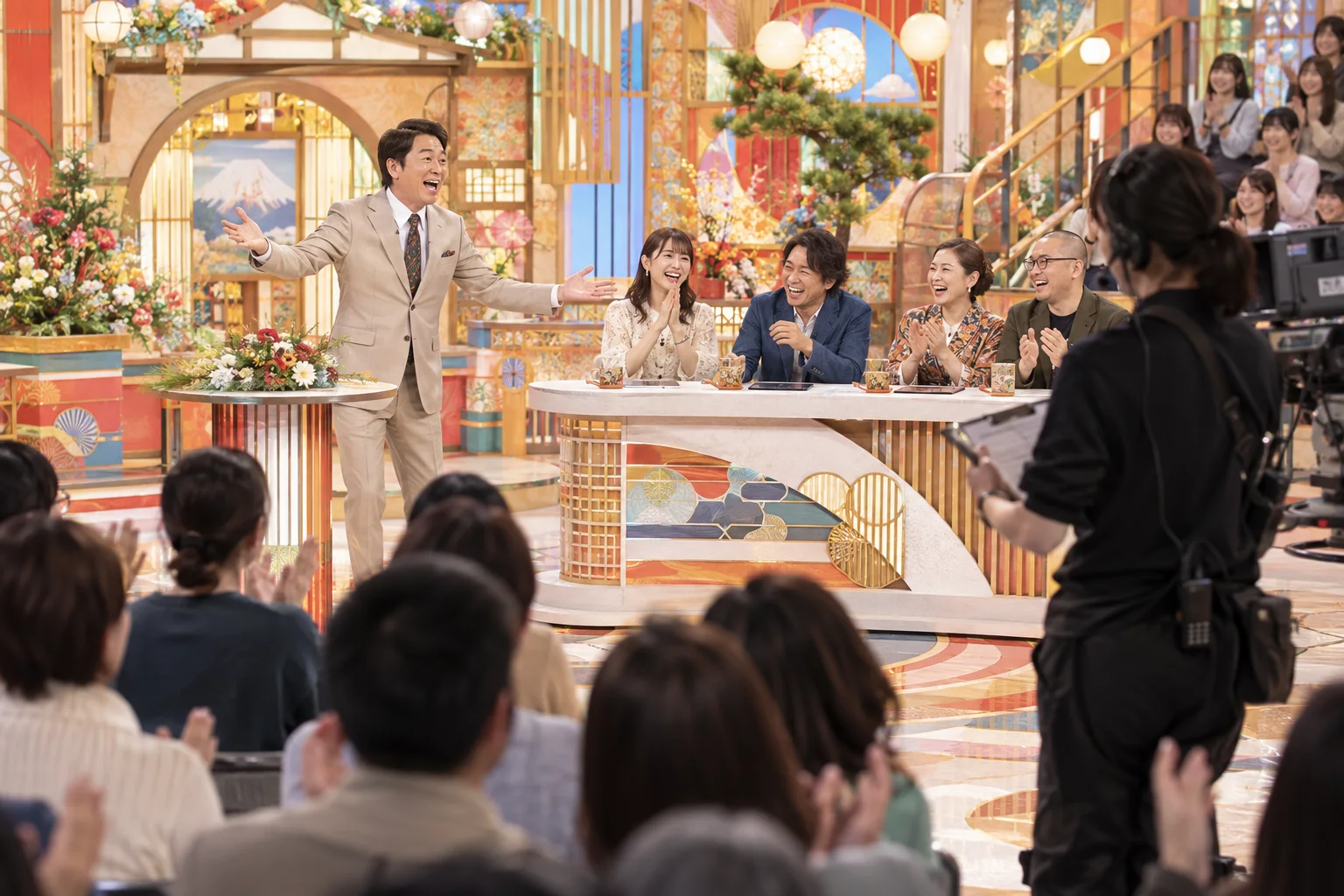
A Japanese variety show typically seats a row of comedians on tiered benches, runs a mix of games, quizzes, food tasting and talk, and decorates the screen with large colored subtitles of what people just said. A small inset window shows a guest reacting to a clip. The style is distinctive enough that clips circulate abroad as examples of strange Japanese television, though the format has clear reasons behind it.
日本のバラエティ番組は、雛壇と呼ばれる段の座席に芸人を並べ、ゲーム、クイズ、食レポ、トークを混ぜて進め、今しゃべった言葉を大きな色つきの字幕で画面に飾ります。小さな窓には、映像を見ている出演者の反応が映ります。この作りは独特で、奇妙な日本のテレビの例として海外に切り取られて出回りますが、その形には理由があります。
As a short speech
A full paragraph you can read aloud
Turn on a Japanese television in the evening and you will probably find a variety show. The format has a grammar of its own. Comedians sit in rows on tiered benches, a setup called hinadan after the tiered stand used to display dolls, and where people sit often reflects seniority. A host runs segments: a quiz, a game, a report from a restaurant, an interview with a guest.
Across the bottom and sides of the screen, large colored subtitles repeat what someone just said, sometimes with an exclamation mark drawn in. In one corner a small window shows the studio watching a taped clip, so you see the reaction and the thing reacted to at the same time. Foreign clips presented as bizarre Japanese TV usually come from this genre.
The design is practical: subtitles help viewers who have the sound low or who join halfway, the inset window tells you how to take what you are watching, and the crowded bench gives the host many people to hand a line to. Critics argue the style flattens everything into the same texture, and younger viewers increasingly watch clips online instead.
夕方に日本のテレビをつけると、たぶんバラエティ番組に行き当たります。この形式には独自の文法があります。芸人は段になった座席に並び、その構造はひな人形を飾る段にちなんで雛壇と呼ばれます。座る位置には、格の上下が表れることが多いです。司会が企画を回します。クイズ、ゲーム、飲食店からの中継、ゲストへのインタビュー。
画面の下と横には、今しゃべった言葉を繰り返す大きな色つきの字幕が並び、感嘆符が描き足されることもあります。隅の小さな窓には、録画を見ているスタジオの様子が映り、反応と反応の対象を同時に見せます。奇妙な日本のテレビとして海外で紹介される切り抜きは、たいていこの分野から来ています。
この作りは実用的です。字幕は音を絞っている人や途中から見る人を助け、隅の窓はいま見ているものをどう受け取ればよいかを教え、混み合った雛壇は司会が振れる相手を多く与えます。批判する人は、この様式がすべてを同じ手触りに均してしまうと言い、若い視聴者はテレビよりネットの切り抜きを見るようになっています。
Questions people actually ask
And how to answer them.
Why are there so many subtitles on screen?
They are said to have started as a way to make unclear speech and dialect legible, then became a production tool: the size, color and timing of a caption can add a joke that was not in the audio. They also let viewers follow with the sound low, which matters in shared homes.
もとは聞き取りにくい話や方言を読めるようにするためだったとされ、やがて演出の道具になりました。字の大きさ、色、出すタイミングで、音声にはなかった笑いを足せるのです。音を小さくしても筋が追えるので、家族で暮らす家では実用的でもあります。
What is the little window in the corner?
It is called a wipe, and it shows the studio guests watching whatever is being played. The point is that you see the reaction alongside the material, which shapes how you read it. Critics dislike it for that reason; producers keep it because it works.
ワイプと呼ばれ、流れている映像を見ているスタジオの出演者を映します。反応を素材と並べて見せることで、受け取り方が方向づけられます。批判する人はまさにその点を嫌い、作り手は効果があるので使い続けます。
Are the comedians famous for anything else?
Many are stand-up or double-act performers who built a name in comedy and now work mainly on variety television, and the biggest also host news and information programs. The career path runs from stage comedy to television, so the bench is full of people with years of live experience.
多くは漫才やコントで名を上げた芸人で、今は主にバラエティで働き、大物は報道や情報番組の司会もします。舞台の笑いからテレビへという道筋があるので、雛壇には長く生で鍛えた人が並んでいます。
A common misunderstanding
MYTHJapanese TV is mostly people being humiliated in strange games.
FACTThe clips that travel abroad are selected for strangeness; the bulk of the genre is talk, quizzes, food and travel segments, and the physical stunt shows are a small and largely older part of it.
Phrases you can use
- The comedians sit on tiered benches.芸人が雛壇に座っています。
- That little window is called a wipe.あの小さい窓はワイプといいます。
- The subtitles repeat what they just said.字幕は今言ったことを繰り返しています。
- Most of it is talk, not stunts.ほとんどは体を張るのではなくトークです。
- Younger people watch clips online instead.若い人はネットの切り抜きで見ます。
Words you need
- variety showバラエティ番組
- host / presenter司会
- caption / subtitle字幕・テロップ
- inset windowワイプ
- segmentコーナー・企画
- comedian芸人
Watch
From YouTubeBackground (Japanese)
日本のバラエティ番組には、雛壇と呼ばれる段状の座席に多くの出演者を並べる構成、発言を大きな文字で画面に出すテロップ、映像を見る出演者を小窓に映すワイプといった独特の演出が定着しています。テロップは聞き取りにくい発言や方言を補う目的から広がり、色や字体や出し方そのものが笑いを作る演出手法になりました。芸人の多くは漫才やコントの舞台を経てテレビに出るため、雛壇には生の舞台経験のある演者が並びます。かつて体を張った企画で知られた番組の映像が海外で切り取られて紹介されることが多く、それが日本のテレビ全体の印象として広まる面があります。近年は視聴形態の変化により、番組の切り抜きが動画配信で見られることが増え、制作側も配信を前提にした作りを意識するようになっています。