nihon eiga
Japanese cinema, then and now
日本映画(にほんえいが)
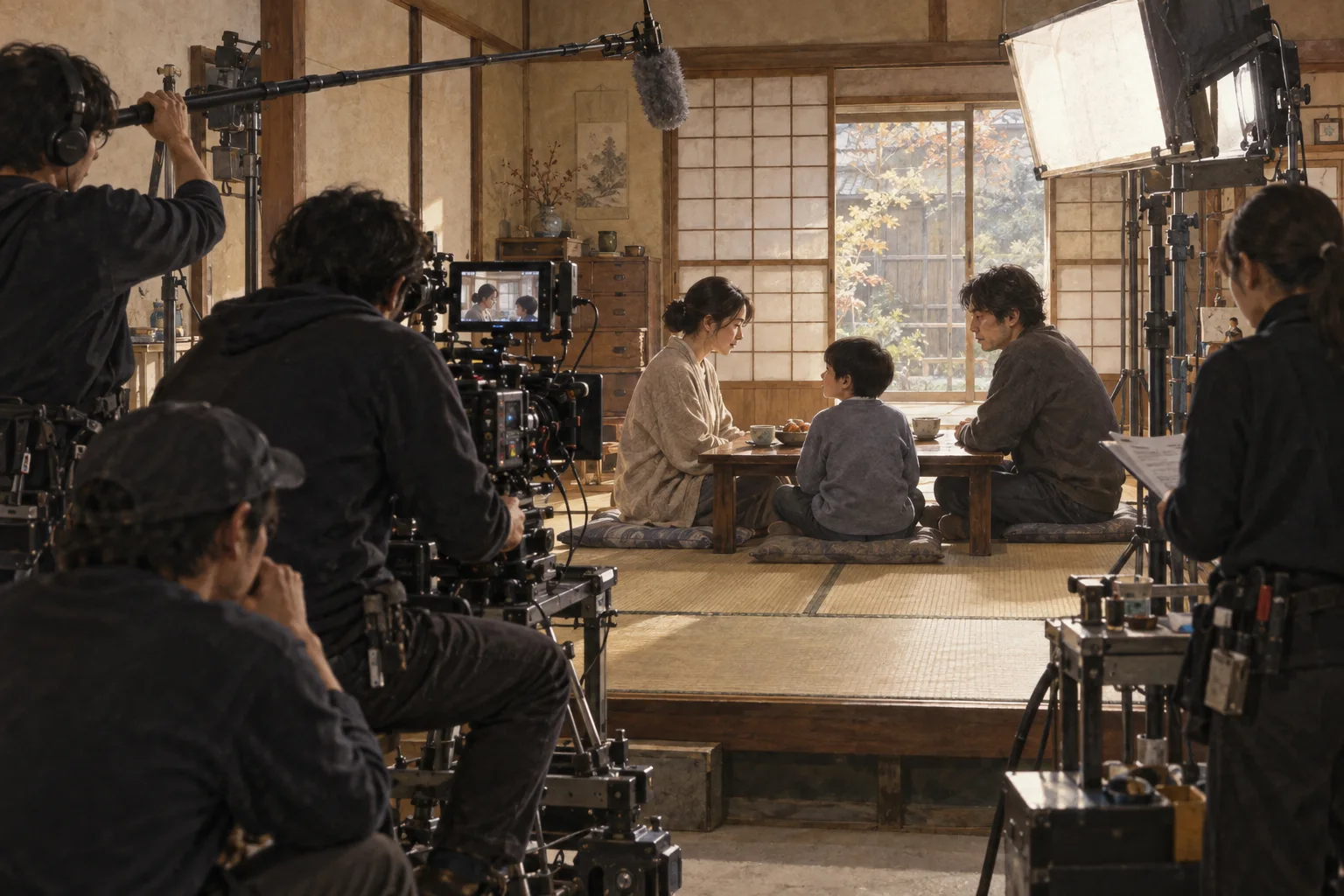
In one line
The shortest answer that works
Nihon eiga, or Japanese cinema, is a film tradition that has made several waves abroad, from postwar masters to animation.
日本映画とは、戦後の巨匠からアニメーションまで、海外で何度か波を作ってきた映画です。
In 30 seconds
The standard explanation
Japan has one of the oldest and largest film industries in the world. Its international reputation was made in the 1950s, when Kurosawa's Rashomon won the top prize at Venice in 1951 and opened the way for Japanese films abroad. A second wave came through animation, and a third through recent live-action dramas. At home, animation and adaptations of manga dominate the box office, which is a different picture from the one seen overseas.
日本には世界でも古く大きな映画産業があります。国際的な評価は1950年代に確立し、黒澤明の「羅生門」が1951年にヴェネツィアで最高賞を受け、日本映画が海外へ出る道を開きました。第二の波はアニメーション、第三の波は近年の実写のドラマです。国内の興行収入はアニメと漫画の映画化が中心で、海外から見える姿とは違っています。
As a short speech
A full paragraph you can read aloud
Japanese cinema has reached the rest of the world in distinct waves, and which one you know probably depends on when you were born. The first came in the 1950s. Kurosawa's Rashomon won the Golden Lion at Venice in 1951, the first time a Japanese film took a top prize at a major foreign festival, and it was followed by the work of Ozu, Mizoguchi and others, films that critics abroad still treat as a high point of the medium.
The second wave was animation, which reached audiences who had never watched a Japanese live-action film; Spirited Away won the Academy Award for best animated feature in 2003. A third wave has come through live-action drama, with Departures taking the foreign language award in 2009 and Drive My Car the international feature award in 2022.
Meanwhile the domestic picture is different again. The films that top the Japanese box office are mostly animation and adaptations of popular manga, and a great deal of the industry's energy goes into television-linked productions that rarely travel.
日本映画は、はっきりした波をなして世界に届いてきました。どの波を知っているかは、たぶん生まれた時期によります。最初の波は1950年代です。黒澤明の「羅生門」が1951年のヴェネツィアで金獅子賞を受けました。
日本映画が海外の主要な映画祭で最高賞を取った最初の例で、それに小津、溝口らの作品が続き、海外の批評家は今もこれらを映画という表現の頂点の一つとして扱います。第二の波はアニメーションで、日本の実写を一本も見たことのない観客に届きました。「千と千尋の神隠し」は2003年にアカデミー賞の長編アニメ映画賞を受けています。
第三の波は実写のドラマで、「おくりびと」が2009年に外国語映画賞、「ドライブ・マイ・カー」が2022年に国際長編映画賞を受けました。一方、国内の風景はまた別です。日本の興行収入の上位はおおむねアニメと人気漫画の映画化で、産業の力の多くは、海外にはあまり出ていかないテレビと結びついた作品に注がれています。
Questions people actually ask
And how to answer them.
Where should I start if I've never seen one?
Depends what you like. For the postwar reputation, start with Rashomon or Tokyo Story. For animation beyond the obvious, look at works by directors other than the most famous one. For recent live-action, Drive My Car and Shoplifters are good entry points and are widely available with subtitles.
好みによります。戦後の評価を知りたいなら「羅生門」か「東京物語」から。アニメーションなら、最も有名な監督以外の作品も見てください。近年の実写なら「ドライブ・マイ・カー」や「万引き家族」が入り口としてよく、字幕つきで広く見られます。
Why is Rashomon so often mentioned?
For two reasons. It won the Golden Lion at Venice in 1951, which was the first major international prize for a Japanese film and changed what Western distributors thought was possible. And its structure, the same event told in incompatible versions, gave English the phrase the Rashomon effect.
二つの理由があります。1951年のヴェネツィアで金獅子賞を取り、日本映画が国際的な大きな賞を得た最初の例として、欧米の配給が考える可能性を変えました。そして、同じ出来事が食い違う形で語られるというその構成から、英語に「羅生門効果」という言い方が生まれました。
What do Japanese people actually watch?
Domestically, animation and films based on popular manga and novels take most of the top box office places, along with television spin-offs. Art films by internationally known directors often do modest business at home. The gap between what wins abroad and what sells here is real.
国内では、アニメと人気漫画や小説の映画化、そしてテレビ発の作品が興行の上位の多くを占めます。国際的に知られる監督の作品が国内では地味な興行にとどまることも珍しくありません。海外で評価されるものと、ここで売れるものの差は実際にあります。
Phrases you can use
- Rashomon won the top prize at Venice in 1951.「羅生門」は1951年にヴェネツィアで最高賞を取りました。
- It was the first Japanese film to do that.日本映画としては初めてのことでした。
- Animation dominates the box office here.ここではアニメが興行の中心です。
- Have you seen it with subtitles?字幕で見ましたか。
- The films that win abroad aren't always the ones that sell here.海外で評価される作品が、ここで売れる作品とは限りません。
Words you need
- director監督
- subtitles字幕
- box office興行収入
- live-action実写
- adaptation映画化・翻案
- film festival映画祭
Watch
From YouTubeBackground (Japanese)
黒澤明監督の「羅生門」は1950年の公開で、1951年のヴェネツィア国際映画祭で金獅子賞を受賞しました。日本映画が海外の主要な映画祭で最高賞を得た最初の例とされ、これをきっかけに小津安二郎、溝口健二らの作品も海外で紹介されました。アカデミー賞では、宮崎駿監督の「千と千尋の神隠し」が2003年に長編アニメ映画賞、滝田洋二郎監督の「おくりびと」が2009年に外国語映画賞、濱口竜介監督の「ドライブ・マイ・カー」が2022年に国際長編映画賞を受けています。国内の興行収入の上位はアニメーションと漫画原作の実写化が占めることが多く、テレビ局が製作に関わる作品も大きな割合を占めます。フィルムの保存は課題で、戦前の日本映画は多くが現存していないとされます。