kawara yane
the tiled roof
瓦屋根(かわらやね)
In one line
The shortest answer that works
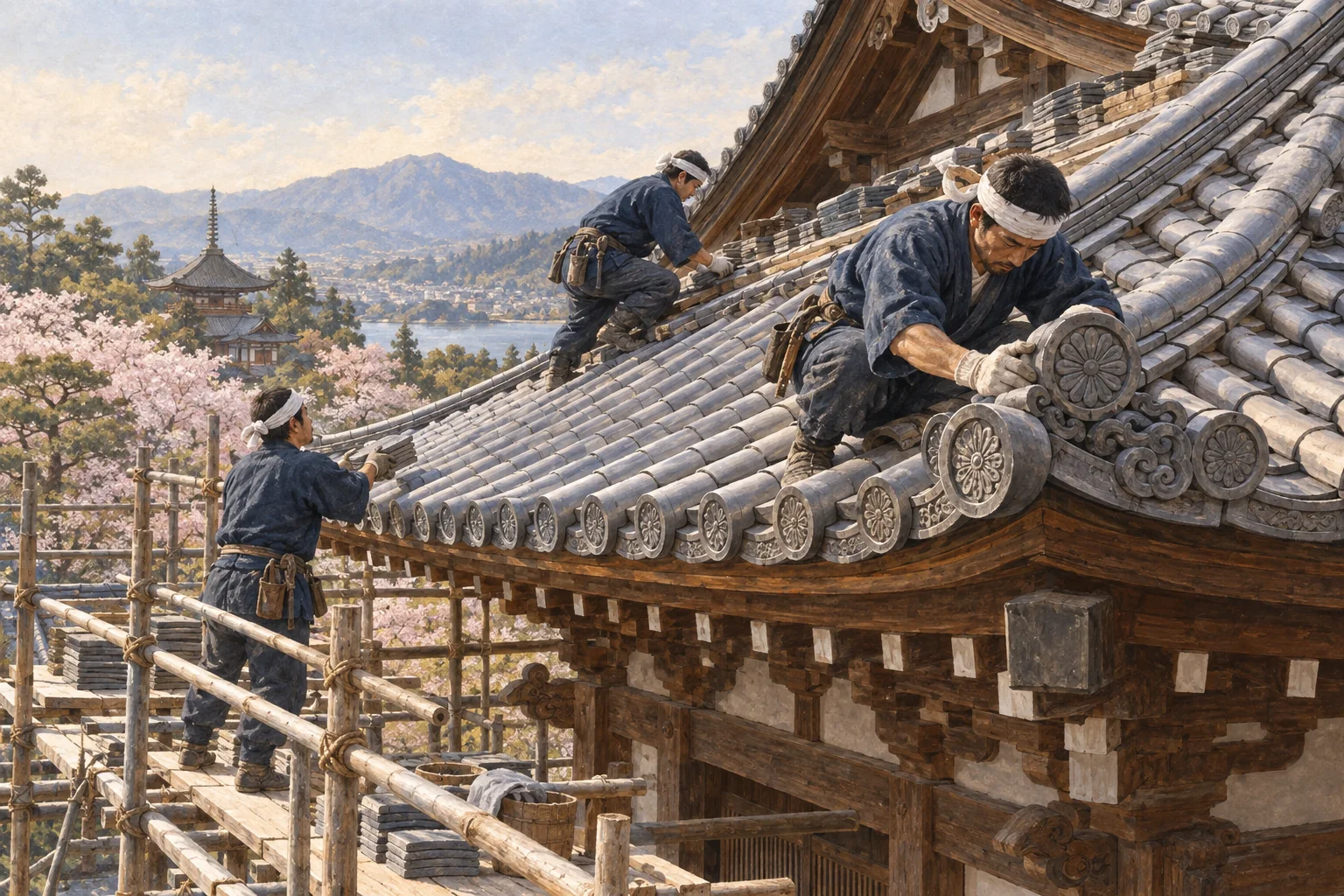
Kawara yane, or tiled roofs, are roofs of heavy clay tiles with a dark, glossy, wave-like surface.
瓦屋根とは、黒くつやのある波のような表情を持つ、重い粘土の瓦で葺いた屋根です。
In 30 seconds
The standard explanation
Kawara are fired clay tiles laid in overlapping rows. The classic type is smoked in the kiln, which leaves a carbon film with a silvery black sheen and no glaze. They last many decades, shed heavy rain and snow well, and insulate. They are also heavy, which makes a building top-heavy in an earthquake, so lighter metal and slate roofs have taken much of the market in new housing.
瓦は粘土を焼いた屋根材で、重ねながら葺きます。代表的なのはいぶし瓦で、窯で燻すことで釉薬なしに銀黒のつやを持つ炭素の膜ができます。何十年も持ち、強い雨や雪をよく流し、断熱にもなります。同時に重く、地震のときに建物の頭を重くするため、新築では軽い金属やスレートの屋根が大きな割合を占めるようになりました。
As a short speech
A full paragraph you can read aloud
The dark, rippling roofs you see over old towns and temples are made of kawara, fired clay tiles. The most characteristic kind is not glazed but smoked: at the end of firing, the kiln is filled with smoke, and carbon settles on the surface as a thin film with a silvery black shine that weathers beautifully.
Tiles are laid overlapping in rows so that water runs off without reaching the wood beneath, and the ridge is capped with thicker pieces stacked by hand. At the ends you often find a round or decorated tile, sometimes bearing a family crest or a demon face meant to guard the building. A tiled roof can last for generations, and it insulates the house and keeps it quiet.
The problem is weight. A heavy roof raises a building's center of gravity, and after major earthquakes many damaged houses had tiled roofs, so lighter materials have taken much of the new-build market. Modern tiles are fixed with nails and clips, which changes that picture considerably.
古い町や寺の上に見える、黒く波打つ屋根は瓦、つまり焼いた粘土の屋根材でできています。最も特徴的なのは釉薬をかけずに燻したいぶし瓦で、焼成の最後に窯を煙で満たすと、表面に炭素が薄い膜として定着し、銀黒のつやが出て、年月とともに美しく枯れていきます。
瓦は重ねながら列に葺かれ、水が下の木に届かずに流れ落ちるようになっていて、棟は厚い部材を手で積んで納めます。端にはしばしば丸い瓦や飾りの瓦があり、家紋や、建物を守るための鬼の顔をつけたものもあります。瓦屋根は何世代も持ち、断熱になり、家を静かにします。
問題は重さです。重い屋根は建物の重心を上げ、大きな地震のあとには瓦屋根の家に被害が目立ったため、新築では軽い素材が市場の多くを占めるようになりました。今の瓦は釘や金具で留めるので、その事情はかなり変わっています。
Questions people actually ask
And how to answer them.
If tiles are dangerous in earthquakes, why were they used at all?
Because they solved older problems first. Before tiles, roofs were thatch or wooden shingles, which burned, and fire destroyed whole districts of Edo repeatedly. Tiles are fireproof, so the authorities encouraged them. Weight was the trade-off accepted for not burning down.
先に別の問題を解いたからです。瓦の前の屋根は茅や板で、よく燃え、江戸は何度も大火で町ごと焼けました。瓦は燃えないので、当局はその普及を促しました。重さは、焼けないことと引き換えに受け入れられた代償でした。
What is the face at the end of the ridge?
An onigawara, a ridge-end tile often modeled as a demon's face. It sits where the ridge meets the eaves and is meant to ward off misfortune, in the same spirit as a gargoyle. Not all are demons; some carry a family crest or a wave pattern instead.
鬼瓦といって、鬼の顔をかたどることの多い棟の端の瓦です。棟と軒の合わさるところに据えられ、ガーゴイルと同じ気持ちで災いを払うためのものです。すべてが鬼というわけではなく、家紋や波の文様のものもあります。
Why are some roofs black and some brownish-red?
The black ones are smoked tiles with a carbon film. The reddish-brown ones are glazed, and the most famous of those come from Shimane, where tiles fired very hot under an iron-rich local glaze stand up to hard frost, so they are used across the snowy side of the country. Color largely tells you the region and the method.
黒いのは炭素の膜を持ついぶし瓦です。赤茶のものは釉薬をかけたもので、最も知られるのは島根の石州瓦で、鉄分を含む地元の釉薬をかけて高温で焼くため強い凍結に耐え、雪の多い日本海側で広く使われます。色はおおむね産地と製法を示しています。
Phrases you can use
- That roof is made of clay tiles.あの屋根は瓦葺きです。
- The black shine comes from smoking, not glaze.あの黒いつやは釉薬ではなく燻したものです。
- The face on the ridge is meant to ward off bad luck.棟の鬼瓦は厄除けのためのものです。
- A tiled roof lasts for decades.瓦屋根は何十年も持ちます。
- New houses often use lighter roofing.新しい家は軽い屋根材を使うことが多いです。
Words you need
- roof tile瓦
- ridge棟
- eaves軒
- glazed / unglazed釉薬のある/ない
- fireproof燃えにくい・不燃の
- center of gravity重心
Watch
From YouTubeBackground (Japanese)
瓦は仏教の伝来とともに大陸から伝わり、寺院の屋根に用いられたのが始まりとされます。住宅に広まるのは江戸時代で、たび重なる大火を受けて、燃えにくい瓦葺きが奨励されたことが普及を後押ししました。いぶし瓦は焼成の最後に燻すことで表面に炭素の膜を作り、釉薬を使わずに銀黒の色を得ます。産地では、愛知の三州、兵庫の淡路、島根の石州が大きな産地として知られ、石州瓦は鉄分を含む来待釉をかけて高温で焼き、凍結に強いことから寒冷地で使われてきました。棟の端に据える鬼瓦は厄除けの意味を持ち、専門の職人が手作りするものもあります。近年は建物を軽くするため金属やスレートの屋根が増え、瓦の生産量は大きく減りましたが、釘や金具で確実に留める工法が整備され、耐震性は以前より高まっています。