jinja no kenchiku
how to read the buildings of a Shinto shrine
神社の建築(じんじゃのけんちく)
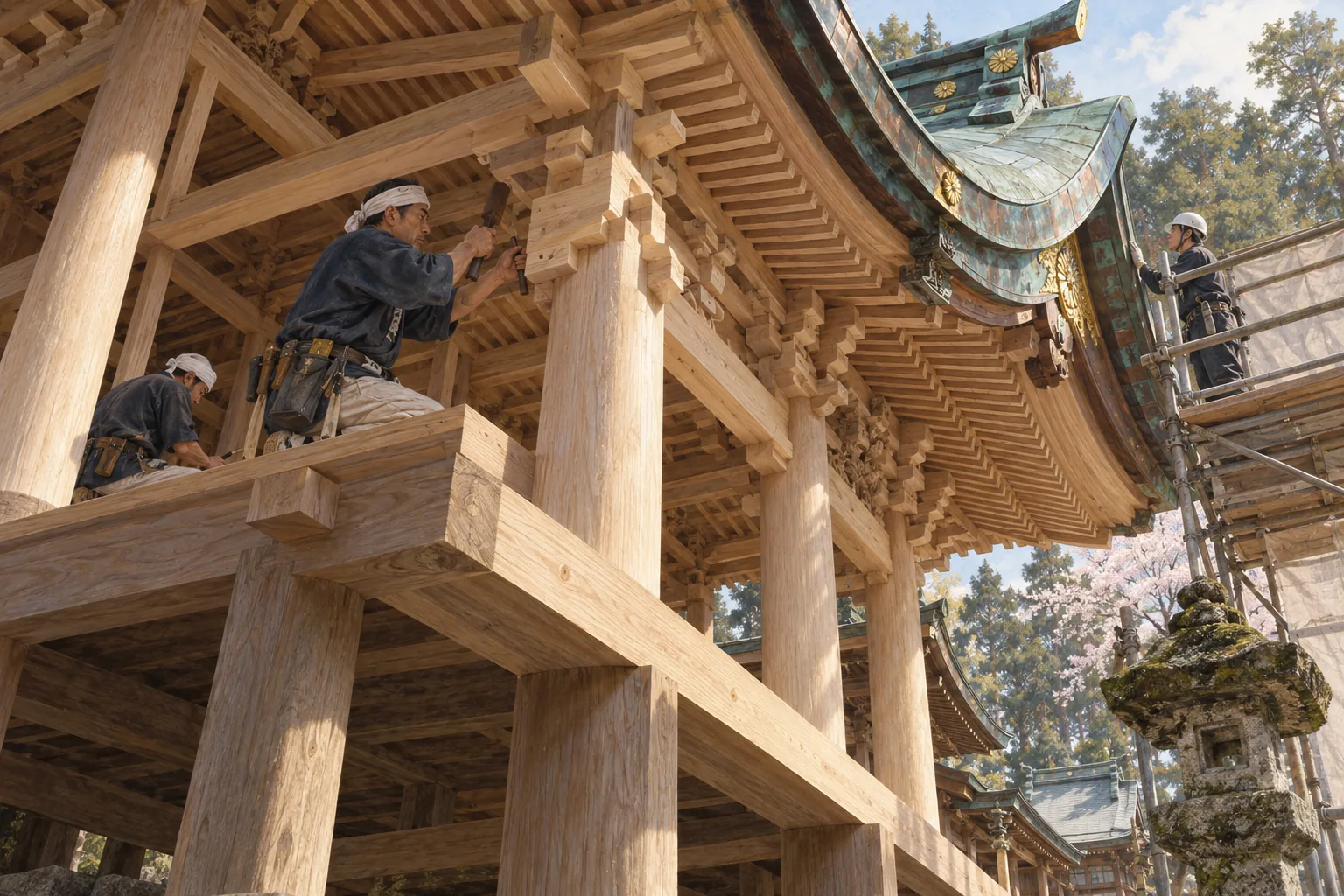
In one line
The shortest answer that works
Jinja no kenchiku, or shrine architecture, is a prayer hall for people and a closed inner hall for the deity.
神社の建築とは、人が拝む拝殿と、神の鎮まる本殿を分けたつくりで、本殿は開かれません。
In 30 seconds
The standard explanation
Walking into a shrine you pass under a torii, along the approach, past a water basin, and arrive at the hall of worship. Behind it, usually higher and smaller, is the main hall where the sacred object is kept, and that building is not entered by visitors and often not by anyone except at certain rites. Reading this layout makes any shrine legible.
神社に入ると、鳥居をくぐり、参道を歩き、手水舎を過ぎて拝殿に着きます。その奥、たいていは一段高く、小さめに建っているのが本殿で、神体が納められています。この建物に参拝者は入らず、決まった祭のほかは誰も入らないことが多いです。この並びが読めると、どの神社も分かるようになります。
As a short speech
A full paragraph you can read aloud
Shrine buildings follow a layout that is worth learning once, because it then applies almost everywhere. You enter through a torii gate, which marks the boundary of the sacred precinct, and walk along the approach, traditionally keeping to the side rather than the center. A water basin stands near the entrance for rinsing your hands and mouth. A pair of guardian figures often sits before the hall.
The building you reach and pray at is the haiden, the hall of worship, with a box for offerings and often a thick rope and bell. Behind it, usually raised and smaller, is the honden, the main hall, which houses the object in which the deity is understood to reside. Visitors do not enter it, and at some shrines nobody does except priests at particular rites.
Architecturally the main hall is the conservative part, built in styles said to descend from ancient raised storehouses, traditionally with a thatched or bark roof, crossed finials at the ridge and a floor lifted off the ground. Some shrines have no main hall at all, because the mountain or rock behind is itself the object of worship.
神社の建物には並びの型があり、一度覚える値打ちがあります。ほとんどどこでも当てはまるようになるからです。まず鳥居をくぐります。ここが神域の境です。参道を歩くときは、中央ではなく端を通るのが古くからの作法です。入口の近くには手水舎があり、手と口をすすぎます。社殿の前には狛犬が一対いることが多いです。
たどり着いて拝む建物が拝殿で、賽銭箱があり、太い綱と鈴が下がっていることも多いです。その奥、たいていは一段高く、小さめに建っているのが本殿です。神が鎮まるとされる神体を納めています。参拝者がここに入ることはなく、神社によっては、決まった祭のときの神職のほかは誰も入りません。
建築としては、本殿がいちばん古い形を保つ部分です。古代の高床の倉に遡るとされる形式で建てられ、屋根は伝統的に茅や檜皮で葺き、棟には千木と鰹木が乗り、床は地面から持ち上げられています。本殿を持たない神社もあります。背後の山や岩そのものが信仰の対象だからです。
Questions people actually ask
And how to answer them.
Why can I not go inside the main hall?
It houses the object in which the deity is said to reside, and it is kept closed. Worship takes place from outside at the hall in front, which is what the offering box and bell are for.
神が鎮まるとされる神体を納めており、閉じられています。参拝は手前の拝殿の外から行います。賽銭箱と鈴はそのためにあります。
What are the crossed poles on the roof?
They are chigi, finials formed by the crossing of the roof boards at the gable, and the short logs lying along the ridge are katsuogi. Both are old features preserved in shrine building and rarely seen elsewhere.
千木といい、屋根の板が破風で交わる形から生まれた飾りです。棟に横たわる短い木は鰹木です。どちらも神社の建築に残る古い要素で、他ではあまり見られません。
How do I tell a shrine from a temple?
As a rule of thumb, a torii gate at the entrance means a shrine. A temple has a roofed gate, often with guardian statues, and usually an incense burner and often a graveyard, which you do not normally find at a shrine.
目安として、入口に鳥居があれば神社です。寺には屋根のある山門があり、仁王像が立つこともあります。線香を焚く香炉があり、墓地があることも多く、これらはふつう神社にはありません。
Phrases you can use
- The torii marks the boundary of the precinct.鳥居から先が神域です。
- Please walk to the side of the approach.参道は端を歩いてください。
- You pray at the hall in front.拝むのは手前の拝殿です。
- The inner hall is not open to visitors.本殿は公開されていません。
- Photography is fine in the grounds.境内の撮影は大丈夫です。
Words you need
- a precinct境内・神域
- the hall of worship拝殿
- the main hall本殿
- a thatched roof茅葺きの屋根
- a raised floor高床
Watch
From YouTubeBackground (Japanese)
本殿の形式には名前が付いており、伊勢神宮の神明造、出雲大社の大社造、春日大社の春日造などが知られています。いずれも高床で、屋根の棟に千木と鰹木を置く点が共通します。参道の中央は神の通る道とされ、端を歩くのが作法とされています。拝殿の鈴を鳴らすのは、自分が来たことを知らせるためと説明されます。本殿を持たず、山や岩、木そのものを対象とする神社もあり、奈良の大神神社が例として知られています。境内には摂社や末社と呼ばれる小さな社が置かれていることも多いです。