keiko
training in a traditional art or martial art
稽古(けいこ)
In one line
The shortest answer that works
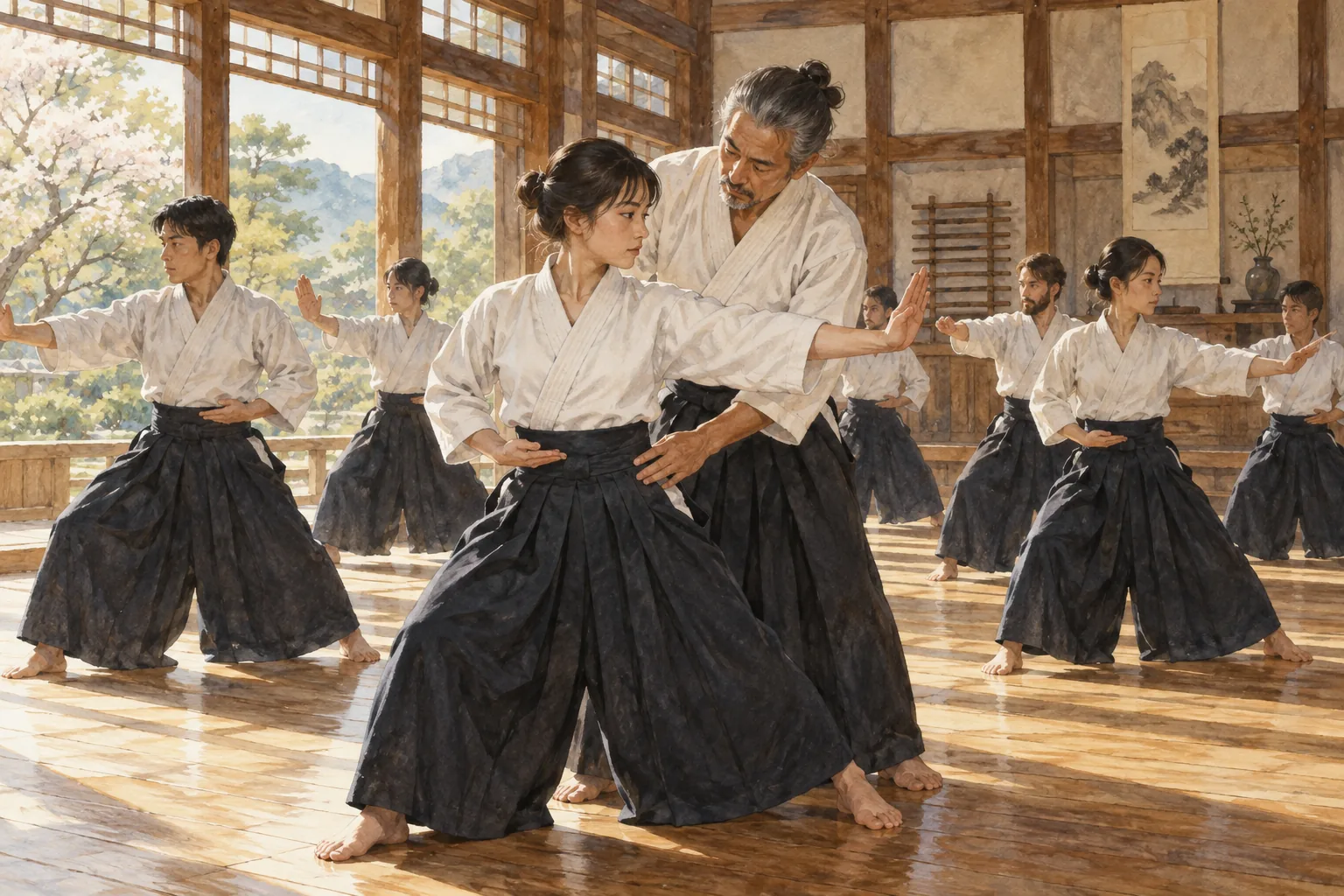
Keiko is training in a traditional art, done the same way every time, for years.
稽古とは、伝統的な芸事や武道で、同じことを何年も繰り返し行う訓練のことです。
In 30 seconds
The standard explanation
Keiko is the word used for training in martial arts, tea ceremony, calligraphy, noh and other traditional arts. It is usually translated as practice, but it carries something extra. A keiko session follows a fixed form, opens and closes with a bow, and is led by a teacher whose way of doing things you copy first and question later. The aim is not only to get better but to keep the form alive by repeating it correctly.
稽古とは、武道や茶道、書道、能などの伝統的な芸事における訓練を指す言葉です。ふつう practice と訳されますが、それだけでは足りません。稽古は決まった形で進み、礼に始まり礼に終わり、先生のやり方をまず真似て、疑問は後から持ちます。目的は上達だけでなく、正しく繰り返すことでその形を保つことにもあります。
As a short speech
A full paragraph you can read aloud
If you join a judo club or a tea ceremony class in Japan, what you do there is called keiko, not practice. The difference matters. In a Western sports practice, you might try a new technique, adjust it to suit your body, and measure whether it works.
In keiko, especially at the beginning, you copy the teacher's form exactly and you do not change it. You may repeat the same movement for years. The reasoning is that the form was refined over generations and you are not yet in a position to judge it.
Some people find this frustrating, and it has real costs, because bad teaching can go unchallenged for a long time. But it also explains something about Japan that visitors notice everywhere. The value is placed on doing a small thing correctly and repeatedly, rather than on doing it in a new way.
日本で柔道の道場や茶道の教室に入ると、そこでやることは practice ではなく稽古と呼ばれます。この違いは大事です。西洋のスポーツの練習なら、新しい技を試し、自分の体に合わせて調整し、効果を測るかもしれません。
稽古では、特に最初のうちは、先生の形をそのまま真似て、変えません。同じ動きを何年も繰り返すこともあります。理由は、その形が何代もかけて磨かれてきたもので、こちらはまだ良し悪しを判断できる立場にない、という考え方です。
もどかしく感じる人もいますし、実際に弊害もあります。まずい指導が長く正されないことがあるからです。ただ、この考え方は、外国の方が日本のあちこちで気づくことの説明にもなります。新しいやり方よりも、小さなことを正しく繰り返すほうに価値が置かれているのです。
Questions people actually ask
And how to answer them.
So is keiko just the Japanese word for practice?
It is the word used for traditional arts specifically. For a soccer team or a school test you would say renshu or benkyo. Keiko implies a teacher, a fixed form, and a lineage behind it.
伝統的な芸事に使う言葉です。サッカーのチームや学校の勉強なら練習・勉強と言います。稽古には、先生がいて、決まった形があり、その背後に流れがある、という含みがあります。
Why can't beginners ask questions?
They can, and good teachers welcome it. But the expectation is that you first copy the form enough times to have something real to ask about. Asking why before you can do it is seen as skipping a step.
聞いてかまいませんし、よい先生は歓迎します。ただ、まず形を十分に繰り返して、聞くに値する中身ができてから、という前提があります。できないうちに理由を尋ねるのは、順番を飛ばしていると見られます。
A common misunderstanding
MYTHKeiko means endless painful repetition with no explanation.
FACTRepetition is central, but harshness is not the point and is increasingly criticized. Many dojos and schools have moved away from the shouting-and-endurance style of the past.
Phrases you can use
- We call this keiko, not practice.これは練習ではなく、稽古と呼びます。
- Just copy the teacher's form for now.いまは先生の形をそのまま真似てください。
- You'll do this same movement for a long time.この同じ動きを、長い間やることになります。
- It starts with a bow and ends with a bow.礼に始まり、礼に終わります。
- The questions come later, once you can do it.質問は、できるようになってからです。
Words you need
- form形、かた
- repetition繰り返し
- master, teacher師匠、先生
- lineage, school流派
- beginner初心者
Watch
From YouTubeBackground (Japanese)
稽古という語の「稽」には考える、「古」には古いことという意味があり、もとは古いことを考え調べるという意味だった。中国の古典に由来する語で、日本では芸事の訓練を指すようになった。世阿弥の能楽論には稽古についての記述があり、年齢に応じた稽古のしかたが説かれている。芸道や武道でいう「守破離」という言葉も同じ考え方に立ち、まず形を守り、次に破り、最後に離れる、という段階を示す。ただし最初の「守」に長くとどまりすぎる指導への批判もある。