ukemi
the breakfall technique that lets you get thrown without getting hurt
受け身(うけみ)
In one line
The shortest answer that works
Ukemi is the breakfall technique judo and other martial arts teach so a thrown person lands without injury.
受け身とは、柔道などの武道で、投げられた人がけがをせずに着地するために練習する倒れ方の技術です。
In 30 seconds
The standard explanation
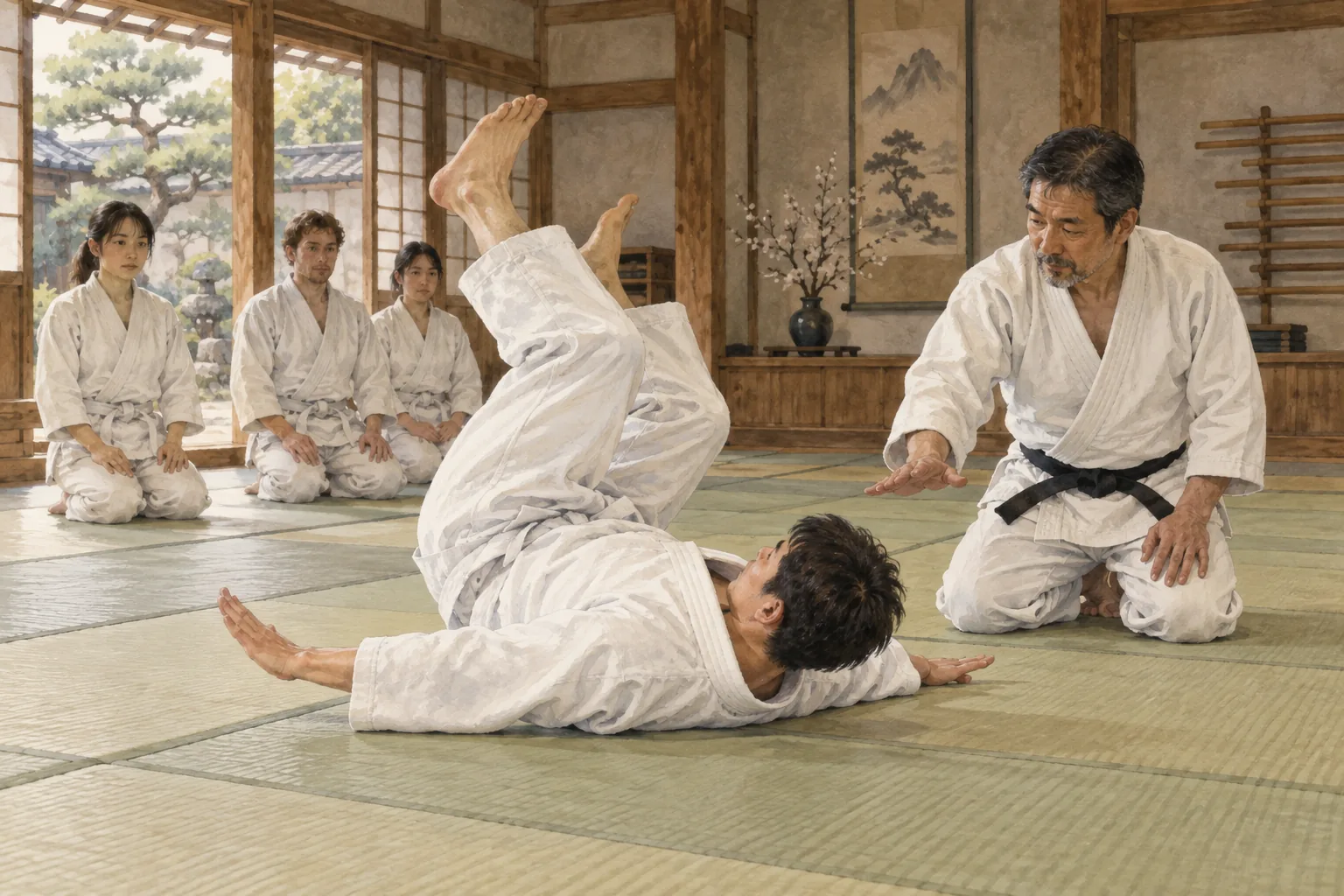
Ukemi means the way of falling safely, practiced so that a person being thrown or knocked down absorbs the impact instead of taking it directly on the head, spine or a locked joint. Beginners drill it long before they learn to throw anyone else, slapping the mat with an open hand and arm as they land to spread out the force. It's why experienced judo or aikido practitioners can be thrown repeatedly in training without much injury, even though a fall that looks violent to a spectator is, to them, a controlled and rehearsed movement.
受け身とは、投げられたり倒されたりしたときに、頭や背骨、関節に直接衝撃を受けるのではなく、その力を分散させて安全に倒れるための技術です。初心者は、人を投げる技を習うよりずっと前に、開いた手のひらと腕で畳を打って衝撃を逃がすこの受け身から練習します。経験を積んだ柔道や合気道の練習者が、稽古で何度投げられても大きなけがをしないのはこのためで、見ている人には激しく見える倒れ方も、本人にとっては十分に稽古を積んだ制御された動きなのです。
As a short speech
A full paragraph you can read aloud
Watch a judo class and the first thing beginners spend weeks on isn't throwing anyone, it's falling. That's ukemi, the technique of taking an impact and turning it into something the body can absorb rather than something the head, spine or a joint takes directly. The basic version has a practitioner slapping the mat hard with an open palm and forearm just before the rest of the body lands, which spreads the force across a wider area and keeps the head from hitting the floor at all.
There are separate versions for falling backward, sideways, forward and rolling forward, each suited to a different kind of throw. Once ukemi becomes automatic, a fall that looks alarming to an outside spectator is, for the practitioner, routine and controlled — which is exactly why judo and aikido can be practiced with real throws, day after day, without the injuries you might expect from being thrown repeatedly.
柔道のクラスを見ると、初心者が最初の数週間かけて練習するのは、人を投げることではなく倒れ方であることに気づきます。それが受け身です。頭や背骨、関節が直接衝撃を受けるのではなく、体全体でその衝撃を吸収できるように変える技術です。
基本の受け身では、体の残りの部分が畳に着く直前に、開いた手のひらと前腕で強く畳を打ちます。これによって力が広い範囲に分散され、何より頭が床に打ちつけられるのを防ぎます。後方受身、側方受身、前方受身、前方回転受身と、投げ技の種類に応じた受け身がそれぞれ用意されています。
受け身が体に染みつくと、外から見ると危なっかしく見える倒れ方も、本人にとってはいつも通りの制御された動きになります。だからこそ柔道や合気道は、投げられ続けても思うほどけがをせずに、実際に投げ合う稽古を日々積むことができるのです。
Questions people actually ask
And how to answer them.
Do all martial arts teach ukemi the same way?
The core idea, spreading impact and protecting the head, is shared, but judo, aikido and other arts each have their own specific ukemi drills suited to how they throw people, so the details differ even if the goal is the same.
衝撃を分散させ、頭を守るという基本の考え方は共通していますが、柔道や合気道などそれぞれの武道が、その投げ技に合わせた独自の受け身の練習法を持っているため、目的は同じでも細部は異なります。
Can adults learn ukemi safely, or is it only for kids?
Adults learn it too, usually more cautiously and slowly than children, since falling technique is taught on padded mats starting with low, gentle falls before building up to full throws, and it's considered a basic safety skill rather than something only for young beginners.
大人も習得できます。たいていは子どもより慎重にゆっくり進め、まずは低く穏やかな倒れ方から始めて、少しずつ本格的な投げ技に対応できるようにします。受け身は若い初心者だけのものではなく、基本的な安全のための技術と考えられています。
Is ukemi useful outside of martial arts, like if I just slip and fall?
Many practitioners say the reflex does carry over, since the instinct to tuck the chin and avoid landing on an outstretched hand or the head can reduce injury in an ordinary fall, though it's trained for the dojo, not certified as general injury prevention.
多くの練習者が、この反射は日常でも役立つと言います。あごを引き、伸ばした手や頭で直接受け止めないようにする反射が、普通に転んだときのけがを減らすことがあるためです。ただしこれは道場での稽古のためのものであり、一般的なけが予防として保証されたものではありません。
Phrases you can use
- Practice your ukemi before you learn to throw.投げ技を習う前に受け身を練習しましょう。
- Slap the mat as you land.着地するときに畳を叩いてください。
- Tuck your chin to protect your head.頭を守るためにあごを引いてください。
- That was a clean backward fall.きれいな後方受身でしたね。
- Ukemi is the first thing every beginner learns.受け身は初心者が最初に習うことです。
Words you need
- breakfall受け身
- backward fall後方受身
- forward rolling fall前方回転受身
- to absorb impact衝撃を吸収する
- mat畳
Watch
From YouTubeBackground (Japanese)
受け身は柔道の創始者である嘉納治五郎が、古流柔術の技をもとに、安全に練習できるよう体系立てて整理したものの一つとされる。倒れる方向によって後方受身・側方受身・前方受身・前方回転受身などに分かれ、初心者は投げ技を習う前にまずこれを繰り返し練習する。受け身の技術がなければ柔道や合気道のような投げ技中心の武道を安全に稽古することは難しく、道場では受け身の習得度が次の段階に進む目安にもされている。