dohyo
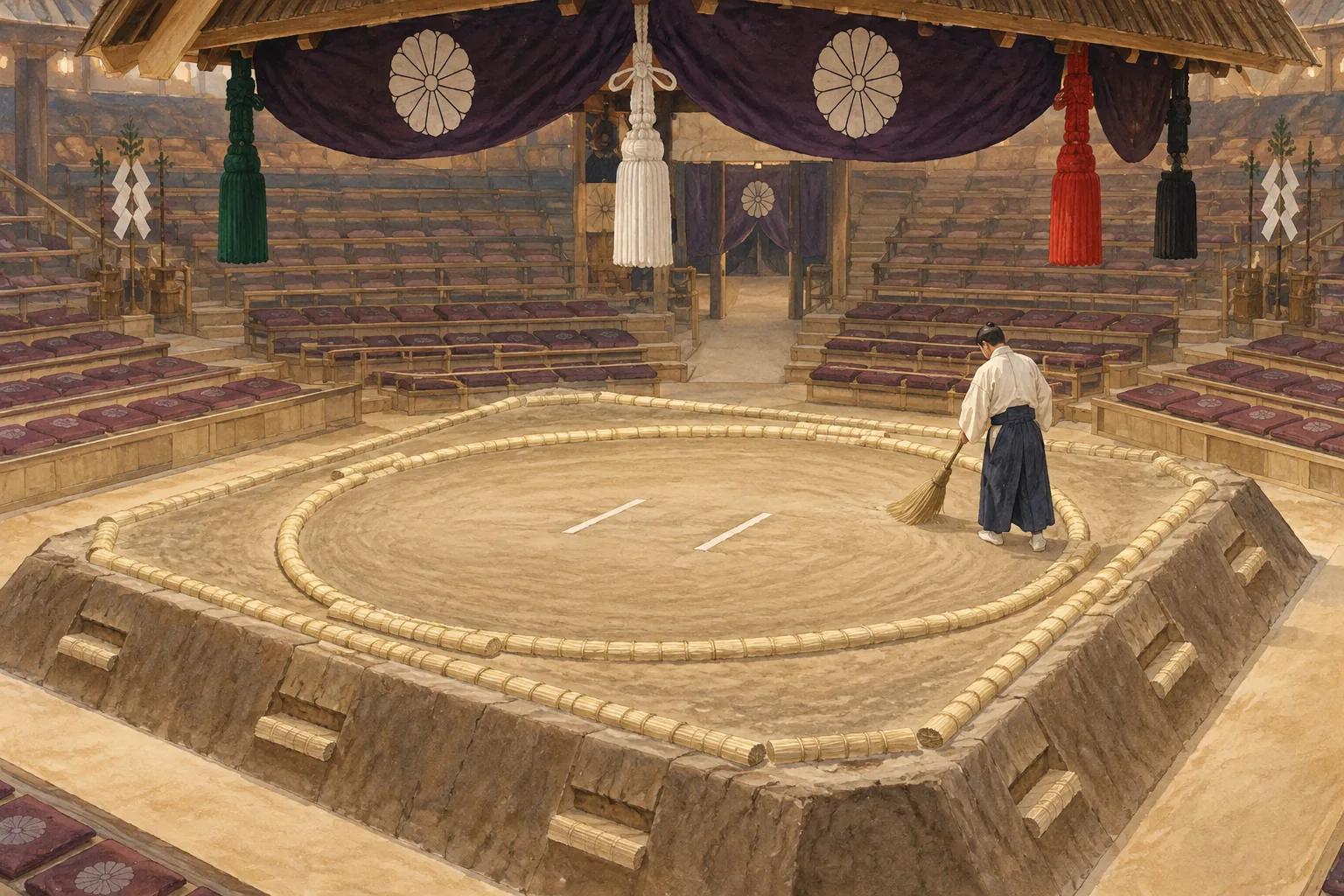
the raised clay ring a sumo bout is fought in
土俵(どひょう)
In one line
The shortest answer that works
The dohyo is the raised clay ring where sumo is fought, and stepping out of it means you lose.
土俵とは相撲を取る土の台のことで、そこから出たら負けになります。
In 30 seconds
The standard explanation
A dohyo is a square platform of packed clay, raised about half a meter off the floor, with a circle marked inside it by half-buried straw bales. The circle is 4.55 meters across. A wrestler loses if he steps outside that circle, or if any part of his body other than the soles of his feet touches the ground. That is the whole rulebook, which is why a bout can end in two seconds.
土俵とは、突き固めた土を四角く盛った台で、床から50センチほど高くなっており、その中に俵を半分埋めて円が作られています。円の直径は4.55メートルです。力士はこの円の外に出るか、足の裏以外が地面についたら負けです。ルールはそれだけなので、勝負が2秒で終わることもあります。
As a short speech
A full paragraph you can read aloud
Sumo is fought on a dohyo, a ring made of packed clay. It sits about half a meter above the floor, and inside it there is a circle 4.55 meters across, marked by straw bales buried so that only the tops show. The rules are almost comically simple.
You lose if you step outside the circle, and you lose if anything but the soles of your feet touches the ground. There are no rounds and no points. What surprises people is that the dohyo is not permanent equipment. It is rebuilt by hand with fresh clay and straw before each tournament, used for fifteen days, and then dug up again.
It is also treated as a sacred space rather than a sports field. Salt is thrown onto it to purify it before bouts, and a Shinto-style roof hangs above it. So it is a stage, an altar, and a playing surface at the same time.
相撲は土俵の上で取ります。突き固めた土で作った台で、床から50センチほど高く、その中に直径4.55メートルの円が、上だけ見えるように埋めた俵で示されています。ルールは笑ってしまうほど単純です。
円の外に出たら負け、足の裏以外が地面につけば負け。ラウンドも点数もありません。驚かれるのは、土俵が常設の設備ではないことです。場所のたびに専門の人たちが新しい土と俵で作り直し、15日間使って、また崩します。
しかも競技場というより神聖な場所として扱われます。取組の前には清めの塩がまかれ、上には神社のような屋根が吊られています。舞台であり、祭壇であり、競技の床でもあるのです。
Questions people actually ask
And how to answer them.
Why do they throw salt?
Salt is used in Shinto to purify a space, and the dohyo is treated as one. Wrestlers in the top divisions throw a handful before each bout. Some throw a pinch, and a few are famous for throwing a huge scattering that the crowd waits for.
塩は神道で場を清めるのに使われ、土俵はそういう場所として扱われます。上位の力士は取組の前にひとつかみまきます。少しだけまく人もいれば、大きくまくので観客が待っている力士もいます。
Is it true women can't go on it?
In professional sumo, women do not enter the dohyo, and the Japan Sumo Association has kept that rule. It has been publicly debated, including after an incident where women who went up to help a collapsed man were asked to leave. Opinions in Japan are divided.
大相撲では女性は土俵に上がらないことになっており、日本相撲協会はこの決まりを続けています。倒れた人を助けようと上がった女性に降りるよう求めた出来事をきっかけに、公に議論されたこともあります。日本国内でも意見は分かれています。
What happens to the dohyo afterwards?
It is dismantled after the tournament. The clay is prepared and packed again for the next one. Building it is a specialized job done by the yobidashi, the ring attendants who also call the wrestlers into the ring.
場所が終わると壊します。土は次の場所のためにまた作り直されます。土俵を作るのは、力士の名を呼び上げる役も務める呼出の仕事です。
A common misunderstanding
MYTHSumo has complicated rules and scoring like boxing rounds.
FACTApart from fouls, there are only two ways to lose: leave the circle, or touch the ground with anything other than the soles of your feet. Most bouts are over in under ten seconds.
Phrases you can use
- If he steps outside the ring, he loses.円の外に出たら、その時点で負けです。
- The circle is about four and a half meters across.円の直径は4メートル半ほどです。
- They throw salt to purify the ring.土俵を清めるために塩をまきます。
- The whole ring is rebuilt for every tournament.土俵は場所ごとに作り直されます。
- Watch the feet — that's usually what decides it.足を見ていてください。たいていそこで決まります。
Words you need
- clay粘土、土
- straw bale俵
- purify清める
- bout, match取組
- sole of the foot足の裏
Watch
From YouTubeBackground (Japanese)
日本相撲協会の土俵規定では、高さ34〜60センチ、一辺6メートル70の台形に土を盛り、その中に直径4メートル55の円を小俵で作ると定められている。この直径になったのは昭和6年(1931年)4月からで、それまでは13尺(約3メートル94)だった。土俵の上には神社の屋根を模した吊り屋根があり、四隅には房が下がる。かつては四本の柱で支えられていたが、観客から見えにくいという理由で1952年に柱が外され、吊り下げ式になった。土俵を作るのは呼出の仕事で、場所ごとに土をつき固めて作り直す。