tachiai and shikiri
the charge that starts a sumo bout, and the ritual staring before it
立合いと仕切り(たちあいとしきり)
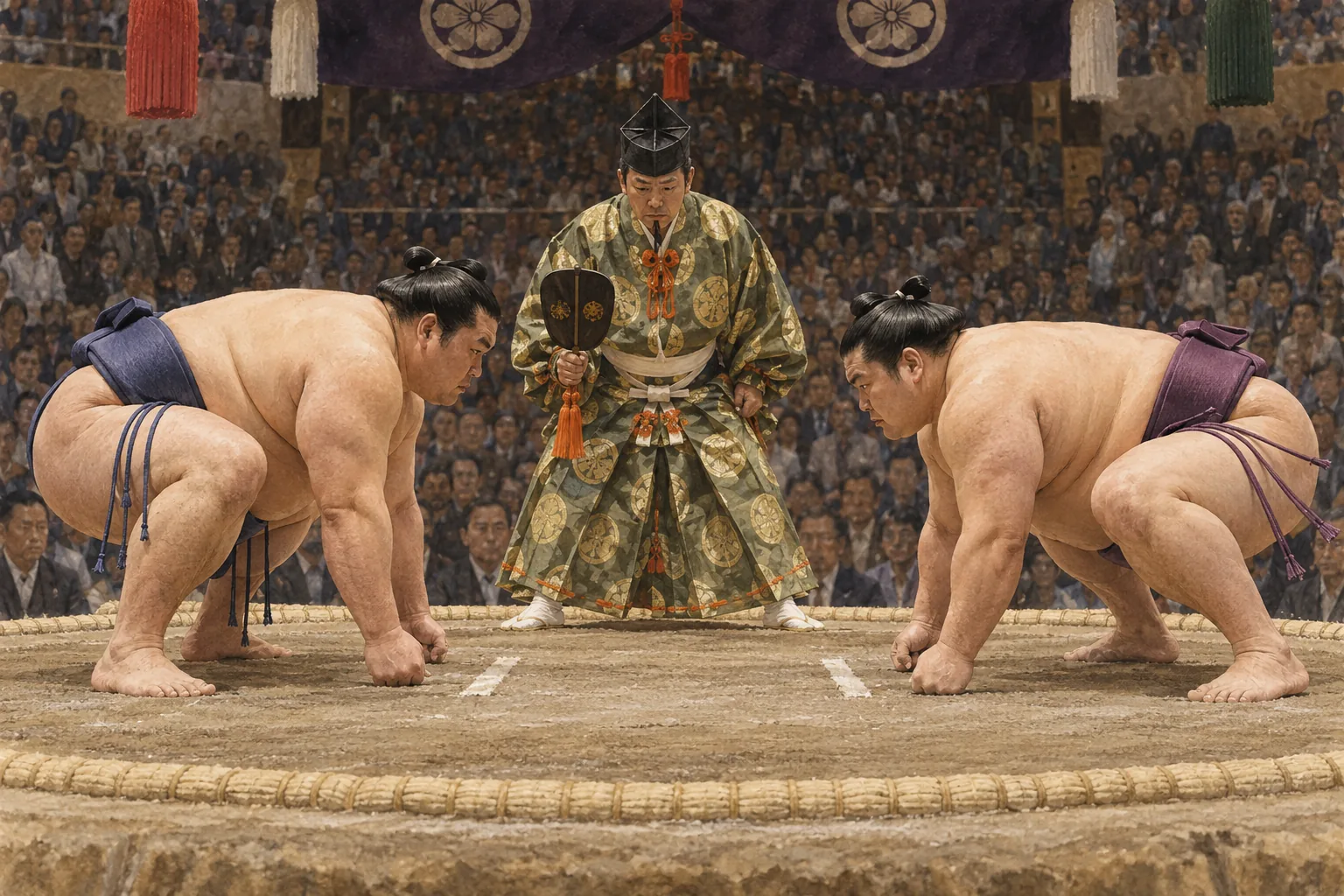
In one line
The shortest answer that works
Tachiai and shikiri are the sumo charge and the staring before it; the charge begins only when both wrestlers agree.
立合いと仕切りとは、両力士の呼吸が合ったときにだけ始まる取組の激突と、その前のにらみ合いのことです。
In 30 seconds
The standard explanation
Before a bout, both wrestlers crouch and stare each other down, throwing salt and adjusting their stance again and again; this is called shikiri. There's no bell or signal to start — both must place their fists on the clay at the same moment and charge together, the tachiai, or the gyoji calls it back. Since 1928, this build-up has had a time limit, now four minutes for the top division.
取組の前、両力士は何度もしゃがみ込んでにらみ合い、塩をまいては構えを整え直します。これを仕切りと呼びます。試合開始の合図はベルも笛もなく、両者が同時に拳を土俵につき、呼吸を合わせて激突する「立合い」で始まり、タイミングが合わなければ行司がやり直しを命じます。1928年からはこの仕切りに制限時間が設けられ、現在は幕内で4分となっています。
As a short speech
A full paragraph you can read aloud
A sumo bout doesn't start with a whistle or a bell. Before charging, both wrestlers repeat a ritual called shikiri: crouching low, staring at each other, throwing purifying salt, and standing back up.
The charge itself, the tachiai, only happens when both wrestlers place their fists on the clay and, with no outside signal, decide together that the moment is right. If one charges early, the gyoji stops the bout and makes them start over.
This used to take as long as the wrestlers wanted, and some pairs are said to have faced off for a very long time. Radio broadcasts changed that: since 1928, shikiri has had a time limit, shortened over the decades to today's four minutes for the top division.
大相撲の取組は、笛やベルの合図で始まるわけではありません。激突する前、両力士は「仕切り」と呼ばれる儀式を繰り返します。低く構えてにらみ合い、清めの塩をまいては、また立ち上がるのです。
激突そのもの、つまり「立合い」は、両者が拳を土俵につき、外からの合図なしに、互いの呼吸だけで「今だ」と決めた瞬間に起こります。どちらかが早く立ってしまうと、行司が取組を止めてやり直しを命じます。
かつては仕切りに制限時間がなく、力士の呼吸が合うまで長い時間にらみ合った例もあったとされます。これを変えたのがラジオ放送でした。1928年から仕切りには制限時間が設けられ、その後何度も短縮されて、現在は幕内で4分となっています。
Questions people actually ask
And how to answer them.
Is there really no signal to start?
Correct — both wrestlers have to agree on the timing themselves by touching both fists to the ground together. It looks chaotic to first-time viewers, but the gyoji is watching closely and will call a false start, matta, and restart the whole process if they're not synchronized.
そのとおりです。両力士は、両方の拳を同時に土俵につくことで、自らタイミングを合わせなければなりません。初めて見る人には無秩序に見えるかもしれませんが、行司はしっかり見ていて、呼吸が合っていなければ「待った」をかけ、最初からやり直させます。
Why do they throw salt so many times?
Throwing salt is a purification ritual from sumo's Shinto roots, meant to cleanse the ring before a fight. Repeating it during shikiri also serves a very human purpose: it lets both wrestlers manage their nerves and read their opponent before the real charge.
塩をまくのは、相撲の神道由来の清めの儀式で、戦いの前に土俵を清める意味があります。仕切りの間に何度も繰り返すことには、緊張を整えたり本番前に相手の様子をうかがったりという、きわめて人間的な目的もあります。
Has the time limit always been four minutes?
No. Before 1928 there was no time limit at all. It was introduced so bouts would fit into radio broadcast schedules, and it has been shortened several times since, down to the four minutes used for the top division today.
いいえ。1928年より前は制限時間そのものがありませんでした。ラジオ放送の時間内に取組を収めるために導入され、その後何度か短縮されて、現在の幕内の4分になりました。
Phrases you can use
- They still haven't charged — the shikiri is dragging on.まだ立合いませんね、仕切りが長引いています。
- That was a false start, a matta.今のは待った、でしたね。
- Watch their fists — the bout starts the moment both touch down.拳に注目してください、両方が土俵につく瞬間に始まります。
- The time limit keeps the shikiri from going on forever.制限時間があるおかげで、仕切りが延々と続くことはありません。
- Their breathing finally matched, and they charged.ようやく呼吸が合って、立合いました。
Words you need
- pre-bout ritual仕切り
- the charge立合い
- false start待った
- purifying salt清めの塩
- time limit制限時間
Watch
From YouTubeBackground (Japanese)
仕切りの制限時間は、ラジオの実況中継が始まった1928年に、放送時間内に取組を収めるために導入されたとされる。それ以前は制限がなく、力士の呼吸が合うまで仕切りを何度も繰り返す取組もあったとされる。制限時間は幕内で当初10分だったものが段階的に短縮され、現在は幕内4分、十両3分、幕下以下2分となっている。土俵の中央には仕切り線と呼ばれる二本の線が引かれており、力士はこの線の内側に両拳をつくことになっている。