bushi no tojo
how warriors took over government
武士の登場(ぶしのとうじょう)
In one line
The shortest answer that works
Bushi no tojo, or the samurai's rise, is how armed provincial landholders came to run Japan for seven centuries.
武士の登場とは、地方の武装した領主が、やがて七百年にわたって国を動かすようになった流れのことです。
In 30 seconds
The standard explanation
Samurai were not created by the court. They grew out of provincial families who armed themselves to hold land while central government weakened. By the late twelfth century one of these groups had set up its own government in Kamakura, and warriors, not courtiers, ran Japan from then until 1868.
武士は朝廷がつくったものではありません。中央の支配が弱まる中で、土地を守るために武装した地方の一族から育ちました。12世紀の終わりにはその一つが鎌倉に自分たちの政権を置き、以後1868年まで、国を動かしたのは貴族ではなく武人でした。
As a short speech
A full paragraph you can read aloud
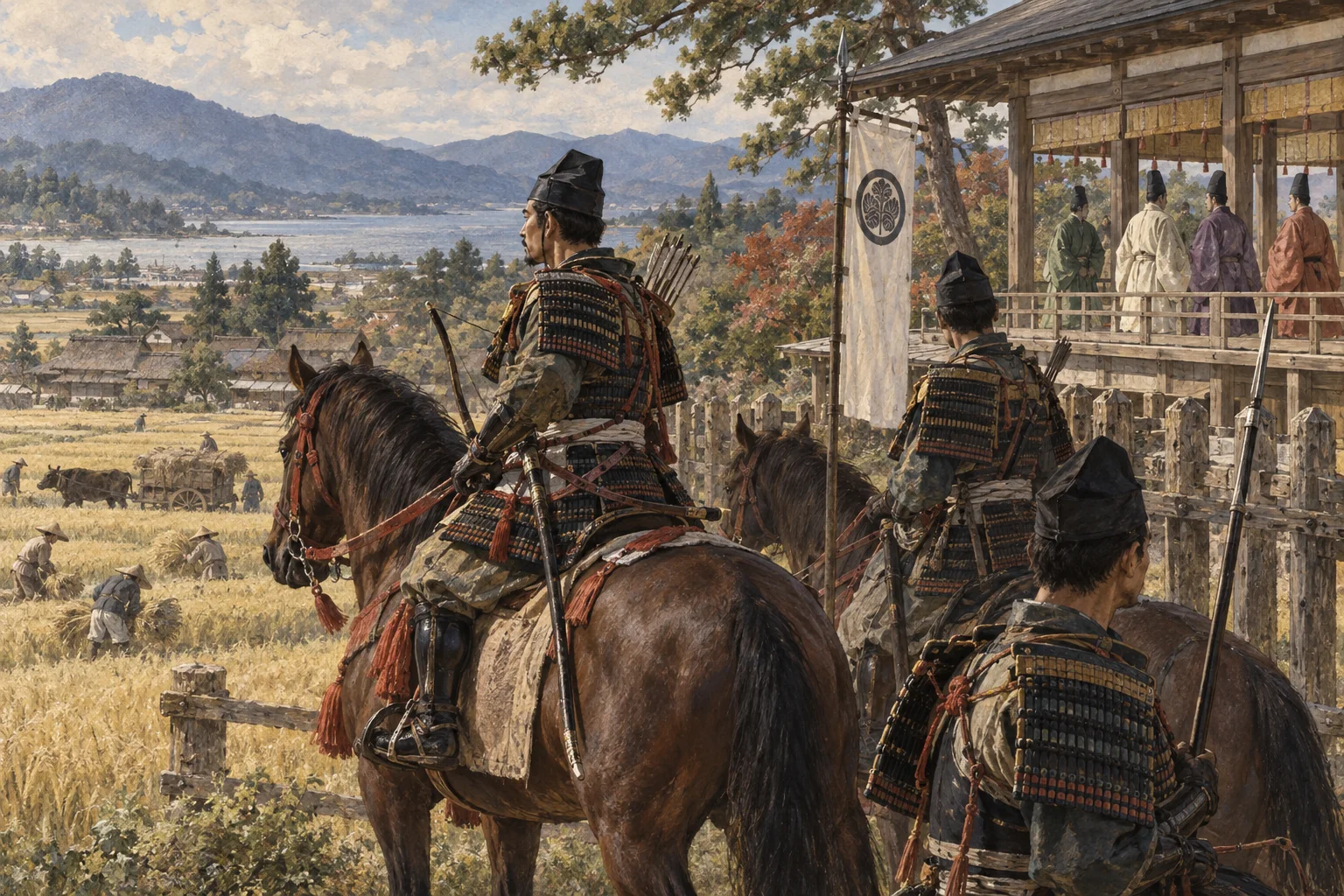
The samurai did not appear as a class at the emperor's command. They grew out of the provinces. As the Heian court's control over distant land weakened, local families armed themselves and their followers to hold their estates and to collect what the capital could no longer collect, and over generations that became a hereditary occupation with its own skills, loyalties and law.
The court hired them, which made them stronger. By the twelfth century two great warrior houses were powerful enough to fight each other over control of the court itself, and when that war ended in 1185 the winner set up his own government in Kamakura, far from Kyoto, and had himself appointed shogun.
That is the decisive moment. From then until 1868, Japan had an emperor in Kyoto who was the source of legitimacy and a warrior government elsewhere that actually governed, and every later regime, including the Tokugawa, was built on that arrangement.
武士は天皇の命令で一つの身分として現れたのではありません。地方から育ちました。平安の朝廷が遠い土地を抑える力を失うにつれ、地方の一族は自らと従者を武装させ、領地を守り、都が集められなくなったものを代わりに集めました。それが世代を重ねるうちに、固有の技能と忠誠と掟を持つ世襲の職業になります。
朝廷は彼らを雇い、それがさらに彼らを強くしました。12世紀には二つの大きな武家が、朝廷そのものの支配をめぐって戦えるほどの力を持ちます。1185年にその戦いが終わると、勝った側は京都から遠い鎌倉に自らの政権を置き、征夷大将軍に任じられました。
ここが決定的な瞬間です。以後1868年まで、日本には正統性の源として京都に天皇がいて、実際に統治する武家の政権が別の場所にある、という形が続きました。徳川を含む後のどの政権も、この仕組みの上に築かれています。
Questions people actually ask
And how to answer them.
Did the samurai overthrow the emperor?
No, and that is the key to the whole arrangement. They took the actual power while leaving the emperor in place as the source of legitimacy, because the shogun's own authority was granted by imperial appointment.
していません。そこがこの仕組みの要点です。武士は実際の権力を握りましたが、天皇は正統性の源として残しました。将軍の権威そのものが、天皇の任命によって与えられるものだったからです。
What did being a samurai actually involve?
It varied enormously by period. In the war centuries it meant fighting and holding land. Under the Tokugawa peace it mostly meant salaried administrative work, and many samurai spent their careers as clerks who owned swords they never used.
時代によってまったく違います。戦の続いた世紀には、戦い、土地を保つことでした。徳川の泰平の下ではおおむね俸給を受ける役所仕事で、多くの武士は一度も使わない刀を持った事務の勤め人として生涯を終えました。
A common misunderstanding
MYTHSamurai were an aristocratic class created by the imperial court.
FACTThey rose from provincial landholding families that armed themselves as central control weakened, and only later became a formal hereditary status.
Phrases you can use
- They came from the provinces, not the court.宮廷ではなく地方から出てきました。
- The emperor stayed, but warriors governed.天皇は残り、統治は武士が行いました。
- The first warrior government was in Kamakura.最初の武家政権は鎌倉に置かれました。
- That arrangement lasted until 1868.その形は1868年まで続きました。
Words you need
- warrior武士
- shogun将軍
- estate / landholding所領
- to seize power実権を握る
Watch
From YouTubeBackground (Japanese)
武士の起源には、地方の有力者が武装したとする見方と、都から下った下級貴族が担い手になったとする見方があり、今も研究上の議論が続いています。源平の争いの末に源頼朝が1185年に守護と地頭を置き、1192年に征夷大将軍に任じられました。鎌倉幕府の成立年をどこに置くかは教科書でも扱いが変わり、近年は1185年とするものが増えています。武士の作法や心得を説いた書物は多く、「武士道」という語が体系として広まったのは明治以降です。