seijinshiki
the coming-of-age ceremony
成人式(せいじんしき)
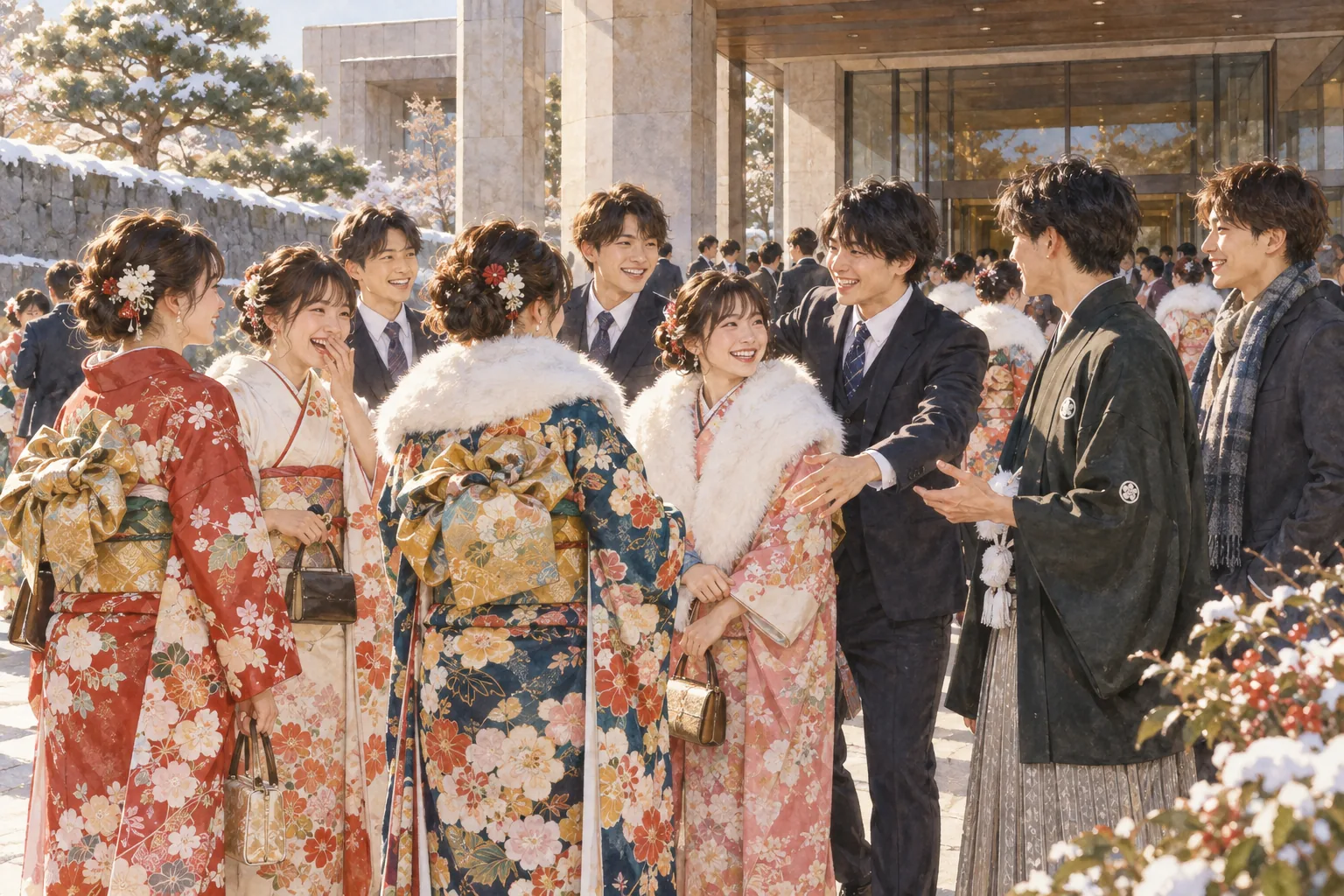
In one line
The shortest answer that works
Seijinshiki is the ceremony held each January for everyone turning twenty that year.
成人式は、毎年1月に、その年度に20歳になる人のために行われる式典です。
In 30 seconds
The standard explanation
Around the second Monday of January, municipalities hold a ceremony for the young people from that town who turn twenty in that school year. Women mostly wear furisode kimono, men wear suits or formal kimono. The ceremony itself is short and largely speeches; the real event is meeting classmates from school for the first time in years.
1月の第2月曜の前後に、各市区町村が、その年度に20歳になる地元の若者のために式典を開きます。女性の多くは振袖、男性はスーツか紋付袴です。式そのものは短く、ほとんどが挨拶。本当の中身は、何年ぶりかに同級生と再会することです。
As a short speech
A full paragraph you can read aloud
Every January, usually around the second Monday, Japanese towns hold a ceremony for the young people turning twenty that school year. It is organized by the local government, and many towns also welcome people who grew up there but have since moved away, which means many people travel home for it.
Women mostly wear furisode, the long-sleeved formal kimono, often booked and paid for a year in advance, with a hair and dressing appointment as early as five in the morning. Men usually wear a suit. The ceremony itself is honestly not the point: a hall, the mayor speaking, a former teacher speaking, and it is over in an hour.
The point is what happens outside afterwards, when you see people you went to school with at fifteen and have not seen since. One complication worth mentioning: in 2022 the legal age of adulthood in Japan changed from twenty to eighteen, but most municipalities kept the ceremony at twenty, often renaming it.
毎年1月、たいていは第2月曜の前後に、日本の各自治体はその年度に20歳になる若者のための式典を開きます。主催は市区町村で、地元を離れた人も出身地の式に出られるところが多いため、そのために帰省する人が多くいます。女性の多くは振袖を着ます。
1年前に予約して支払うことも多く、着付けと髪のセットは朝5時ということもあります。男性はたいていスーツです。式そのものは、正直なところ中心ではありません。会場があり、市長が話し、恩師が話し、1時間で終わります。中心にあるのは、そのあと外で起きることです。
15歳のときに同じ学校にいて、それ以来会っていない人たちと顔を合わせるのです。補足を一つ。2022年に日本の成人年齢は20歳から18歳に引き下げられましたが、多くの自治体は式典を20歳のまま続け、名称を変えました。
Questions people actually ask
And how to answer them.
Is it still at twenty if adulthood is now eighteen?
In most places, yes. Eighteen-year-olds are usually in the middle of entrance exams in January, so municipalities kept the ceremony at twenty and renamed it, often to something like the gathering of twenty-year-olds.
多くの自治体では20歳のままです。18歳の1月は受験の真っ最中なので、式は20歳で続け、「二十歳のつどい」などに名称を変えたところが多くあります。
Do you have to go?
It is entirely voluntary. Some people skip it because of the cost, because they have moved away, or because they would rather not see former classmates.
完全に任意です。費用のため、遠方に住んでいるため、あるいは昔の同級生に会いたくないため、行かない人もいます。
Why do you see news reports about it every year?
Because in a small number of places attendees disrupt the ceremony, and it is reliably filmed. It is not representative; most ceremonies are uneventful and slightly boring.
一部の会場で式を騒がせる参加者がいて、それが毎年必ず撮られるからです。実態を代表してはいません。大半の式は何事もなく、少し退屈です。
Phrases you can use
- It's held on the second Monday of January.1月の第2月曜に行われます。
- Most women wear a furisode kimono.女性の多くは振袖を着ます。
- Many people go back to their hometown for it.そのために地元へ帰る人が多いです。
- The real point is seeing old classmates.本当の目的は、同級生に会うことです。
- The legal age changed, but most ceremonies stayed at twenty.成人年齢は変わりましたが、式典は20歳のままの自治体が多いです。
Words you need
- coming of age成人
- municipality自治体、市区町村
- reunion再会、同窓会
- legal adult法律上の成人
- attendance出席、参加率
Watch
From YouTubeBackground (Japanese)
成人の日は1948年に1月15日と定められ、2000年のハッピーマンデー制度で1月の第2月曜に移った。起源は1946年に埼玉県蕨町(現・蕨市)で行われた「青年祭」とされ、蕨市には成人式発祥の地の碑がある。2022年4月、民法改正により成人年齢は18歳に引き下げられたが、飲酒・喫煙・公営競技は20歳のまま維持された。多くの自治体は受験期との重複を避けて式典の対象を20歳に据え置き、「二十歳のつどい」「二十歳を祝う会」などに改称している。振袖のレンタルは前年の早い時期から予約が埋まり、当日の着付けは未明から始まることが多い。