kappogi
the full-cover Japanese apron
割烹着(かっぽうぎ)
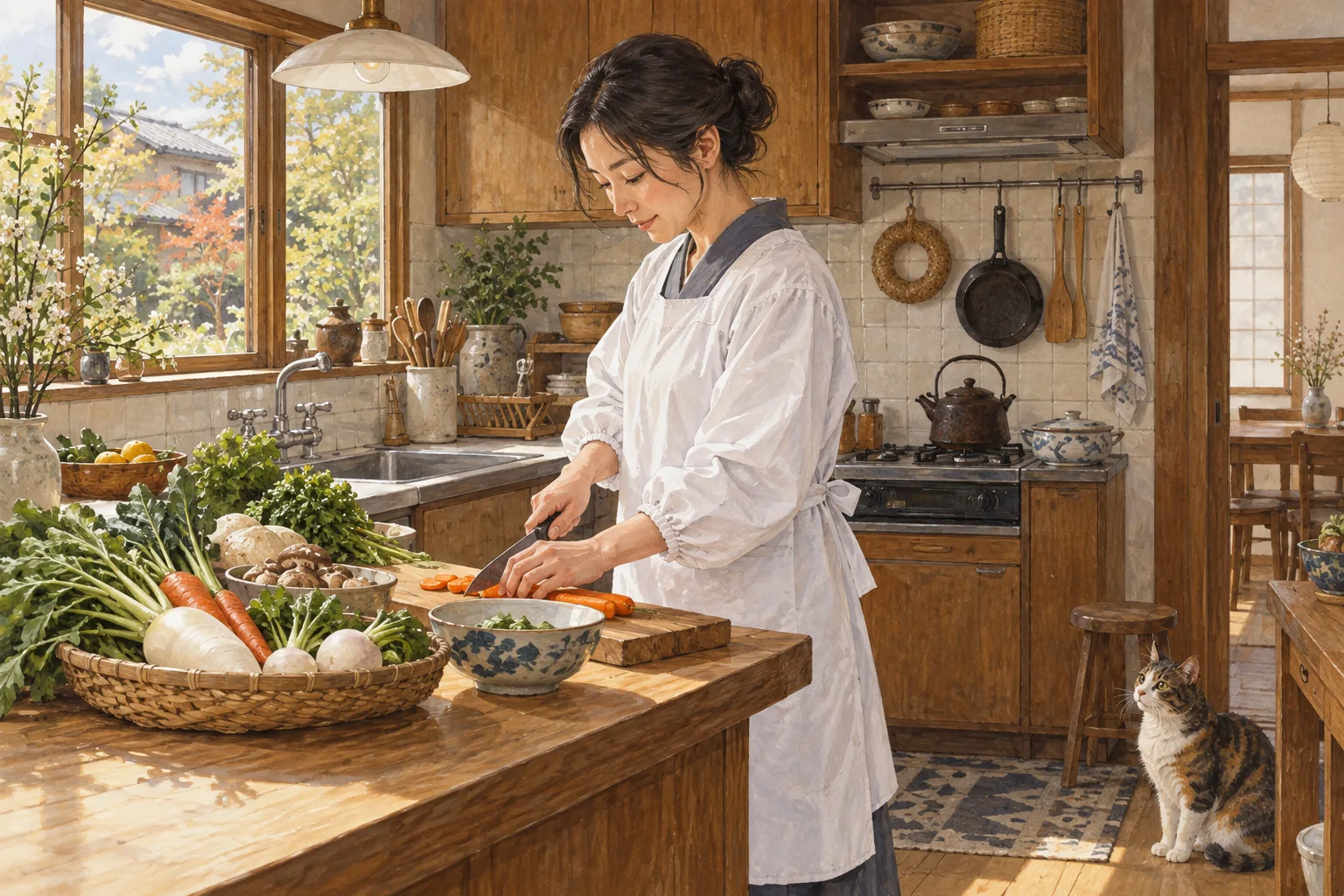
In one line
The shortest answer that works
A kappogi is a Japanese apron with sleeves, designed to cover a kimono completely.
割烹着とは袖のついた日本の前掛けで、着物をすっかり覆うために作られたものです。
In 30 seconds
The standard explanation
A kappogi is an apron with long tubular sleeves and a body that covers the back as well as the front, tied behind. It was designed so that a woman working in a kitchen in kimono could protect the whole garment, especially the wide hanging sleeves. It is still used in cooking classes and by older women at home.
割烹着とは、筒状の長い袖がつき、前だけでなく背中も覆って後ろで結ぶ前掛けです。着物のまま台所に立つ女性が、衣全体、とくに広く垂れた袖を守れるように作られました。今も料理教室や、年配の女性の家庭で使われています。
As a short speech
A full paragraph you can read aloud
A kappogi is a Japanese apron, and its shape is a direct answer to a specific problem. A kimono has wide sleeves that hang open, and they are the first thing to go into the soup, catch fire on the stove or drag across a dirty counter.
A western apron covers the front of the body and does nothing about that. So the kappogi has long tubular sleeves gathered at the wrist, a body that wraps around to cover the back, and ties at the back of the neck and waist, which means the entire kimono disappears underneath it.
They were typically white cotton, and they became a standard image of the Japanese housewife from the early twentieth century onward, to the point where wartime women's associations wore them almost as a uniform. Kimono is no longer everyday clothing, so the kappogi has retreated, but it survives in cooking schools, in traditional food shops, and with older women who simply find it more practical than a front-only apron.
割烹着は日本の前掛けで、その形はひとつの具体的な問題への直接の答えです。着物には広く開いて垂れる袖があり、それが真っ先に汁に入り、こんろの火を引き、汚れた台を引きずります。
西洋の前掛けは体の前を覆うだけで、そこには何もしてくれません。そこで割烹着には、手首で絞った筒状の長い袖がつき、身頃が背中まで回り込み、首の後ろと腰で結ぶようになっています。つまり着物がすっかりその下に隠れます。
白い木綿のものが一般的で、二十世紀の初めごろから日本の主婦の定番の姿になり、戦時中の女性の組織ではほとんど制服のように着られました。着物はもう日常着ではないので割烹着も退きましたが、料理学校や和食の店、そして前だけの前掛けより実用的だと考える年配の女性のもとに残っています。
Questions people actually ask
And how to answer them.
Why not just wear a normal apron?
Because a normal apron leaves the sleeves exposed, and kimono sleeves are the part most likely to get wet, dirty or caught. Once you are not wearing kimono the advantage largely disappears, which is why its use declined.
ふつうの前掛けでは袖がむき出しのままだからです。着物の袖は、濡れる、汚れる、引っかかる可能性が最も高い部分です。着物を着なくなれば利点はほとんど消えます。だから使われなくなりました。
Is it still sold?
Yes, in department stores, cooking supply shops and online, including short-sleeved and modern versions. Cooking classes often supply them, and they are also worn by staff in shops that sell traditional food.
売られています。百貨店や調理用品の店、通信販売にあり、半袖のものや現代風の意匠のものもあります。料理教室が貸し出すこともあり、和食の品を扱う店の従業員も着ています。
Phrases you can use
- It covers the sleeves as well.袖まで覆います。
- It ties behind the neck and waist.首の後ろと腰で結びます。
- It was designed for wearing over kimono.着物の上に着るために作られました。
- Cooking classes still use them.料理教室では今も使われます。
Words you need
- apron前掛け
- sleeve袖
- to tie at the back後ろで結ぶ
- cooking class料理教室
Watch
From YouTubeBackground (Japanese)
「割烹」は切ることと煮ることを指す語で、料理そのものを意味します。割烹着は明治から大正にかけて広まったとされ、着物を守るための実用の衣として定着しました。白い割烹着は、戦時中の婦人会の姿として写真に数多く残っています。袖口にゴムを入れたものが多く、手首で袖が留まるようになっています。前掛けだけの「エプロン」とは別の語として使い分けられ、料理の場面では今も両方が使われています。