kyoto
the capital for a thousand years, and how to explain it
京都(きょうと)
In one line
The shortest answer that works
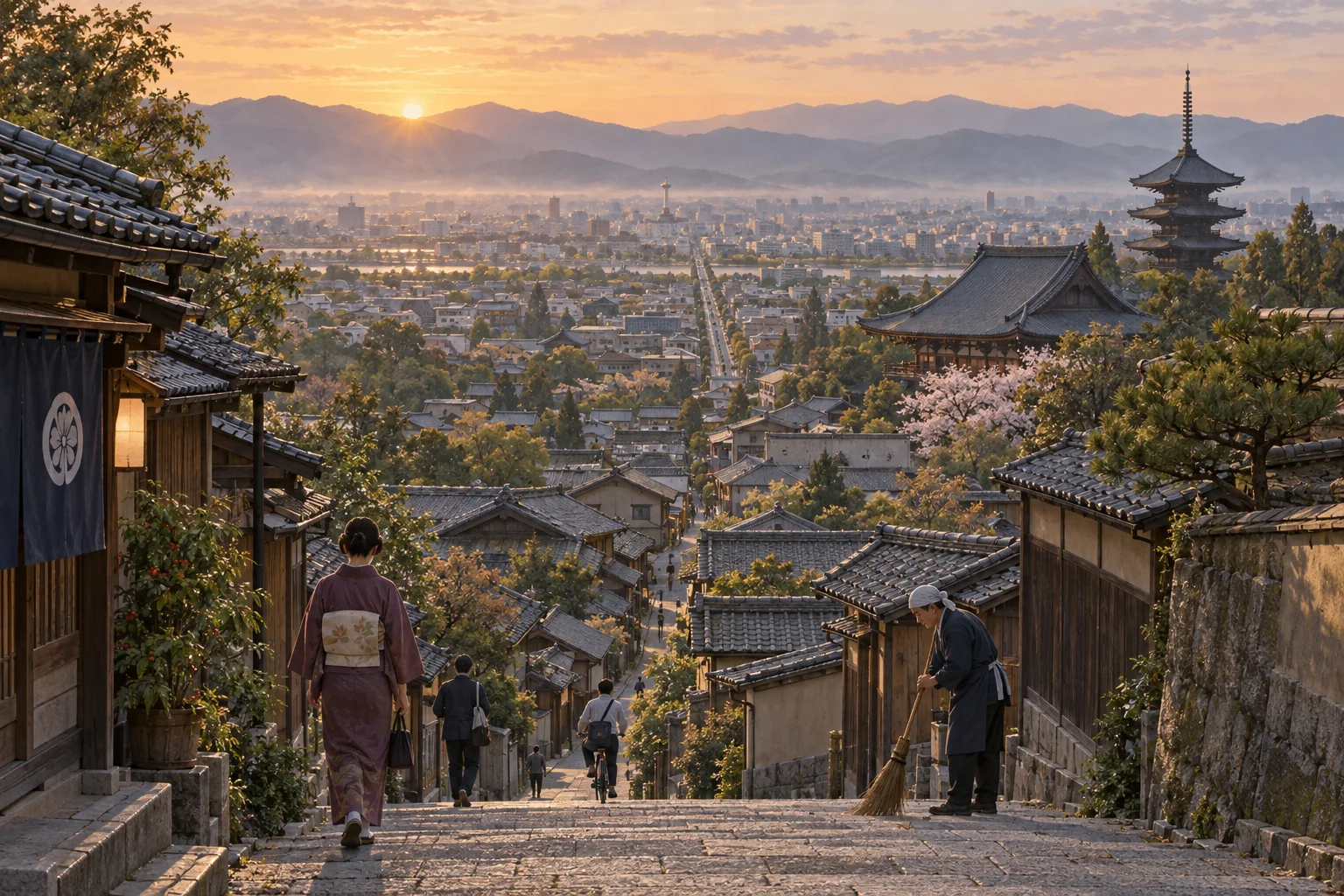
Kyoto was Japan's capital from 794 to 1869 and is still full of old temples and shrines.
京都は794年から1869年まで日本の都で、いまも古い寺社が数多く残る町です。
In 30 seconds
The standard explanation
Kyoto was founded as the capital in 794 and remained the emperor's seat until the court moved to Tokyo in 1869. The city was laid out as a grid copied from the Chinese capital, which is why streets still run straight and the main east-west avenues are numbered, from Ichijo to Kujo. It escaped the large-scale bombing that flattened other cities, so more survived here than elsewhere — though repeated fires and wars destroyed and rebuilt much of it long before that.
京都は794年に都として開かれ、1869年に宮廷が東京へ移るまで天皇の住む町でした。中国の都にならった碁盤の目に区切られたので、いまも通りはまっすぐで、東西の大通りは一条から九条まで番号で呼ばれます。ほかの都市を焼いた大規模な空襲を免れたため、残ったものは多い。ただし、それより前の度重なる火災と戦乱で、町の多くは失われ、建て直されてきました。
As a short speech
A full paragraph you can read aloud
Kyoto is the city visitors most want explained, and the usual line — the old capital where everything is preserved — needs two corrections. The first is the history. Kyoto was made the capital in 794 and stayed the emperor's residence for more than a thousand years, until the court moved to Tokyo in 1869.
It was planned as a grid on the model of the Chinese capital, which is why the streets run straight and an address can be given as the crossing of two named streets. The second correction is the word preserved. Kyoto burned repeatedly. A civil war in the 1460s and 70s destroyed much of the city, and fires did the rest, so a great many famous buildings are later reconstructions, some of them from the twentieth century.
What is true is that Kyoto escaped the fire bombing that leveled many Japanese cities in 1945, so the fabric that had survived to that point survived. And Kyoto today is not a museum: it is a working city of well over a million people, with a subway, universities and manufacturers, and the temples sit inside ordinary neighborhoods.
京都は、外国の人がいちばん説明を求める町です。そして「すべてが保存されている古い都」という決まり文句には、二つの訂正が要ります。一つは歴史です。京都は794年に都となり、1869年に宮廷が東京へ移るまで千年以上にわたって天皇の住む町でした。
中国の都にならった碁盤の目として設計されたので、通りはまっすぐで、住所を通りの交わりで言い表せます。もう一つの訂正は、保存という言葉です。京都は繰り返し焼けています。十五世紀後半の内乱で町の多くが失われ、残りは火事が焼きました。ですから有名な建物の多くは後の再建で、二十世紀のものもあります。
本当なのは、1945年に日本の多くの都市を焼き払った空襲を、京都が免れたということです。その時点まで残っていたものが、そのまま残った。そしていまの京都は博物館ではありません。百万をはるかに超える人が暮らし、地下鉄が走り、大学と製造業を抱える現役の町で、寺はふつうの住宅地のなかにあります。
Questions people actually ask
And how to answer them.
Is it true Kyoto was spared because of its cultural value?
Kyoto avoided large-scale firebombing, and cultural value is the explanation usually given, associated with an American official's intervention. The decision-making is debated by historians, and small raids did occur.
大規模な空襲は免れましたし、文化的価値のためだという説明がよくなされ、アメリカのある高官の関与が語られます。決定の経緯については歴史家のあいだで議論があり、小規模な空襲は実際にありました。
Why do Kyoto addresses sound so strange?
Because of the grid. A location is given as one street crossing another, plus a word for north, south, east or west of that corner, which is more precise than a block number.
碁盤の目だからです。通りと通りの交点を挙げ、そこから上がる・下がる・東入る・西入るを添えます。街区の番号よりも正確に示せます。
How many days do I need there?
Three is the usual answer for the main sites, but the honest advice is to pick fewer places and go early. The famous temples are extremely crowded from mid-morning.
主な場所を回るなら三日と言われますが、正直に勧めるなら、行き先を減らして朝早く行くことです。有名な寺は昼前からひどく混みます。
A common misunderstanding
MYTHKyoto is a thousand-year-old city that has never been destroyed.
FACTIt burned many times in wars and fires, and many famous buildings are reconstructions. What it escaped was the 1945 firebombing.
Phrases you can use
- Kyoto was the capital from 794 to 1869.京都は794年から1869年まで都でした。
- The streets are a grid, copied from a Chinese capital.通りは中国の都にならった碁盤の目です。
- Many famous buildings are reconstructions.有名な建物の多くは再建です。
- It escaped the 1945 firebombing.1945年の空襲を免れました。
- Go early — the temples fill up by mid-morning.朝早く行ってください。寺は昼前に混みます。
Words you need
- old capital古都
- grid layout碁盤の目
- imperial court宮廷
- reconstruction再建
- townhouse町家
Watch
From YouTubeBackground (Japanese)
京都は794年(延暦13年)に平安京として開かれ、天皇の住まいは1869年(明治2年)の東京行幸まで置かれた。応仁の乱(1467〜1477)で市街の大半が焼けたとされる。1994年に「古都京都の文化財」として17の資産がユネスコ世界遺産に登録されており、そこには滋賀県大津市の延暦寺も含まれる。市の人口は約140万人で、通りの名を組み合わせて場所を示す言い方が今も使われている。