kagura
dance offered to the gods
神楽(かぐら)
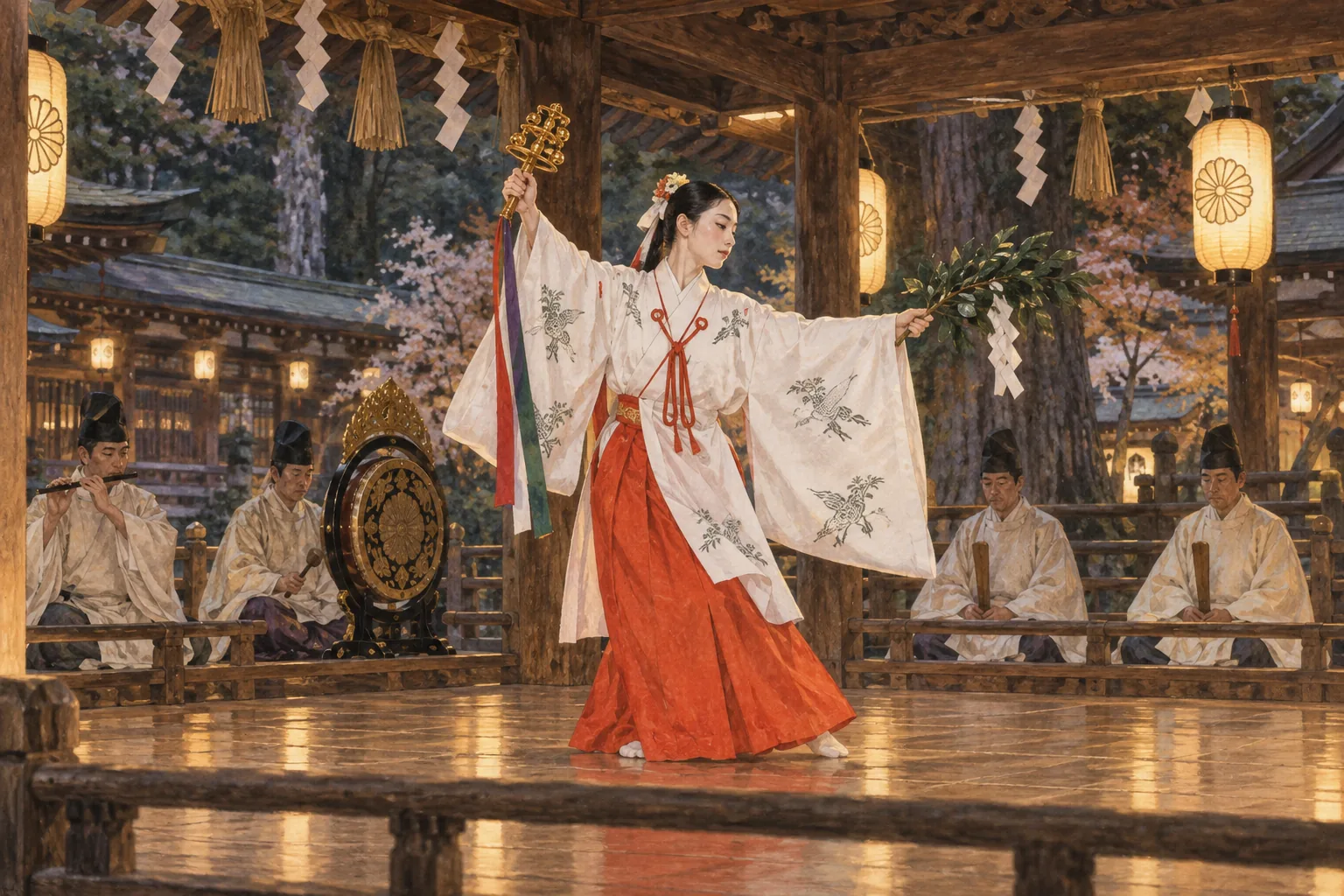
In one line
The shortest answer that works
Kagura is dance and music performed as an offering to the gods, not primarily for an audience.
神楽とは、観客にではなく神に捧げるものとして舞われ、奏でられる芸能です。
In 30 seconds
The standard explanation
Kagura is Shinto ritual dance accompanied by flute and drum. Its origin is traced to the myth in which a goddess dances to draw the sun deity out of a cave. Court versions are formal and restrained; village versions can run all night, with masked performers acting out myths, and some are spectacular.
神楽は笛と太鼓を伴う神道の神事の舞です。起源は、天照大御神を岩戸から出すために女神が舞ったという神話に求められます。宮中の神楽は格式ばって抑制的ですが、里の神楽は夜通し続くこともあり、面をつけた演者が神話を演じる、見ごたえのあるものもあります。
As a short speech
A full paragraph you can read aloud
Kagura is dance performed as an offering to the gods, accompanied by flute, drum and sometimes bells. Its origin is placed in a famous myth: when the sun deity hid in a cave and the world went dark, another goddess danced on an upturned tub until the assembled gods laughed loudly enough to make the sun curious, and she came out.
That is why kagura is understood as something done in front of the gods rather than in front of people. There are two broad kinds. The court tradition, performed at the palace and at major shrines, is slow, restrained and formal.
The village traditions are something else entirely: in Shimane, masked performers act out the slaying of an eight-headed serpent with costumes that unroll across the stage, drums that shake the floor and fireworks, and performances that run from evening until dawn at a local festival. Anyone can watch, entry is usually free, and it is one of the most enjoyable things to stumble into in rural Japan.
神楽は神に捧げるものとして舞われる踊りで、笛と太鼓、ときに鈴を伴います。その起源は、よく知られた神話に置かれます。太陽の神が岩屋に隠れて世が闇になったとき、別の女神が伏せた桶の上で舞い、集まった神々が大声で笑ったので、太陽の神が気になって外を覗き、外に出た、という話です。
だから神楽は、人の前ではなく神の前で行われるものと理解されています。大きく二つの流れがあります。宮中と大きな社で行われる伝統は、ゆるやかで抑制が効き、格式ばっています。里の神楽はまったく別のものです。
島根では、面をつけた演者が八つの頭を持つ大蛇の退治を演じ、衣装が舞台いっぱいに広がり、太鼓が床を揺らし、花火が上がり、地元の祭りで夕方から夜明けまで続きます。誰でも見られ、たいてい入場は無料で、地方の日本で偶然出くわすものとしては、最も楽しいもののひとつです。
Questions people actually ask
And how to answer them.
Can I watch, and do I need a ticket?
Village kagura at a shrine festival is usually free and open to anyone, and people come and go through the night. Some famous performances are ticketed when staged in a theater, but the original setting is a shrine stage.
神社の祭りで行われる里の神楽は、たいてい無料で誰でも見られ、人は夜通し出入りします。劇場で上演される有名なものには有料のものもありますが、本来の場は神社の舞台です。
How is it different from noh?
Noh is theater with an audience, a written repertoire and professional actors trained in schools. Kagura is a ritual offering performed largely by local people, learned within a community, and the gods are the primary audience.
能は観客のための演劇で、書かれた演目があり、流派で修業した専門の役者が演じます。神楽は神事の奉納で、担うのは主に地元の人々、地域の中で受け継がれ、第一の観客は神です。
Phrases you can use
- It's an offering, not a show.見せ物ではなく奉納です。
- The gods are the main audience.第一の観客は神です。
- Village performances can last all night.里の神楽は夜通し続くことがあります。
- Anyone can come and watch.誰でも見に来られます。
Words you need
- ritual dance神事の舞
- mask面
- to dedicate / offer奉納する
- shrine stage神楽殿
Watch
From YouTubeBackground (Japanese)
神楽の起源は、天岩戸の前で天鈿女命が舞ったという神話に求められます。宮中で行われるものを御神楽、各地のものを里神楽と呼び分けます。島根の石見神楽は八岐大蛇の演目で知られ、長い胴の大蛇が何体も舞台を回ります。宮崎の高千穂の夜神楽は夜通し行われ、国の重要無形民俗文化財に指定されています。多くの神社に神楽殿があり、祭りの日に舞が奉納されます。