shamisen
the three-stringed instrument played with a large plectrum
三味線(しゃみせん)
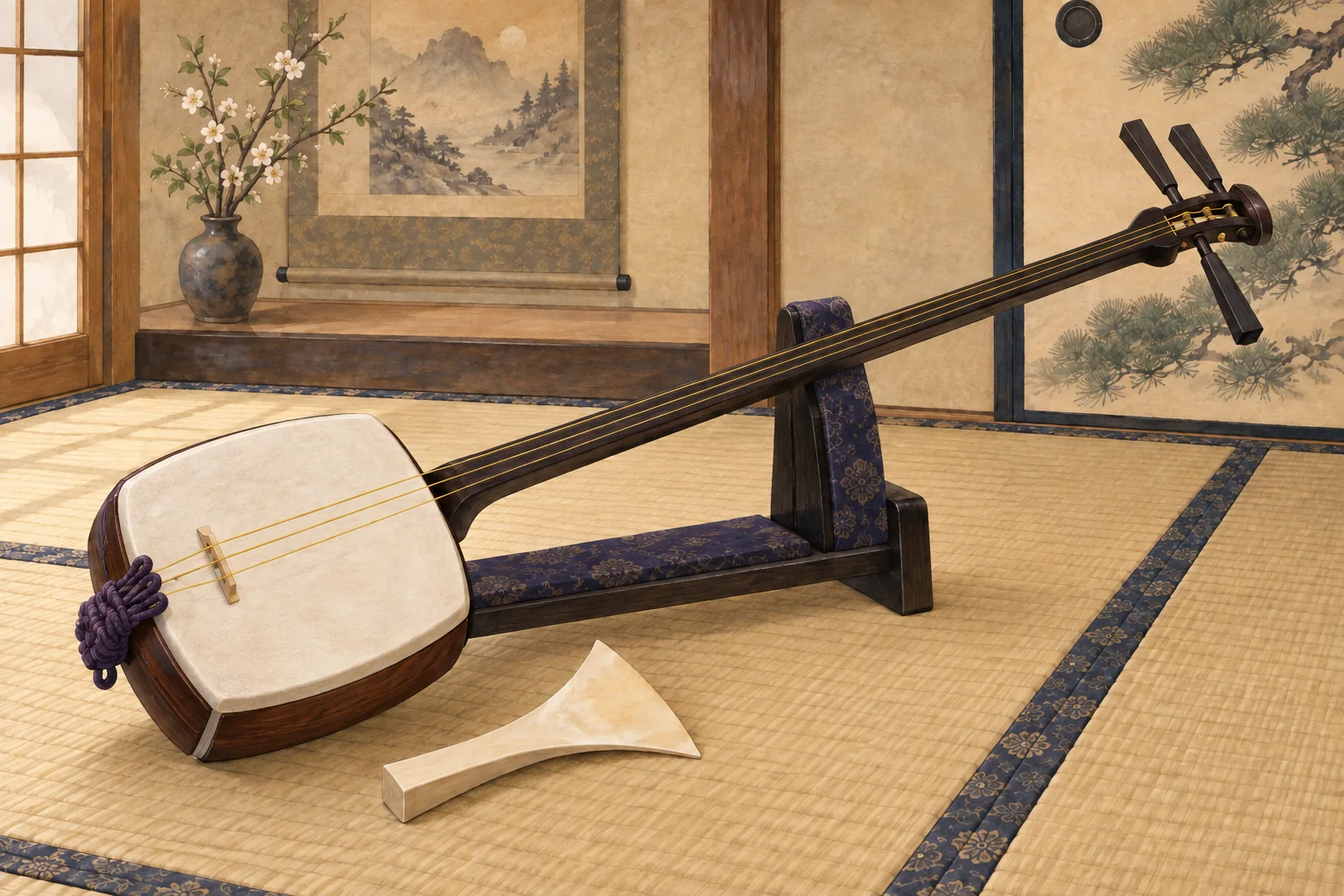
In one line
The shortest answer that works
The shamisen is a three-stringed instrument struck with a large plectrum, used in many different kinds of music.
三味線は三本の弦を大きな撥で弾く楽器で、まったく違う種類の音楽に使われます。
In 30 seconds
The standard explanation
The shamisen has three strings stretched over a square body, and it is struck rather than plucked, with a large plectrum that hits the skin as well as the string. There are no frets. The thickness of the neck divides it into families: a thin neck for delicate song, a thick neck for the driving Tsugaru style from the north.
三味線は四角い胴に三本の弦を張った楽器で、爪弾くのではなく、大きな撥で弦と皮を同時に叩くようにして鳴らします。勘所を示す仕切りはありません。棹の太さで系統が分かれ、細い棹は繊細な歌に、太い棹は北国の津軽の激しい奏法に使われます。
As a short speech
A full paragraph you can read aloud
The shamisen is the three-stringed instrument you hear in kabuki, in folk song and, increasingly, in rock bands. The body is a square wooden frame covered with skin, the neck has no frets, and the player strikes the strings with a large plectrum that lands on the skin at the same time, so every note carries a percussive slap.
That combination of pitch and hit is what makes the sound recognizable. Instruments are grouped by the thickness of the neck. A thin neck suits the delicate song styles that accompany dance and theater. A thick neck belongs to the Tsugaru style from the north of Honshu, which is fast, loud and closer to improvisation, and which is the version most likely to convert a first-time listener.
The instrument took shape in the sixteenth century from one that reached mainland Japan from the Ryukyu Kingdom, now Okinawa. Skins were traditionally animal hide, and synthetic skins are now widely used, which has made the instrument easier to own and to take abroad.
三味線は、歌舞伎や民謡、そして近ごろはロックの演奏でも聴く三本弦の楽器です。胴は四角い木の枠に皮を張ったもので、棹に仕切りは無く、大きな撥で弦を弾くと同時に皮も叩きます。だから、どの音にも打楽器のような衝撃が乗ります。
音の高さと打撃が一緒に鳴る、この組み合わせが、あの音を聞き分けられるものにしています。楽器は棹の太さで分けられます。細い棹は、舞踊や芝居に付く繊細な歌の系統に合います。太い棹は本州の北、津軽の奏法のもので、速く、大きく、即興に近い演奏になります。
初めて聴く人をいちばん引き込むのが、この形です。楽器そのものは十六世紀、琉球王国(今の沖縄)から本土へ伝わった楽器をもとに、今の姿になりました。皮は昔は動物の皮を使い、今は人工の皮も広く用いられます。おかげで持ちやすくなり、海外へも運びやすくなりました。
Questions people actually ask
And how to answer them.
Is it like a banjo or a guitar?
Closer to a banjo in that the body is a skin-covered drum, but it has no frets and is struck with a plectrum that hits the skin. The percussive element is much stronger than on either instrument.
皮を張った胴という点ではバンジョーに近いですが、仕切りが無く、皮ごと叩く撥で鳴らします。打楽器としての要素は、どちらの楽器よりずっと強いです。
What is Tsugaru shamisen?
A style from the north of Honshu played on a thick-necked instrument, fast and percussive, with room for improvisation. It began as accompaniment for traveling performers and is now often played as a solo showpiece.
本州の北、津軽の奏法で、太棹を使い、速く打楽器のように弾き、即興の余地があります。もとは門付けの芸に付いたもので、今は独奏の聴かせどころとして演奏されることが多いです。
Can a visitor try one?
Yes. Short lessons for visitors are offered in Tokyo, Kyoto, Kanazawa and elsewhere, usually an hour with an instrument provided. Holding the plectrum correctly is the part that takes the longest.
できます。東京、京都、金沢などで旅行者向けの短い体験があり、多くは一時間ほどで楽器も貸してもらえます。いちばん時間がかかるのは、撥の持ち方です。
Phrases you can use
- It has only three strings.弦は三本だけです。
- You strike it with a large plectrum.大きな撥で弾きます。
- The thick-necked one is for the Tsugaru style.太棹は津軽三味線に使います。
- There are no frets on the neck.棹に仕切りはありません。
- Could I try holding it?持たせていただけますか。
Words you need
- a string弦
- a plectrum撥
- fretless仕切りの無い
- percussive打楽器のような
- to accompany伴奏する
Watch
From YouTubeBackground (Japanese)
棹の太さで細棹・中棹・太棹に分かれ、長唄は細棹、民謡や津軽は太棹が使われます。同じ楽器の名前でも、系統が違えば奏法も曲もまったく違います。撥は弦と皮を同時に叩くため、胴の皮には撥皮という当て皮を貼って傷みを防ぎます。十六世紀に、琉球を経て伝わった楽器をもとに作られたとされます。皮は動物のものが長く使われてきましたが、人工の皮が普及し、湿気に強く手入れも楽になりました。歌舞伎や文楽の伴奏を担う一方、現代の音楽と合わせる演奏家も増えています。