gidayu
the narrative chanting behind bunraku puppet theater
義太夫(ぎだゆう)
In one line
The shortest answer that works
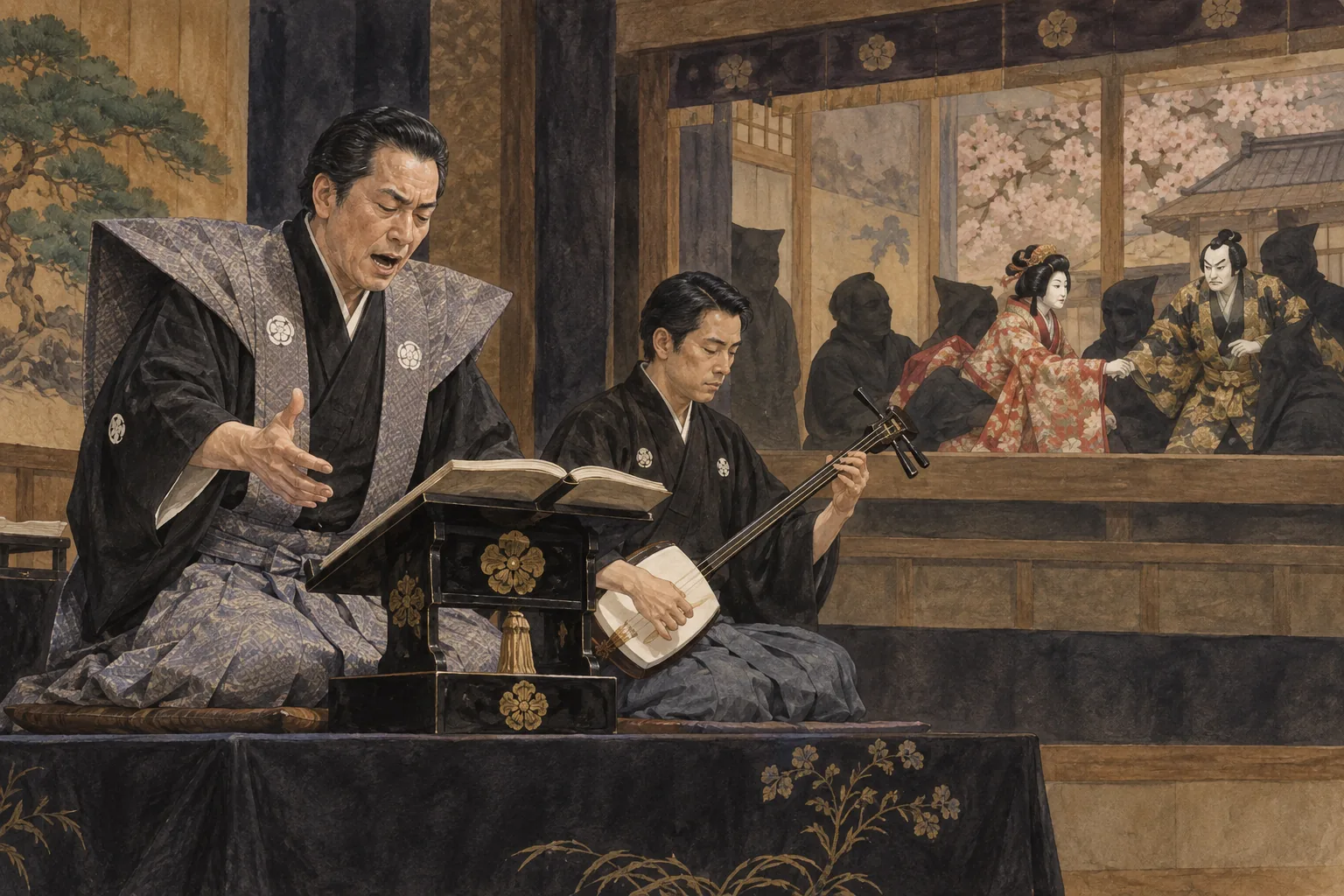
Gidayu is the chanted narration, usually by a single performer per scene, that carries a bunraku puppet play.
義太夫とは、ふつう一場面を一人の語り手がすべて語り分けて、文楽の人形芝居を進める語り物のことです。
In 30 seconds
The standard explanation
In a typical bunraku scene, a single chanter called a tayu voices every character, narrates the action, and describes each character's feelings, shifting pitch and tone to distinguish an old man from a young woman from a villain, all while accompanied by a shamisen player seated beside him. This narrative style is named gidayu after Takemoto Gidayu, who founded a theater in Osaka in 1684 and whose style became so dominant that the whole genre took his name. The tayu places the script on an ornate lectern and raises it respectfully to his forehead before he begins.
文楽のふつうの場面では、たった一人の太夫がすべての登場人物を語り分け、状況を説明し、それぞれの感情を描き出します。老人の声、若い女性の声、敵役の声を、高さや調子を変えて演じ分け、そのかたわらに座る三味線弾きの伴奏がつきます。この語りの様式は義太夫と呼ばれ、1684年に大坂で座を興した竹本義太夫にちなんだ名前で、その様式があまりに広く行き渡ったため、この語り物のジャンル全体がその名で呼ばれるようになりました。太夫は台本(床本)を飾りのついた見台に置き、語り始める前に、それを額の高さまで押しいただきます。
As a short speech
A full paragraph you can read aloud
Watch a bunraku performance and you might assume the puppets themselves are speaking, but every word comes from one person seated at the side of the stage: the tayu, performing gidayu narration. A single tayu voices every role in the scene, an old lord, a young woman, a villain, shifting pitch and tone for each, while also narrating the setting and describing emotions the puppets cannot show with words. He is accompanied throughout by a shamisen player whose phrasing interacts with the narration almost like a conversation.
The style takes its name from Takemoto Gidayu, a chanter who founded the Takemoto-za theater in Osaka's Dotonbori district in 1684, and whose particular way of chanting became so influential that gidayu came to mean this entire genre of narrative recitation, used in bunraku and later borrowed into kabuki as well. A tayu keeps the script on a stand in front of him and raises it respectfully before he begins, and veteran performers are known for a distinctive, strained vocal power built up over decades of training.
文楽の舞台を見ると、人形そのものが話しているように見えるかもしれませんが、言葉はすべて舞台の脇に座る一人の人物、義太夫を語る太夫から発せられています。一人の太夫がその場面の登場人物すべてを演じ分け、老いた主君、若い女性、敵役と、声の高さや調子を変えながら、同時に情景を語り、人形が言葉では示せない感情を描写します。
そのかたわらには三味線弾きがつき、その旋律は伴奏というより、語りとの対話のように絡み合います。この様式は、1684年に大坂道頓堀に竹本座を興した語り手、竹本義太夫の名にちなんでおり、その独特の語り口があまりに大きな影響を持ったため、義太夫という言葉自体が、文楽で使われ、のちに歌舞伎にも取り入れられた、この語り物のジャンル全体を指すようになりました。
太夫は台本を目の前の見台に置き、語る前にうやうやしく押しいただきます。ベテランの語り手は何十年もの稽古で鍛えた、独特のかすれを帯びた力強い声で知られています。
Questions people actually ask
And how to answer them.
Does the tayu act out the movements too?
No, movement belongs entirely to the puppeteers. The tayu sits still at a small lectern beside the stage and provides only voice and narration, while the puppeteers, working in full view of the audience, handle every physical gesture.
いいえ、動きはすべて人形遣いが担います。太夫は舞台の脇にある小さな見台のそばに座ったまま、声と語りだけを担当し、観客の目の前で作業する人形遣いが、すべての身体的な動作を受け持ちます。
How is one performer's voice enough for a whole cast?
Years of training let a skilled tayu shift pitch, pace and vocal texture sharply enough that an audience can follow who is speaking without seeing a face change, much as a skilled voice actor differentiates characters in animation.
長年の稽古によって、熟練した太夫は声の高さや速さ、質感を大きく変えることができ、顔の表情が変わらなくても、観客は誰が話しているのか聞き分けられます。アニメで声優が人物を演じ分けるのに似ています。
Is gidayu chanting used outside of bunraku?
Yes, kabuki borrowed gidayu narration for certain plays, especially ones adapted directly from bunraku scripts, where an onstage or offstage chanter narrates alongside the live actors rather than puppets.
使われます。歌舞伎は、特に文楽の台本をそのまま脚色した演目で義太夫の語りを取り入れており、その場合は人形ではなく生身の役者と並んで、舞台上か舞台脇の語り手が語ります。
Phrases you can use
- The tayu voiced all five characters in that scene.太夫はその場面の五人すべてを語り分けました。
- His shamisen playing responds to the narration.彼の三味線は語りに応じて演奏されます。
- He raises the script to his forehead before he starts.語り始める前に、台本を押しいただきます。
- This play borrows gidayu narration from bunraku.この演目は文楽の義太夫の語りを取り入れています。
- His voice has that rough, powerful gidayu quality.彼の声には、あのかすれた力強い義太夫らしさがあります。
Words you need
- chanter, narrator太夫
- narrative chanting義太夫
- shamisen三味線
- puppeteer人形遣い
- lectern for the script見台
Watch
From YouTubeBackground (Japanese)
義太夫節は、竹本義太夫が1684年(貞享元年)に大坂道頓堀に竹本座を創立したことをもって成立したとされます。太夫は物語のすべての登場人物を語り分けるだけでなく、地の文で情景や心情も語り、隣に座る三味線弾きとの息の合った掛け合いが芸の核心とされます。義太夫の語りは文楽だけでなく歌舞伎にも取り入れられ、丸本物と呼ばれる、もとは人形浄瑠璃のために書かれた演目で今も使われています。