mie
the frozen dramatic pose in kabuki
見得(みえ)
In one line
The shortest answer that works
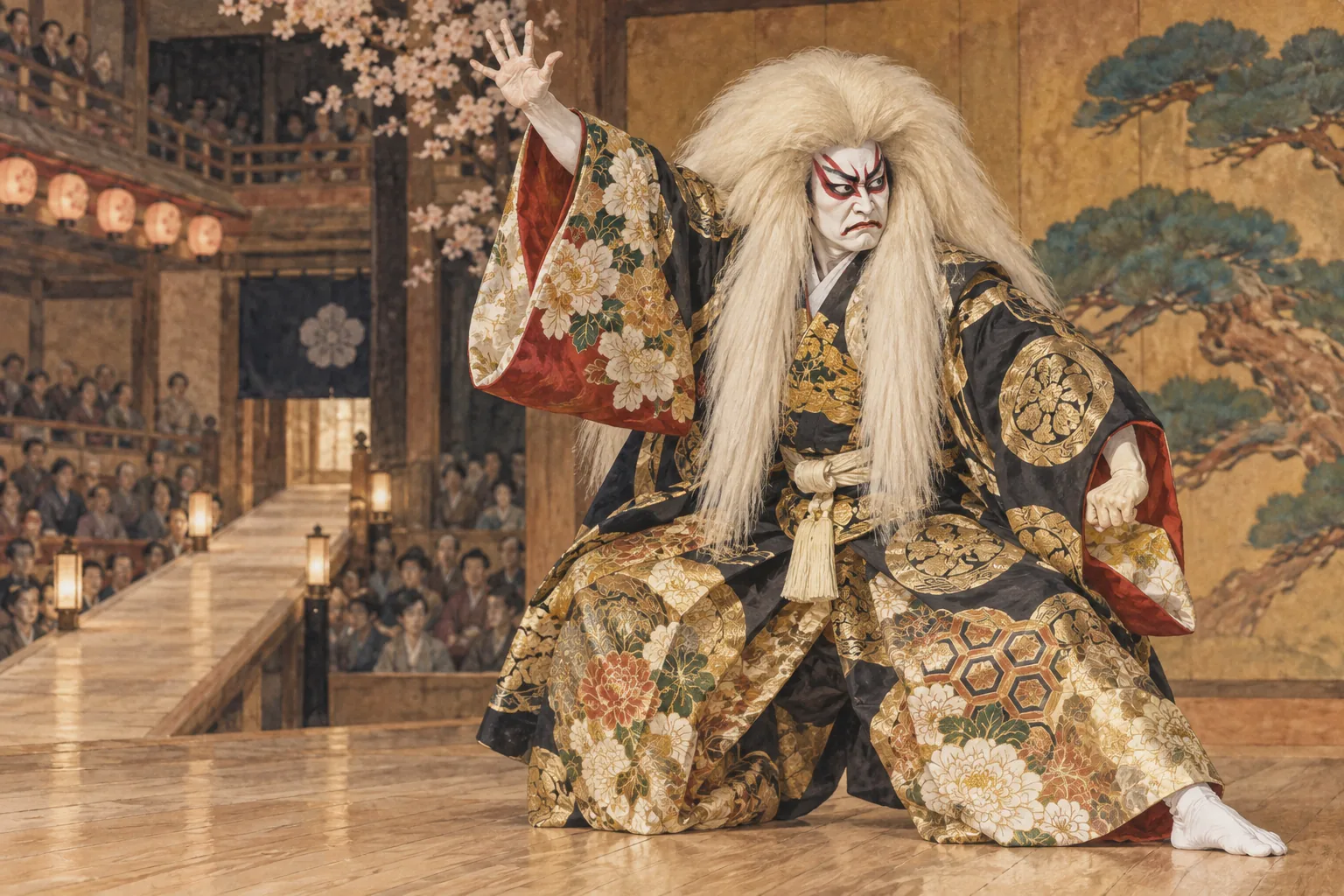
Mie is the moment a kabuki actor freezes in a dramatic pose at a story's emotional peak.
見得とは、物語の感情が最も高まった瞬間に、歌舞伎の役者が劇的な姿勢で動きを止めることです。
In 30 seconds
The standard explanation
At a scene's emotional climax, a kabuki actor stops moving entirely, strikes an exaggerated pose, and often crosses one eye inward while glaring, a technique called nirami. A specialist at the side of the stage strikes two wooden blocks against a board, a sound called tsuke, to punctuate the freeze, and the audience may call out the actor's house name in approval at that exact moment. Mie functions like an exclamation point on the story, marking the single instant an audience is meant to remember most from the entire scene.
場面の感情が最も高まった瞬間に、歌舞伎の役者は動きを完全に止め、誇張した姿勢を取り、しばしば片方の目を寄せてにらむ「にらみ」という技法を使います。舞台の端でツケ打ちが二本の木を板に打ちつける「ツケ」の音が、その静止の瞬間を際立たせ、観客はまさにその瞬間に役者の屋号を声に出して呼ぶことがあります。見得はいわば物語の感嘆符のようなもので、その場面全体の中で観客に最も記憶してほしい、たった一瞬を示すものです。
As a short speech
A full paragraph you can read aloud
If there is one moment of kabuki that people remember, it is likely to be a mie, the instant an actor stops dead, holds an exaggerated pose, and often crosses one eye toward his nose while glaring at the audience, a specific technique called nirami. It happens at the emotional peak of a scene, and everything around it is built to make that single freeze land: the music stops or drops away, and a specialist at the side of the stage strikes two wooden blocks sharply against a board, a sound called tsuke, timed to the pose itself.
Regular kabuki fans in the audience shout the actor's yago, the traditional house name of his acting family, at exactly that moment, a call-and-response tradition that outsiders often find startling the first time they hear it. A mie is not decoration; it functions as punctuation, telling the audience which instant in a long, slow-building scene is the one to remember. Actors train for years to hold a mie with total physical control, since a pose that looks the slightest bit unsteady undercuts the entire effect.
歌舞伎で人の記憶に残る一瞬があるとすれば、それはおそらく見得でしょう。役者が完全に動きを止め、誇張した姿勢を取り、しばしば片目を鼻のほうへ寄せて客席をにらむ、にらみと呼ばれる特有の技法です。これは場面の感情が最も高まった瞬間に起こり、その静止の一瞬を際立たせるために、周りのすべてが作られています。
音楽が止まるか小さくなり、舞台の端に座るツケ打ちが、その姿勢に合わせて二本の木を板に鋭く打ちつけます(ツケ)。歌舞伎に通じた観客は、まさにその瞬間に、役者の家に伝わる屋号を声に出して呼びます。これは初めて聞く人をしばしば驚かせる、呼びかけと応答の伝統です。
見得は単なる飾りではなく、句読点のような働きをし、ゆっくり積み上げられた長い場面の中で、どの一瞬を覚えておくべきかを観客に伝えます。役者は完全に体を制御して見得を保てるようになるまで、何年も稽古を積みます。少しでも不安定に見える姿勢は、その効果全体を台無しにしてしまうからです。
Questions people actually ask
And how to answer them.
What is that shouting from the audience?
Devoted fans call out the actor's yago, a traditional stage name tied to his acting family, at the exact moment of a mie. It is a form of applause built into the performance rather than an interruption.
熱心なファンが、見得のまさにその瞬間に、役者の家に伝わる屋号を声に出して呼びます。これは中断ではなく、演目そのものに組み込まれた拍手の一形式です。
Why does he cross his eye like that?
That specific expression is called nirami, and it is meant to project overwhelming, almost supernatural intensity at the audience. It is used only in the boldest, most dramatic mie, not every one.
その独特の表情はにらみと呼ばれ、観客に圧倒的で、ほとんど超自然的な迫力を投げかけるためのものです。すべての見得ではなく、最も大胆で劇的な見得だけに使われます。
Is mie only in kabuki, or does it appear elsewhere?
It is specifically a kabuki term, but the idea of a frozen, exaggerated pose at a dramatic peak is often said to have influenced other Japanese art forms, including how manga and anime draw a character's climactic moment.
見得は歌舞伎に固有の言葉ですが、劇的な頂点で動きを止め誇張した姿勢を取るという発想は、漫画やアニメが人物の決めの瞬間を描く手法など、他の日本の表現にも影響を与えていると言われます。
Phrases you can use
- He struck a mie right as the music stopped.音楽が止まった瞬間に見得を切りました。
- The sharp clacks punctuate the pose.ツケの音がその姿勢を際立たせます。
- The audience called out his house name.観客は彼の屋号を声に出して呼びました。
- That's the moment you're meant to remember.そこが記憶しておくべき瞬間です。
- Holding a mie takes total physical control.見得を保つには完全な身体の制御が要ります。
Words you need
- dramatic frozen pose見得
- eye-crossing glareにらみ
- sound of wooden blocks struck on a boardツケ
- actor's house name屋号
- call-and-response shout掛け声
Watch
From YouTubeBackground (Japanese)
見得を切る瞬間には、舞台の端でツケ打ちと呼ばれる担当者が二本の木を板に打ちつけ、その音で静止を際立たせます。観客が役者の屋号を呼ぶ掛け声は大向こうと呼ばれ、長年の常連客が担うことが多いとされています。片目を寄せてにらむ「にらみ」は、江戸時代には邪気を払う力があるとも信じられていました。市川團十郎家に伝わる芸とされ、今も襲名披露の口上などで披露されることがあります。