nihon buyo
classical Japanese dance, largely grown out of kabuki
日本舞踊(にほんぶよう)
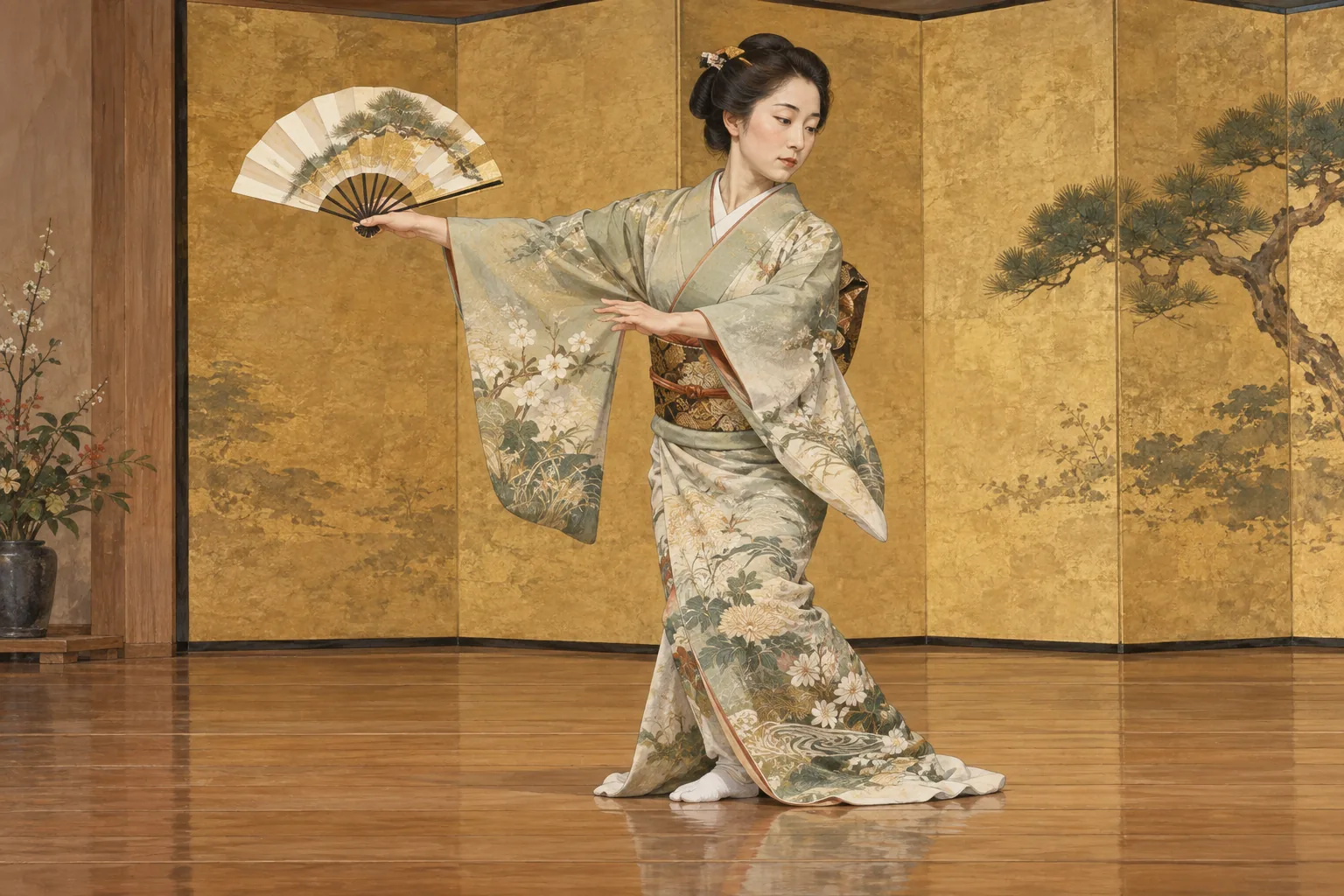
In one line
The shortest answer that works
Nihon buyo, or classical Japanese dance, is mostly descended from kabuki dance and performed low to the ground in kimono.
日本舞踊とは、多くが歌舞伎の踊りから生まれた古典の舞踊で、着物姿で腰を落として踊るものです。
In 30 seconds
The standard explanation
Nihon buyo is the classical dance taught as a lesson art and performed on stage in kimono, to shamisen and song. Most of its repertoire came from kabuki dance, with an older strand of quieter indoor dance from Kyoto and Osaka. Movement stays low: knees bent, feet sliding rather than lifting, no jumps. It is organized into schools under the iemoto system, and advanced students can receive a stage name.
日本舞踊は、習い事として教えられ、着物で舞台に立つ古典の舞踊です。三味線と唄に合わせます。演目の多くは歌舞伎の踊りから来ており、京や大坂の静かな座敷の舞という古い流れもあります。動きは低く、膝を曲げ、足は上げずにすり、跳びません。家元制度のもとで流派に分かれ、一定の段階に達した弟子は名取として芸名をもらいます。
As a short speech
A full paragraph you can read aloud
Nihon buyo is classical Japanese dance, and the clearest way to explain it is by where it came from and how the body moves. Most of the repertoire is kabuki dance that left the stage and became something people could study, which is why the pieces are performed to shamisen and narrative song.
There is also an older, quieter strand from Kyoto and Osaka, danced in a room rather than a theater, with much smaller movement. What surprises people who know Western dance is the direction of the effort. There is no jumping and no lifting of the line.
The knees stay bent, the center of gravity stays low, the feet slide along the floor, and the kimono and the fan do a great deal of the expression, so a turn of the wrist can mean rain or a letter or a river. It is organized like tea and flower arrangement, under headmaster schools, and a student who reaches a certain level is given a stage name and may then teach. Children still study it, though far fewer than a century ago.
日本舞踊は日本の古典舞踊です。分かりやすく説明するなら、どこから来たかと、体をどう使うかの二つでしょう。演目の多くは歌舞伎の踊りが舞台を離れ、人が習えるものになったものです。だから三味線と語りの唄に合わせるのです。
もう一つ、京や大坂の、劇場ではなく座敷で舞う静かな流れもあり、こちらは動きがずっと小さい。西洋の舞踊を知る人が驚くのは、力の向きです。跳びませんし、体を上に伸ばしません。膝は曲げたまま、重心は低いまま、足は床をすります。
表現の多くを着物と扇が担うので、手首の返し一つが雨にも手紙にも川にもなります。茶や花と同じく家元制度で流派に分かれ、一定の段階に達した弟子は流派から芸名をもらい、教えることができます。子どもの習い事としても続いていますが、百年前に比べればずっと少なくなりました。
Questions people actually ask
And how to answer them.
Is this the same as kabuki?
No. Kabuki is drama with dance in it, performed by male professional actors, many from hereditary acting families. Nihon buyo is the dance itself, taught to amateurs and professionals alike, and women are the majority of students.
違います。歌舞伎は踊りを含む演劇で、男性の職業俳優が演じます。その多くは代々続く役者の家の出です。日本舞踊は踊りそのもので、素人も玄人も習い、稽古する人の多くは女性です。
Why is everything so low?
The dance grew in kimono on a wooden stage or a tatami room. A kimono with an obi restricts the legs and hips, and sliding feet keep the line of the garment, so the expression moved to the upper body and the fan.
着物で、板の舞台や畳の上で育った踊りだからです。帯を締めた着物は脚と腰を縛りますし、すり足なら着物の線が崩れません。そのぶん表現は上半身と扇に移りました。
Can a foreigner learn it?
Yes. Schools accept foreign students and some run short trial lessons for visitors. Reaching a stage name takes years and the fees are not small.
習えます。流派は外国人の弟子を受け入れますし、旅行者向けの体験もあります。名取になるには年数がかかり、費用も小さくありません。
A common misunderstanding
MYTHNihon buyo is an ancient court art.
FACTMost of it comes from kabuki dance of the Edo period. Court dance is a separate, older tradition called bugaku.
Phrases you can use
- It mostly comes from kabuki dance.多くは歌舞伎の踊りから来ています。
- The knees stay bent and the feet slide.膝を曲げたまま、足はすります。
- There's no jumping at all.跳ぶ動きはまったくありません。
- The fan can stand for rain, or a letter.扇は雨にも手紙にもなります。
- Students are given a stage name by the school.弟子は流派から芸名をもらいます。
Words you need
- headmaster system家元制度
- stage name名取
- sliding stepすり足
- folding fan扇
- school, style流派
Watch
From YouTubeBackground (Japanese)
日本舞踊の流派は二百を超えるとされ、花柳・藤間・若柳・西川・坂東が大きな流派として挙げられることが多い。歌舞伎の女方が踊りの師匠を兼ねた歴史があり、歌舞伎役者と舞踊の家は今も近い関係にある。上方で座敷で舞われた流れは「舞」、江戸で舞台化した流れは「踊り」と呼び分けられることがあり、両方を合わせた呼び名として「舞踊」の語が明治末に広まったとされる。