biwa
the lute that carried Japan's war tales
琵琶(びわ)
In one line
The shortest answer that works
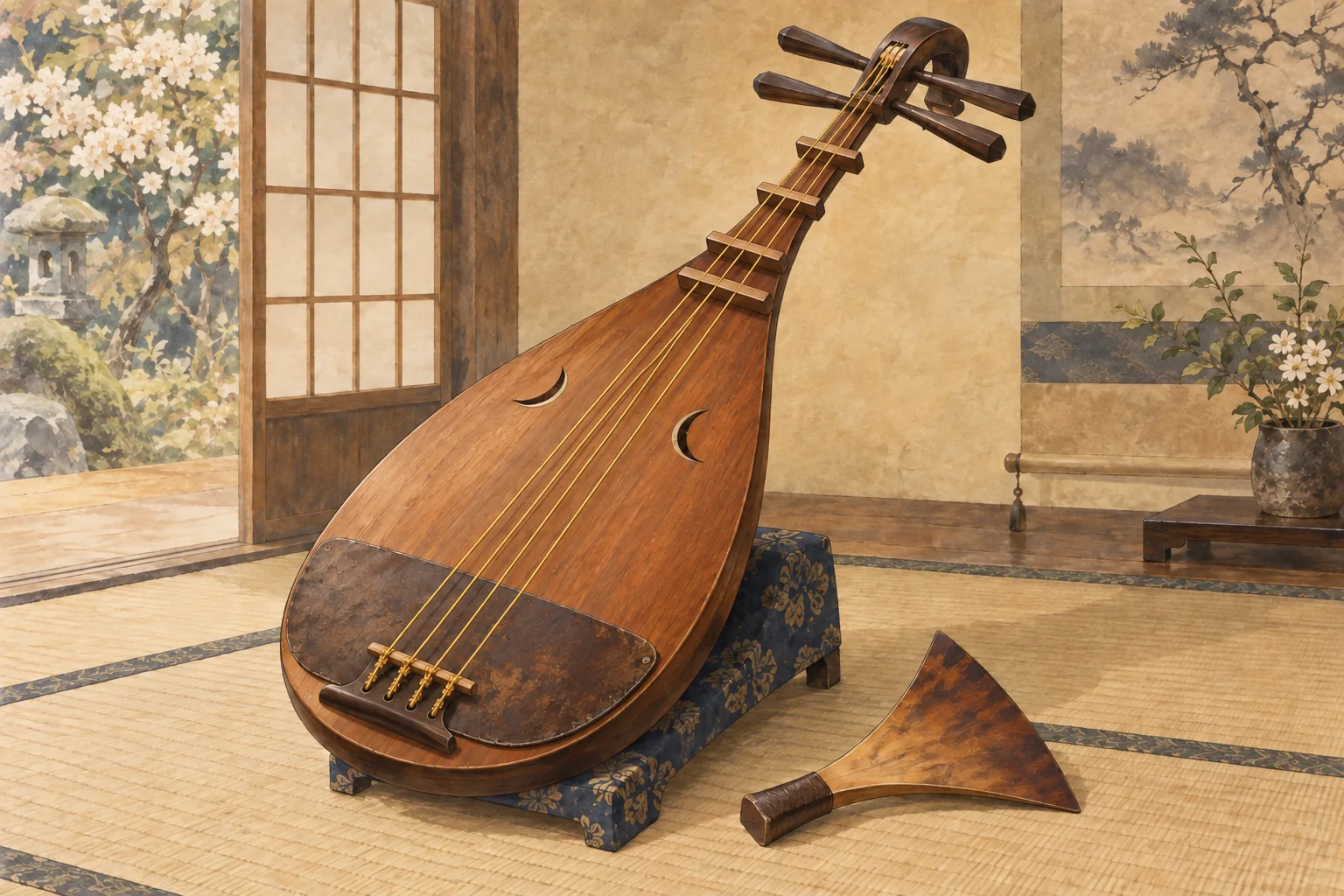
Biwa, a short-necked lute, is played with a large wedge-shaped plectrum to accompany sung storytelling.
琵琶とは、大きなばちで弾く短い棹の弦楽器で、語りに合わせて弾かれてきたものです。
In 30 seconds
The standard explanation
The biwa is a pear-shaped lute with four or five strings and high frets, struck with a broad wooden plectrum that also strikes the body. Its importance in Japan is less as a solo instrument than as the accompaniment to narrative: blind performers called biwa hoshi carried The Tale of the Heike, the account of a twelfth-century war, around the country by reciting it to the biwa.
琵琶は洋梨の形をした四弦か五弦の弦楽器で、高い柱を持ち、幅の広い木のばちで弦と胴を打ちます。日本での重みは、独奏より語りの伴奏にあります。琵琶法師と呼ばれる盲目の奏者が、十二世紀の戦を描いた『平家物語』を、琵琶に乗せて各地に運びました。
As a short speech
A full paragraph you can read aloud
The biwa matters in Japan for a reason that is not really musical. It is a lute, pear-shaped, with four or five strings and unusually tall frets, and it is played with a broad wedge of wood that strikes the strings and the face of the instrument together, so the sound is percussive and buzzing rather than sweet. But its role was to carry words.
Before printing was widespread, blind performers known as biwa hoshi traveled Japan reciting The Tale of the Heike, the story of the war that destroyed the Taira clan in the twelfth century, and the biwa punctuated the recitation. That is how people who could not read learned that story, and it is why the famous opening line about the sound of the temple bell is known to Japanese schoolchildren today.
Later, regional traditions developed in Satsuma and Chikuzen, in what is now Kagoshima and Fukuoka, with their own styles of singing and playing. The instrument nearly disappeared in the twentieth century and survives now through a small number of performers and a revival of interest, including composers writing new work for it.
琵琶が日本で重んじられる理由は、音楽そのものにはありません。洋梨の形をした四弦か五弦の弦楽器で、柱が高く、幅広い木のばちで弦と胴を同時に打つので、甘い音ではなく、打楽器のような、ざらつく響きになります。しかしその役目は、言葉を運ぶことでした。
印刷が広まる前、琵琶法師と呼ばれた盲目の奏者が各地を回り、十二世紀に平家を滅ぼした戦を描く『平家物語』を語りました。琵琶がその語りに区切りを入れたのです。字を読めない多くの人々がその戦の物語を知った道筋がこれであり、鐘の音で始まるあの冒頭を、いまも日本の子どもが暗唱する理由でもあります。
のちに、いまの鹿児島と福岡にあたる薩摩と筑前で、独自の歌と弾き方を持つ流れが育ちました。二十世紀には絶えかけましたが、少数の奏者と関心の高まりによって続いており、新しい曲を書く作曲家もいます。
Questions people actually ask
And how to answer them.
Why were the performers blind?
Recitation to the biwa was one of the few occupations organized for blind men, and it was protected by a guild. The association is historical rather than musical.
琵琶を弾いて語ることは、盲人のための数少ない職の一つで、当道座という組織に守られていました。音楽上の理由ではなく、歴史的な事情です。
How does it differ from the shamisen?
The biwa is older, has a wooden face and tall frets, and is struck with a much larger plectrum. The shamisen arrived in the sixteenth century, has a skin face and no frets at all.
琵琶のほうが古く、表は木で柱が高く、ばちもずっと大きい。三味線は十六世紀に入ったもので、表は皮、柱はありません。
Can you still hear it live?
Yes, but rarely. Concerts happen in Tokyo and Fukuoka and at some temples, and recordings are easy to find. The number of professional players is small.
聴けますが、機会は多くありません。東京や福岡、寺などで演奏会があり、録音は容易に見つかります。職業奏者の数は多くありません。
A common misunderstanding
MYTHThe biwa is a Japanese invention.
FACTIt came from the continent, part of a family of lutes thought to have spread across Asia from Persia. Japan developed its own forms and its own use of it.
Phrases you can use
- It's a lute played with a big wooden plectrum.大きな木のばちで弾く弦楽器です。
- The plectrum hits the body as well as the strings.ばちは弦だけでなく胴も打ちます。
- Blind performers used it to tell war tales.盲目の奏者が、これで戦の物語を語りました。
- The Tale of the Heike was spread this way.平家物語はこうして広まりました。
- Very few professionals play it today.いま弾く職業奏者は、ごく少数です。
Words you need
- plectrumばち
- fret柱
- narrative recitation語り
- blind lute priest琵琶法師
- war tale軍記物
Watch
From YouTubeBackground (Japanese)
琵琶には、雅楽で用いる楽琵琶、語りに用いる平家琵琶、江戸期以降に発達した薩摩琵琶と筑前琵琶などの種類があり、弦数も柱の数も異なる。『平家物語』は鎌倉時代に成立したとされ、冒頭の「祇園精舎の鐘の声」は中学校の教科書に載る。正倉院には八世紀の五弦琵琶が伝わっており、現存する五弦琵琶としてよく知られている。