Heike monogatari
the war tale about the fall of a clan, recited to the lute
平家物語(へいけものがたり)
In one line
The shortest answer that works
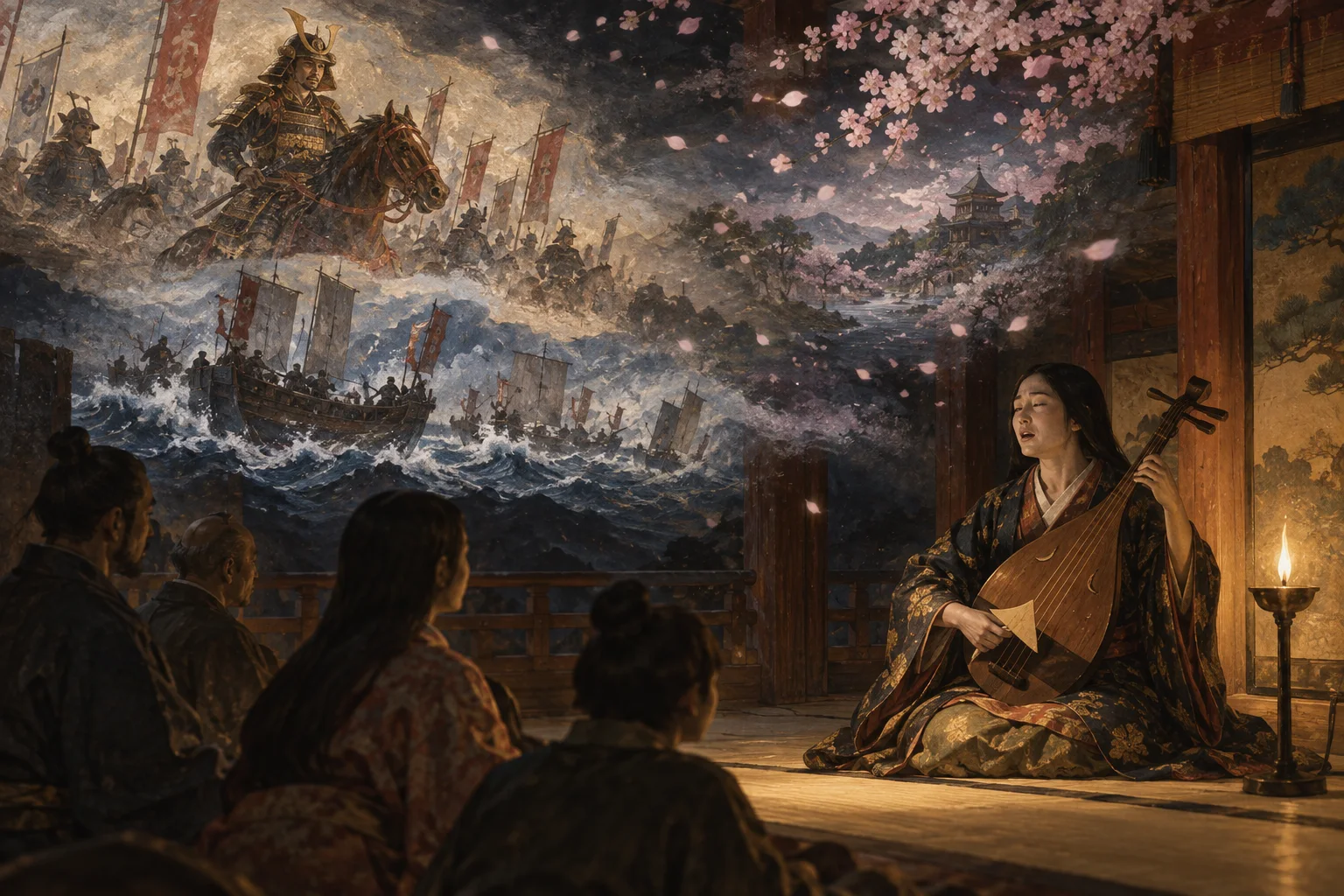
Heike monogatari, The Tale of the Heike, is an account of the Taira clan's fall, spread by blind lute reciters.
平家物語とは、平家の滅亡を描き、琵琶を持つ盲目の語り手が広めた物語です。
In 30 seconds
The standard explanation
A narrative of the war between the Taira and Minamoto clans in the 1180s, ending in the Taira's destruction at sea. It was not read so much as heard: blind performers recited it to the biwa across Japan. Its opening lines about the sound of a temple bell and the impermanence of all things are among the best-known sentences in Japanese, and are still memorized in school.
1180年代の平氏と源氏の戦を描き、平家が海に滅びるまでを語る物語です。読まれるより、聞かれるものでした。盲目の奏者が琵琶に乗せて各地で語ったのです。鐘の声と諸行無常を説く冒頭は、日本語で最もよく知られた文章の一つで、いまも学校で暗唱されます。
As a short speech
A full paragraph you can read aloud
The Tale of the Heike is the story of a civil war in the 1180s between two warrior clans, the Taira and the Minamoto, which ended with the Taira defeated at sea and a child emperor drowning in his grandmother's arms rather than be captured. What makes it remarkable is the point of view.
It is told from the side that lost, and its subject is not victory but the fact that power does not last, which it states in the opening lines about the sound of a temple bell and the color of flowers that shows all things must fade. Japanese schoolchildren still learn those lines by heart.
For centuries the tale was not a book people read but a performance people attended: blind reciters called biwa hoshi traveled the country reciting it to a lute, which is how an audience that could not read learned this part of its own history. The episodes became the raw material for noh plays, kabuki and later films, and the names in it, especially the young general Yoshitsune, are known to almost every Japanese adult.
平家物語は、1180年代の平氏と源氏という二つの武家の戦を描いた物語で、平家が海の戦に敗れ、幼い天皇が捕らわれるかわりに祖母に抱かれて入水するところで終わります。際立っているのは、視点です。負けた側から語られ、主題は勝利ではなく、力は続かないということ。
それを冒頭の、鐘の声と、盛った花の色は必ず衰えるという文が告げます。日本の子どもはいまもその一節を暗唱します。何百年ものあいだ、この物語は読む本ではなく、聞きに行く芸でした。琵琶法師と呼ばれた盲目の語り手が各地を回り、琵琶に乗せて語ったのです。
字の読めない聴衆は、そうして自らの歴史のこの部分を知りました。その挿話は能や歌舞伎、のちには映画の材料になり、登場する名前、とりわけ若い武将の義経は、日本の大人ならほとんど誰でも知っています。
Questions people actually ask
And how to answer them.
Is it history or fiction?
Both. The war happened and many figures are real, but the work is a literary account shaped over generations of recitation, with invented speeches and scenes.
両方です。戦は実際にあり、多くの人物も実在します。ただし作品としては、代々の語りのなかで形を整えられた文学で、作られた場面や台詞を含みます。
What are the famous opening lines?
They say that the sound of the bell of Gion temple carries the impermanence of all things, and that the color of the sala flowers shows that whatever flourishes must decline.
祇園精舎の鐘の声に諸行無常の響きがあり、沙羅双樹の花の色は盛者必衰の理をあらわす、という文です。
Who wrote it?
Unknown. A fourteenth-century essay, Tsurezuregusa, names a possible author, but the text exists in many versions, and it is best understood as the product of a recitation tradition.
分かっていません。鎌倉時代末の随筆『徒然草』が作者らしき人物を挙げていますが、本文は多くの異本があり、語りの伝統が育てたものと考えるのが妥当です。
A common misunderstanding
MYTHIt glorifies the winning samurai.
FACTIt is told from the losing side and its theme is impermanence. Even several of the victors in it are shown coming to bad ends.
Phrases you can use
- It's about a clan that lost everything.すべてを失った一族の物語です。
- The theme is that nothing lasts.主題は、何も続かないということです。
- Blind reciters spread it with a lute.盲目の語り手が琵琶で広めました。
- Most Japanese students learn the opening lines.冒頭は日本の生徒の多くが習います。
- Noh and kabuki plays come from its episodes.能や歌舞伎の演目がここから生まれました。
Words you need
- war tale軍記物語
- impermanence無常
- blind lute reciter琵琶法師
- warrior clan武家
- downfall滅亡
Watch
From YouTubeBackground (Japanese)
平家物語は鎌倉時代に成立したとされ、覚一本をはじめ多くの異本がある。『徒然草』は信濃前司行長という人物が作り、生仏という盲目の僧に語らせたと記すが、確定はしていない。源平の争乱は1185年の壇ノ浦の戦いで終わり、安徳天皇は数え八歳で入水したと伝えられる。能では「敦盛」「屋島」など、平家物語に取材した曲が数多く作られた。