mukashi no asobi
the pre-electronic children's games still taught in schools
昔の遊び(むかしのあそび)
In one line
The shortest answer that works
Mukashi no asobi, or old children's games, are beanbags, marbles, cup-and-ball and stilts, kept alive mainly by schools teaching them.
昔の遊びとは、お手玉、おはじき、けん玉、竹馬など、主に学校が意識して教えることで残っている子どもの遊びです。
In 30 seconds
The standard explanation
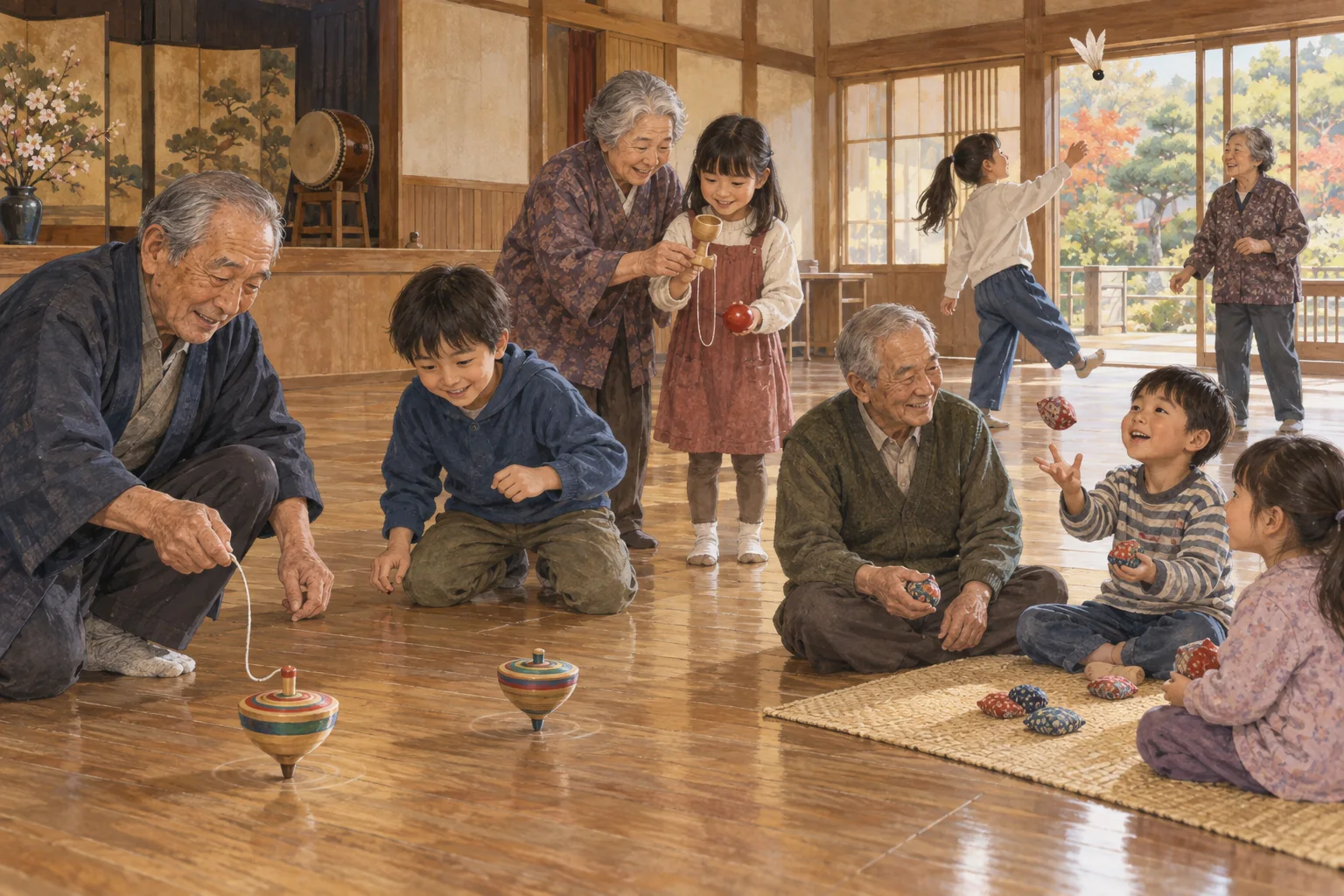
Japanese elementary schools set aside time for games children would otherwise never meet: otedama beanbags, ohajiki glass counters, menko cardboard slammers, kendama cup-and-ball, bamboo stilts and koma tops. Grandparents are often invited to teach them. It is a deliberate preservation program rather than a living playground culture, though kendama has had a genuine revival and is now an international sport.
日本の小学校は、そのままでは出会わない遊びのために時間を取ります。お手玉、おはじき、めんこ、けん玉、竹馬、こま。祖父母を招いて教えてもらうこともあります。これは自然に続いている遊びというより、意識して残す取り組みです。ただ、けん玉だけは本当に流行を取り戻し、いまでは国際的な競技になっています。
As a short speech
A full paragraph you can read aloud
If you visit a Japanese elementary school in winter, you may find a classroom of children throwing small cloth beanbags in the air, or flicking flat glass discs across a desk, and adults from the neighborhood teaching them how. These are the old games. Otedama is juggling with beanbags filled with beans, ohajiki is a flicking game with glass counters, menko is slamming a thick card down to flip your opponent's, kendama is a wooden cup-and-ball, and there are bamboo stilts and tops as well.
What is honest to say is that this is not a living playground culture. Japanese children play the same video games as children anywhere, and these games survive because the school curriculum makes room for them and because grandparents are willing to come in and demonstrate.
The one real exception is kendama, which escaped: it was picked up by young people abroad, developed tricks and competitions, and came back to Japan as something that is not nostalgic at all. That is worth pointing out, because it shows the difference between a tradition that is preserved and a tradition that is still alive.
冬に日本の小学校を訪ねると、教室で子どもたちが小さな布の袋を放り上げていたり、平たいガラスの玉を机の上ではじいていたりして、地域の大人がやり方を教えている場面に出会うかもしれません。これが昔の遊びです。
お手玉は豆を入れた布袋を投げ上げて受ける遊び、おはじきはガラスの玉をはじいて取る遊び、めんこは厚い札を叩きつけて相手の札を返す遊び、けん玉は木の玉と皿の遊び。ほかに竹馬やこまもあります。正直に言うべきことがあります。これは今も校庭で生きている遊びではありません。日本の子どもも、よその国の子どもと同じゲームで遊びます。
これらが残っているのは、学校が時間を確保し、祖父母が教えに来てくれるからです。ただ一つ、けん玉だけは例外で、外に出て行きました。海外の若者が取り上げ、技と競技会が生まれ、懐かしさとは無縁のものとして日本に戻ってきたのです。これは指摘する値打ちがあります。保存された伝統と、いまも生きている伝統の違いが見えるからです。
Questions people actually ask
And how to answer them.
Do children really still play these?
In school time and at community events, yes. Outside those settings, rarely. Kendama is the exception and has real players of all ages.
学校の時間や地域の行事では遊びます。それ以外の場面ではほとんどやりません。けん玉だけは例外で、年齢を問わず本気の愛好者がいます。
Why do schools teach them?
They are used in classes about local life and the generations, and they give older neighbors a reason to come into the school. The games also need no equipment budget.
地域や世代について学ぶ授業で使われ、近所の高齢者が学校に来るきっかけにもなります。道具の費用がほとんどかからない点もあります。
Is kendama hard?
Catching the ball on the largest cup takes a few minutes. The graded tricks go a very long way beyond that, and there is a national certification system for levels.
大きい皿に玉を乗せるだけなら数分でできます。そこから先の技は果てしなく、段位や級を認定する制度もあります。
A common misunderstanding
MYTHJapanese children grow up playing traditional games.
FACTMost meet them only through school programs. Everyday play is the same screens and sports as elsewhere.
Phrases you can use
- These are games from before video games.ゲーム機より前の遊びです。
- Schools teach them on purpose, to keep them.残すために、学校が意識して教えています。
- Grandparents come in and show the children how.祖父母が来て、子どもに教えてくれます。
- Kendama came back as a real sport.けん玉は本物の競技として戻ってきました。
- Honestly, most kids play video games.正直に言えば、多くの子はゲーム機で遊びます。
Words you need
- beanbag jugglingお手玉
- glass flicking countersおはじき
- card slamming gameめんこ
- cup-and-ballけん玉
- bamboo stilts竹馬
Watch
From YouTubeBackground (Japanese)
けん玉は日本けん玉協会が級位・段位を認定しており、海外にも競技団体がある。現在の形のけん玉は大正時代に広島県廿日市で作られたものが元になったとされ、同市はけん玉発祥の地を名乗っている。小学校の生活科では、地域の人を招いて昔の遊びを体験する単元が広く行われている。お手玉の中身は小豆や数珠玉が使われてきた。