go-sekku
the five seasonal festivals of the old calendar
五節句(ごせっく)
In one line
The shortest answer that works
The go-sekku are five seasonal festivals on odd-numbered days that structure the traditional Japanese year.
五節句とは奇数の月日に置かれた五つの季節の節目で、日本の伝統的な一年を形づくっています。
In 30 seconds
The standard explanation
Five dates form a set: the seventh of the first month, the third of the third, the fifth of the fifth, the seventh of the seventh and the ninth of the ninth. Each pairs an odd number with a plant: herbs, peach, iris, bamboo and chrysanthemum. The Edo government made them official holidays, and although that status ended in 1873, four of the five are still widely celebrated. The ninth-month one has largely faded.
五つの日付が一組をなします。一月七日、三月三日、五月五日、七月七日、九月九日です。それぞれ奇数と植物が組になっていて、七草、桃、菖蒲、笹、菊です。江戸幕府がこれらを公式の祝日と定め、その地位は1873年に廃止されましたが、五つのうち四つは今も広く祝われています。九月のものはほとんど廃れました。
As a short speech
A full paragraph you can read aloud
Japanese people celebrate the Doll Festival in March and Children's Day in May without usually noticing that they belong to a single system. The go-sekku are five seasonal turning points taken from the Chinese calendar, each falling on a day where an odd number repeats: the seventh day of the first month, then the third of the third, the fifth of the fifth, the seventh of the seventh and the ninth of the ninth.
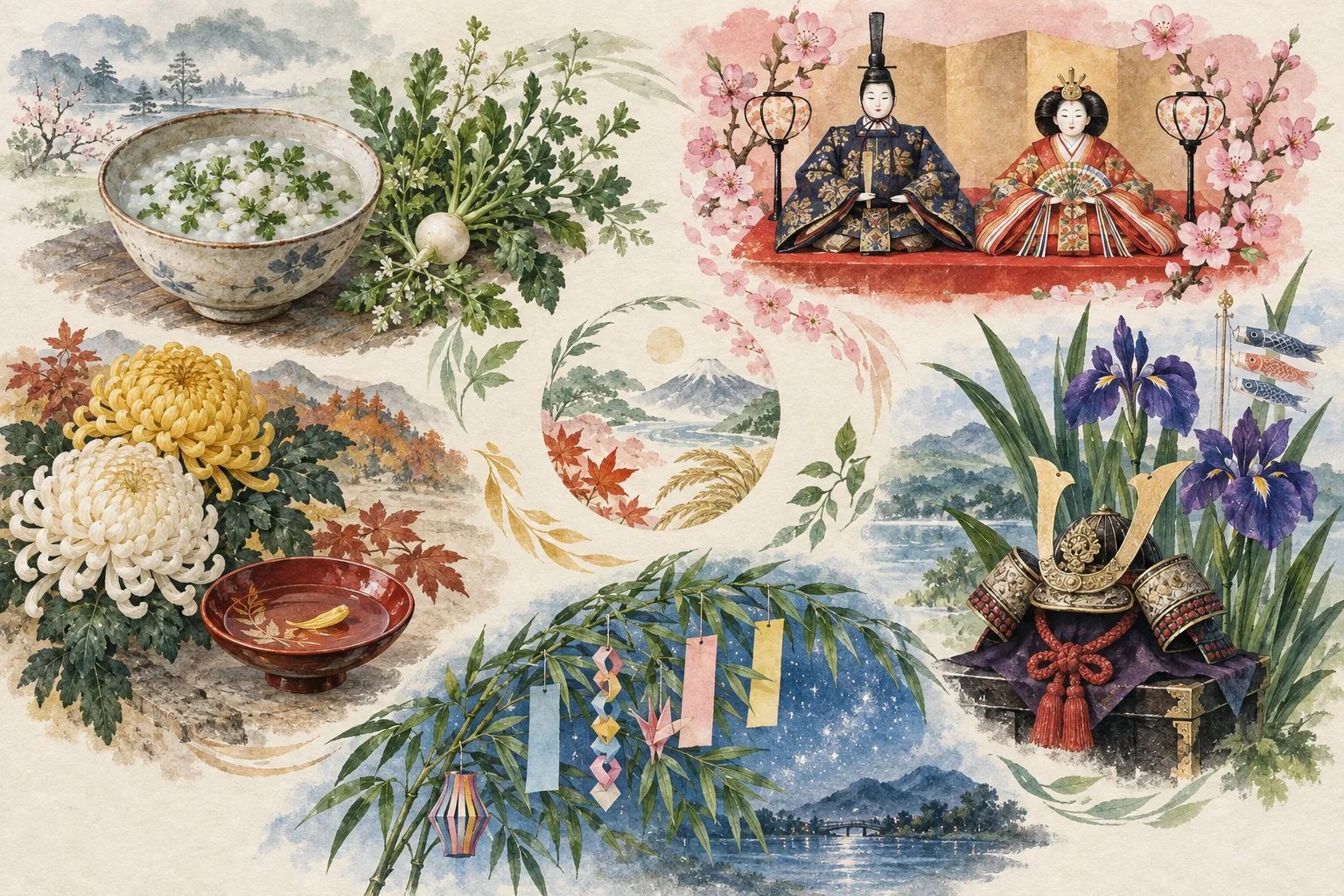
Odd numbers were considered auspicious, and a doubled odd number was thought to be a point where the year could tip either way, so each date carried a ritual with a plant believed to drive off harm.
You eat seven herbs in a rice porridge, display peach blossom with the dolls, put iris leaves in the bath, write wishes on bamboo, and drink sake with a chrysanthemum petal. The Edo shogunate made the five official days, and the Meiji government abolished that status in 1873. Four of them survived on their own. The ninth-month one did not.
日本人は三月の雛祭りも五月のこどもの日も祝いますが、それらが一つの体系に属していることにはふつう気づいていません。五節句は中国の暦から取り入れた五つの季節の変わり目で、それぞれ奇数が重なる日に置かれています。
一月七日、次いで三月三日、五月五日、七月七日、九月九日です。奇数は縁起がよいとされ、奇数が重なる日は一年がどちらにも傾きうる境目と考えられたため、各日には災いを払うとされる植物を伴う行事が置かれました。
七種の草を粥にして食べ、雛人形とともに桃の花を飾り、菖蒲の葉を風呂に入れ、笹に願いを書き、菊の花びらを浮かべた酒を飲みます。江戸幕府はこの五日を公式の式日とし、明治政府が1873年にその地位を廃止しました。うち四つはそれ自身の力で生き残り、九月のものは残りませんでした。
Questions people actually ask
And how to answer them.
Which five are they, in order?
The seventh of January with seven herbs, the third of March with peach for the Doll Festival, the fifth of May with iris for Children's Day, the seventh of July for the Star Festival, and the ninth of September, the chrysanthemum festival. Four are household names; the last is not.
一月七日の七草、三月三日の桃の節句すなわち雛祭り、五月五日の菖蒲の節句すなわちこどもの日、七月七日の七夕、九月九日の重陽です。四つは誰もが知っていますが、最後の一つはそうではありません。
Why did the September one disappear?
Several reasons are suggested. Chrysanthemums bloom around the ninth of the ninth month on the old calendar but not on the new one, which pushed the festival out of season when Japan switched calendars. It also had no children's element to carry it, unlike the March and May festivals.
いくつかの理由が挙げられます。菊は旧暦の九月九日ごろに咲きますが新暦ではそうではなく、暦の切り替えで季節から外れてしまいました。また三月や五月の節句と違い、行事を支える子どもの要素がありませんでした。
Are the go-sekku public holidays now?
Only the fifth of May, which is a national holiday as Children's Day. The other four are ordinary working days, though schools, shops and households mark them. Their status as official days of the calendar ended in 1873.
国民の祝日は五月五日のこどもの日だけです。ほかの四つはふつうの平日ですが、学校や店や家庭で祝われます。暦の上の公式の日としての地位は1873年に終わりました。
Phrases you can use
- These five festivals belong to one set.この五つの行事は一つの組です。
- They all fall on repeated odd numbers.どれも奇数が重なる日です。
- Each one has a plant attached to it.それぞれに植物がついています。
- Only Children's Day is a public holiday now.今、祝日なのはこどもの日だけです。
- The September one has mostly died out.九月のものはほとんど廃れました。
Words you need
- seasonal festival節句
- odd number奇数
- auspicious縁起のよい
- lunar calendar旧暦
- chrysanthemum菊
Watch
From YouTubeBackground (Japanese)
五節句は人日(一月七日)、上巳(三月三日)、端午(五月五日)、七夕(七月七日)、重陽(九月九日)の五つで、中国の暦法に由来し、奇数が重なる日を季節の節目としたものです。江戸幕府がこれを式日と定めて武家や庶民に広まりましたが、明治六年(1873年)の太政官布告で公式の節句としての制度は廃止されました。それでも民間の行事としては残り、現在も四つは広く行われています。重陽だけが衰えた理由としては、新暦では菊の季節と合わないことや、子どもの行事という支えがなかったことが挙げられます。菊を用いる行事は今も一部の神社や旧家で続き、菊の花を浮かべた酒や菊の着せ綿といった風習が伝えられています。人日の七草がゆだけは、新暦の一月七日に定着しました。