kutsu o nugu
removing shoes indoors
靴を脱ぐ(くつをぬぐ)
In one line
The shortest answer that works
In Japan you always take your shoes off before stepping into a home.
日本では、家に上がる前に必ず靴を脱ぎます。
In 30 seconds
The standard explanation
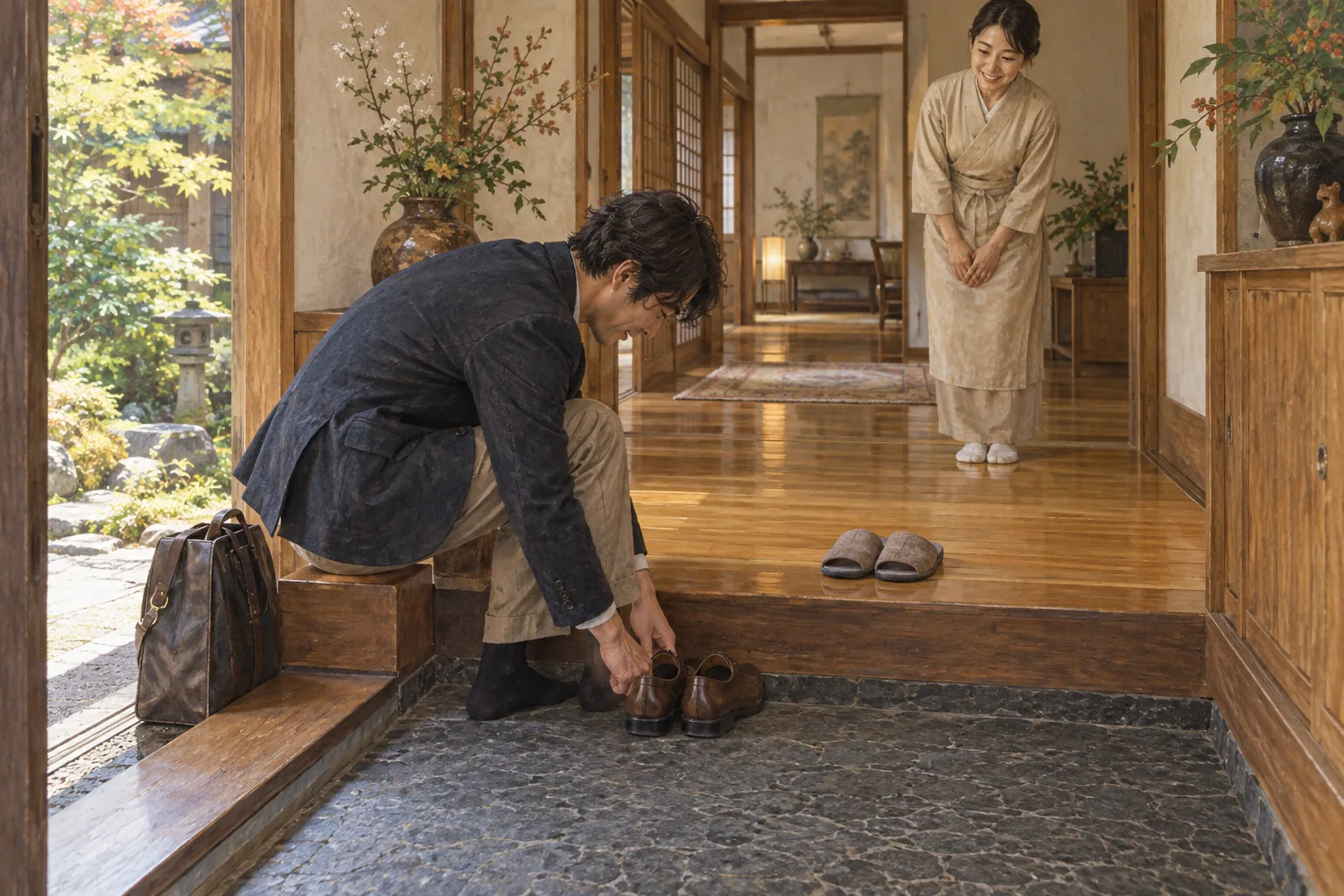
Japanese homes have a sunken entrance area called a genkan. You step out of your shoes there, turn them to face the door, and step up onto the floor. This is not optional, and it applies to some restaurants, temples, schools and clinics as well. If there is a step up and a row of slippers waiting, that is the signal.
日本の家には玄関という一段低い空間があります。そこで靴を脱ぎ、つま先をドアのほうに向けて揃え、床に上がります。これは任意ではなく、一部の飲食店・寺・学校・病院でも同じです。段差があってスリッパが並んでいたら、それが合図です。
As a short speech
A full paragraph you can read aloud
In Japan, you never wear outdoor shoes inside a house. Every home has a lowered entrance area called a genkan, and that small step marks the line between outside and inside. You take your shoes off there, turn them so the toes face the door, and step up.
It is not only about dirt. The floor is a place people sit on and sleep on, especially in a room with tatami mats, so keeping it clean is keeping the living space itself clean.
The same rule applies in many temples, traditional restaurants, and even some schools and hospitals. If you see a step and a shelf of slippers, that is your cue. And one more rule: never wear the slippers onto tatami, and never wear the toilet slippers back out.
日本では、家の中で外履きの靴を履くことはありません。どの家にも玄関という一段低い場所があり、その段差が外と内の境界線になっています。そこで靴を脱ぎ、つま先をドアのほうに向けて揃え、上がります。
汚れだけの問題ではありません。とくに畳の部屋では床は座る場所であり寝る場所でもあるので、床をきれいに保つことは生活空間そのものを清潔に保つことなのです。
同じ決まりは、多くの寺、伝統的な飲食店、学校や病院にもあります。段差とスリッパ棚があれば、それが合図です。もう一つ、スリッパのまま畳に上がってはいけませんし、トイレのスリッパを履いたまま出てきてもいけません。
Questions people actually ask
And how to answer them.
What if my socks have holes in them?
This is a real worry for many people here, not a joke. Plenty of Japanese people check their socks before visiting someone. If you are going to a home or a traditional restaurant, wear socks you would not mind showing.
冗談ではなく、本気で気にする人の多いことです。訪問前に靴下を確かめる日本人もたくさんいます。家や座敷のある店に行く日は、人に見せられる靴下を履いていきましょう。
What are the separate slippers in the bathroom for?
Toilet slippers stay in the toilet. The toilet is treated as a separate zone, so you swap into them at the door and swap back out. Walking out still wearing them is the classic foreign guest mistake, and everyone will notice.
トイレ用スリッパはトイレ専用です。トイレは別の区域とみなされるので、入口で履き替えて、出るときに戻します。履いたまま出てくるのは外国人客の定番の失敗で、必ず気づかれます。
Do I really have to line up my shoes?
Turning them to face the door is polite and takes two seconds. In a formal setting you step up first, then turn and align them, rather than turning your back on the room.
つま先を外に向けるだけで十分礼儀正しく、2秒で終わります。改まった場では、上がってから向き直して揃えます。部屋に背を向けないためです。
Phrases you can use
- Please take your shoes off here.ここで靴を脱いでください。
- Feel free to use these slippers.こちらのスリッパをお使いください。
- Please don't wear slippers on the tatami.畳の上ではスリッパを脱いでください。
- The toilet has its own pair — please leave them inside.トイレ用のスリッパは中に置いたままにしてください。
- Just turn them to face the door, like this.こんなふうに、つま先を外に向けておきます。
Words you need
- entryway玄関
- step up上がる
- slippersスリッパ
- indoor / outdoor shoes内履き/外履き
- line up (shoes)揃える
Watch
From YouTubeBackground (Japanese)
靴を脱ぐ文化は日本だけのものではなく、韓国・トルコ・インドネシア・北欧諸国など広い範囲にある。日本で特徴的なのは、脱ぐ場所が「玄関」として建築的にはっきり区切られていること。玄関の床(三和土)と部屋の床にはふつう段差があり、この段差が内と外の境界を示す。旅館や座敷で靴を後ろ向きに脱ぐと「部屋に背を向ける」形になるため、正式には前向きに上がってから膝をついて靴を揃える。学校では上履きに履き替え、これを「上靴」と呼ぶ地域もある。スリッパが日本に入ったのは明治期で、土足の外国人が座敷に上がるための「上靴」として作られたのが始まりとされる。