ryokan
a traditional Japanese inn
旅館(りょかん)
In one line
The shortest answer that works
A ryokan is a traditional inn where you sleep on tatami, wear a robe, and dinner comes to your room.
旅館とは、畳の部屋に泊まり、浴衣を着て、夕食が部屋に運ばれてくる日本の宿のことです。
In 30 seconds
The standard explanation
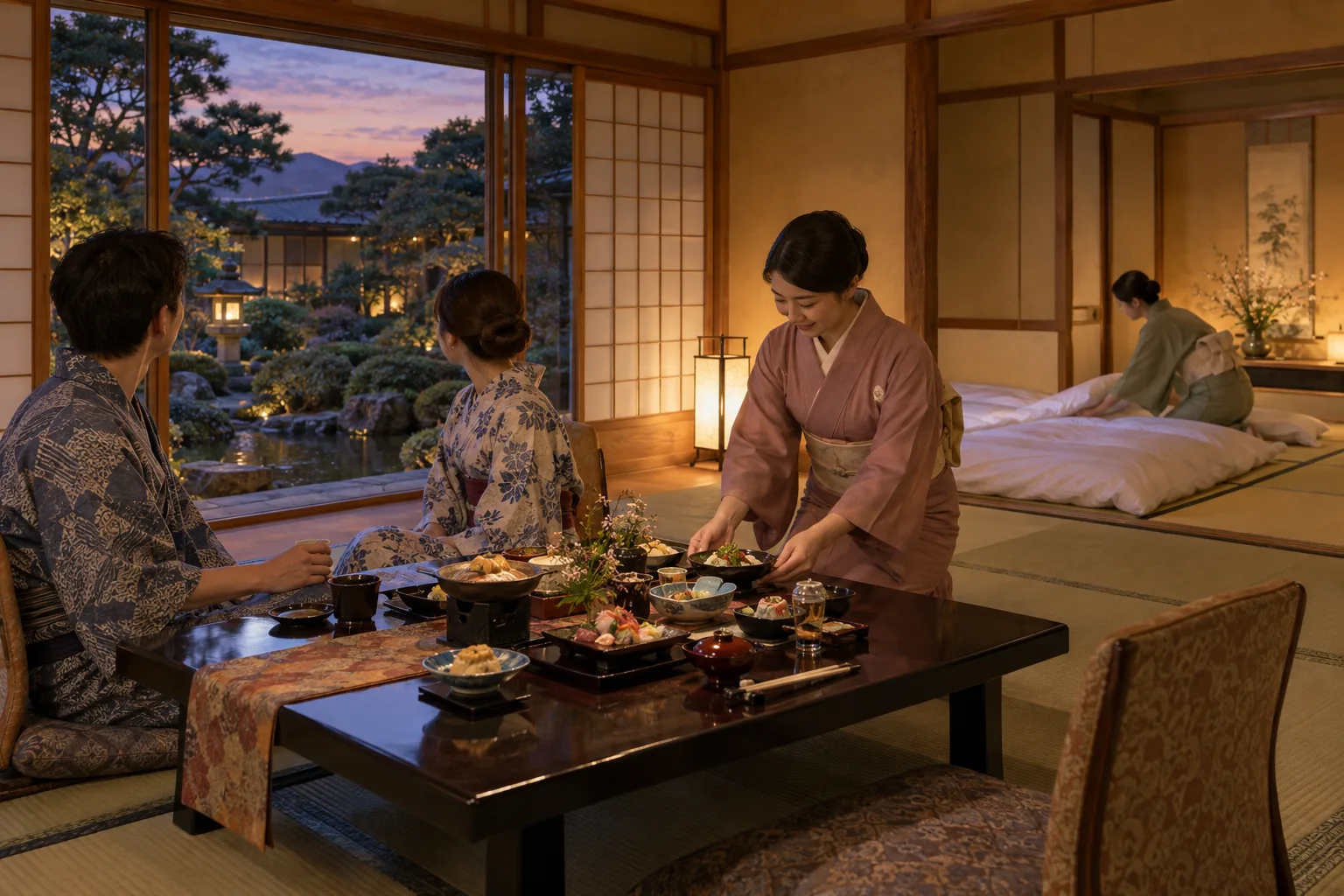
A ryokan is a traditional Japanese inn. You take your shoes off at the entrance, sleep on a futon laid on tatami, change into a cotton robe called a yukata, and usually eat both dinner and breakfast there. Many have hot spring baths. The price includes the meals, which is why it looks expensive compared with a hotel room.
旅館は日本の伝統的な宿です。玄関で靴を脱ぎ、畳に敷いた布団で寝て、浴衣に着替え、たいてい夕食と朝食をそこで食べます。温泉のある宿も多くあります。料金に食事が含まれるため、ホテルの部屋代と比べると高く見えます。
As a short speech
A full paragraph you can read aloud
A ryokan is a traditional Japanese inn, and it works differently from a hotel. You take your shoes off at the entrance and do not put them on again until you leave. Your room has tatami flooring, a low table, and no bed; staff lay out a futon while you are at dinner.
You change into a cotton robe called a yukata and wear it around the building, including to the bath and to the dining room. Dinner is usually a long set meal of small seasonal dishes, often served in your room, and breakfast is included too.
That is why the price per person looks high next to a hotel: you are paying for two meals and a level of attention, not a bed. My advice is to stay only one night at first. It is a lot of hospitality to absorb at once.
旅館は日本の伝統的な宿で、ホテルとは仕組みが違います。玄関で靴を脱ぎ、帰るまで履きません。部屋は畳敷きで、低いテーブルがあり、ベッドはありません。夕食のあいだに係の人が布団を敷きます。
浴衣に着替え、風呂にも食事処にもその格好で行きます。夕食はたいてい季節の小皿が長く続く献立で、部屋に運ばれることも多く、朝食も含まれます。ホテルと比べて一人あたりの料金が高く見えるのはそのためです。
ベッド代ではなく、二食分と、それだけの手のかけ方に払っているのです。おすすめは、最初は一泊にしておくこと。一度に受け止めるには、もてなしの量が多いのです。
Questions people actually ask
And how to answer them.
Can I wear the yukata outside?
Around the inn, yes, and in hot spring towns people walk the streets in them. In a city hotel that would look odd, but in a ryokan town it is completely normal.
館内なら大丈夫ですし、温泉街では浴衣のまま通りを歩きます。都会のホテルでは奇妙に見えますが、温泉地ではごく普通です。
Is it rude to skip dinner?
Not rude, but tell them well in advance. Meals are prepared per guest, so canceling on the day wastes food and the price usually still includes it.
失礼ではありませんが、早めに伝えてください。食事は人数分用意されるため、当日の取り消しは食材が無駄になり、料金にも含まれたままになることが多いです。
What is a minshuku?
A smaller, cheaper, family-run version. Simpler rooms, home-style meals, often shared bathrooms. Less polished, and some people prefer it for exactly that reason.
より小さく安い、家族経営の宿です。部屋は簡素で、料理は家庭的、風呂やトイレは共同のことも多いです。洗練されていないぶん、それを好む人もいます。
Phrases you can use
- Dinner is served in your room at six.夕食は6時にお部屋にお持ちします。
- They'll lay out the futon while you're eating.食事のあいだに布団を敷いてくれます。
- You can wear the yukata anywhere in the building.浴衣は館内のどこでも着ていて大丈夫です。
- The price includes dinner and breakfast.料金には夕食と朝食が含まれています。
- Please leave your shoes at the entrance.玄関で靴をお脱ぎください。
Words you need
- inn宿、旅館
- futon布団
- cotton robe浴衣
- half board1泊2食つき
- hospitalityもてなし
Watch
From YouTubeBackground (Japanese)
旅館の起源は、街道沿いの宿場町に置かれた「旅籠(はたご)」にさかのぼる。世界最古の宿として知られる山梨県の慶雲館は705年創業とされ、ギネス世界記録に認定されている。旅館業法ではかつて、和室を主体とする施設を「旅館営業」として分けていた(2018年の法改正で、ホテル営業と旅館営業の区分は「旅館・ホテル営業」に一本化された)。料金が「1泊2食つき・一人あたり」で表示されるのは、食事が宿の中心的なサービスだからである。なお「仲居さん」は客室を担当する接客係で、布団の上げ下ろしや配膳を行う。