shabu-shabu
beef swished in hot broth
しゃぶしゃぶ(しゃぶしゃぶ)
In one line
The shortest answer that works
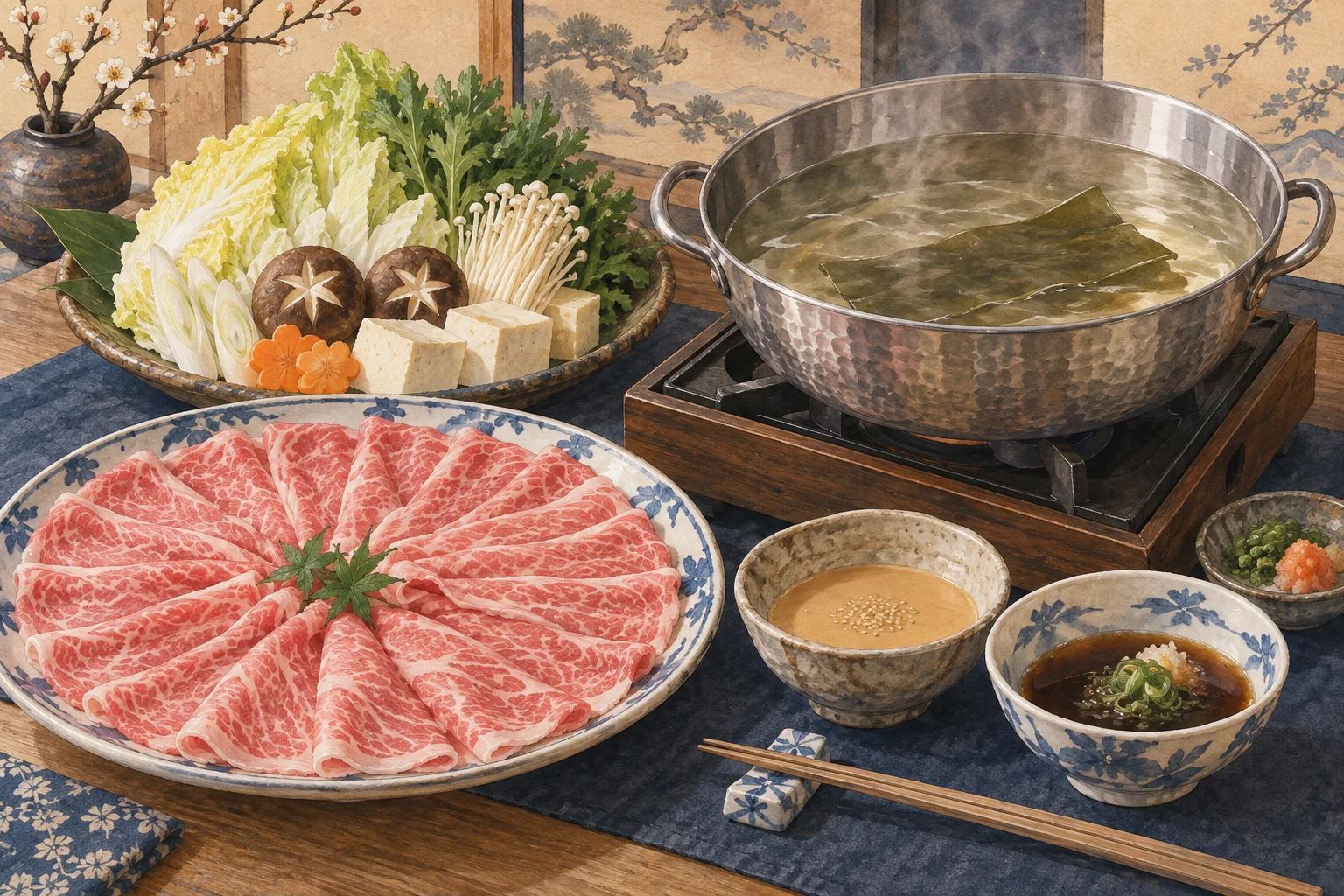
Shabu-shabu is paper-thin beef swished briefly in hot broth and dipped in sauce.
しゃぶしゃぶとは、薄く切った牛肉を熱いだしにさっとくぐらせ、たれにつけて食べる料理です。
In 30 seconds
The standard explanation
Shabu-shabu is thinly sliced beef cooked at the table by holding it in simmering broth for a few seconds, then dipping it in either a sesame sauce or a citrus and soy sauce. Vegetables, tofu and mushrooms go in the pot too, and noodles or rice are cooked in the broth at the end.
しゃぶしゃぶは薄く切った牛肉を、卓上で煮立つだしに数秒くぐらせて食べる料理です。ごまだれか、柑橘と醤油のポン酢につけます。野菜、豆腐、きのこも鍋に入れ、最後に残っただしで麺かご飯を煮ます。
As a short speech
A full paragraph you can read aloud
Shabu-shabu is beef sliced so thin it cooks in seconds. You hold a slice with chopsticks, swish it back and forth in a pot of simmering broth until the pink is gone, and dip it in one of two sauces: a nutty sesame sauce or ponzu, which is soy sauce with citrus juice.
The name is onomatopoeia for the swishing sound. It is not a soup; the broth is usually just water with a sheet of kelp in it, because the point is the beef and the sauces, not the liquid. Vegetables, tofu, mushrooms and noodles go in alongside.
At the end the broth has taken on flavor from everything cooked in it, and that is when rice or noodles are added to finish. Compared with sukiyaki it is much lighter, since nothing is sweetened, and that is the main choice a Japanese group makes when deciding between the two.
しゃぶしゃぶは、数秒で火が通るほど薄く切った牛肉です。箸で一枚つまみ、煮立つだしの中で前後に振り、赤みが消えたら二つのたれのどちらかにつけます。香ばしいごまだれか、醤油に柑橘の汁を合わせたポン酢です。
名は、その振る音をそのまま写した言葉です。汁物ではありません。だしはたいてい昆布を一枚入れた湯で、主役は肉とたれであって、液のほうではないからです。野菜、豆腐、きのこ、麺も一緒に入れます。
最後にはだしが、そこで煮たすべてのものの味を含んでいて、そこでご飯か麺を入れて締めます。すき焼きと比べるとずっと軽い。甘みを加えないからです。日本人が集まってどちらにするか決めるとき、判断の分かれ目はそこにあります。
Questions people actually ask
And how to answer them.
How long do I cook the beef?
A few seconds. Hold it in the broth, move it back and forth, and take it out as soon as the red has gone. Leaving it in makes it tough, which is the one mistake that spoils the dish.
数秒です。だしに入れて前後に振り、赤みが消えたらすぐ引き上げてください。入れっぱなしにすると硬くなります。この料理を台無しにする唯一の失敗がそれです。
Which sauce should I use?
Both, and most people alternate. Sesame is rich and suits the fattier cuts; ponzu is sharp and citrusy and resets the palate. Vegetables usually go better with ponzu.
両方使い、たいていは交互にします。ごまだれは濃厚で脂の多い部位に合い、ポン酢は酸味と柑橘で口をさっぱりさせます。野菜はポン酢のほうが合うことが多いです。
Phrases you can use
- Just a few seconds in the broth.だしに数秒くぐらせるだけです。
- Don't leave the meat in the pot.肉は鍋に入れっぱなしにしないでください。
- There are two sauces. Try both.たれは二種類あります。両方試してください。
- We cook noodles in the broth at the end.最後に残っただしで麺を煮ます。
Words you need
- thinly sliced薄切りの
- brothだし
- dipping sauceつけだれ
- to finish a hotpot締める
Watch
From YouTubeBackground (Japanese)
しゃぶしゃぶの名は、鍋の中で肉を振る音に由来し、1950年代に大阪の店が名づけたとされます。だしは昆布だけの簡素なものが基本で、肉とたれの味を邪魔しない考え方によります。牛肉のほか、豚しゃぶ、鯛しゃぶ、蟹しゃぶもあります。締めにはうどん、中華麺、雑炊が選ばれます。すき焼きとの違いは味つけの有無で、しゃぶしゃぶは鍋に味をつけず、つけだれで食べます。